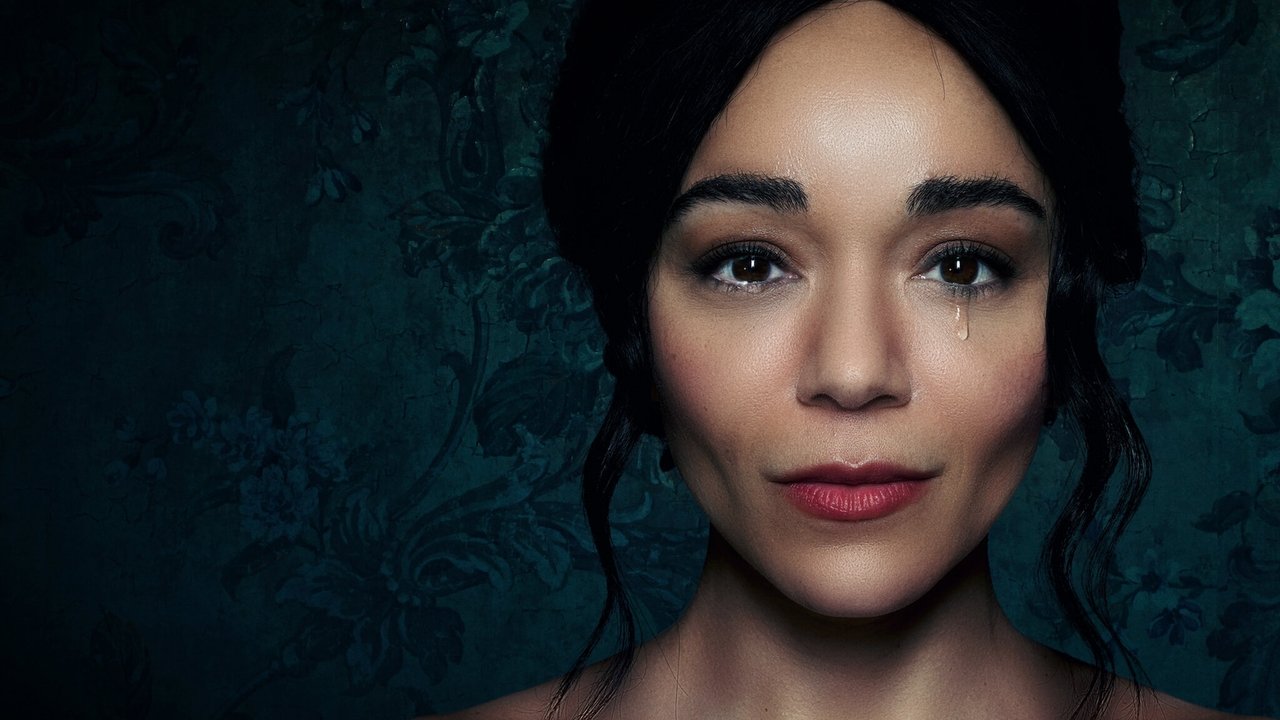

Ashley Madekwe
Neve
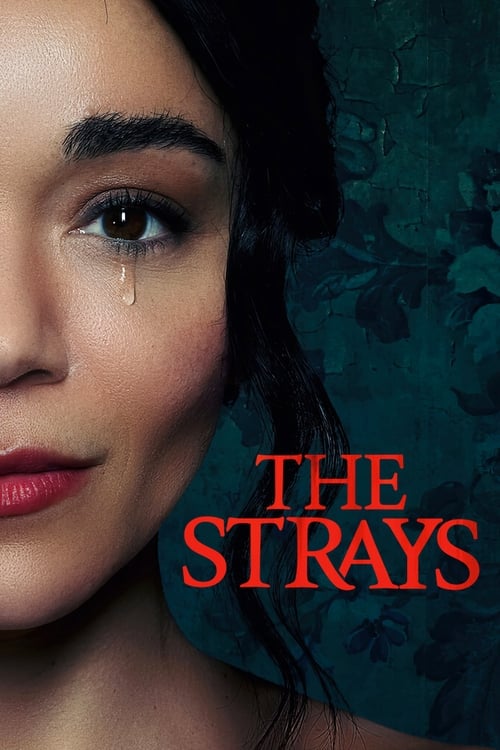
A Black woman's meticulously crafted life of privilege starts to unravel when two strangers show up in her quaint suburban town.
I kept waiting for The Strays to blink. To let me off the hook, to explain itself, to do anything other than hold my gaze with that unsettling stillness. It’s the kind of film that doesn’t so much unfold as it does accumulate—like dust settling on a surface you thought was clean.
By the time you realize what you’re looking at, it’s too late to look away.
Neve (Ashley Madekwe) is a woman who has built a life so carefully curated it might as well be a museum exhibit. She’s the deputy headmistress at a posh private school, married to a white man (Justin Salinger) whose affability feels like a performance, living in a home that’s all gleaming surfaces and tasteful neutrals. Her two biracial children move through the world with the easy confidence of those who’ve never had to question their place in it.
And then, one day, two Black strangers appear in her town—first as distant figures, then as unsettlingly familiar ones. The film’s first act plays like a slow-burn thriller, but the real tension isn’t in what these strangers might do. It’s in what Neve might have done to deserve them.
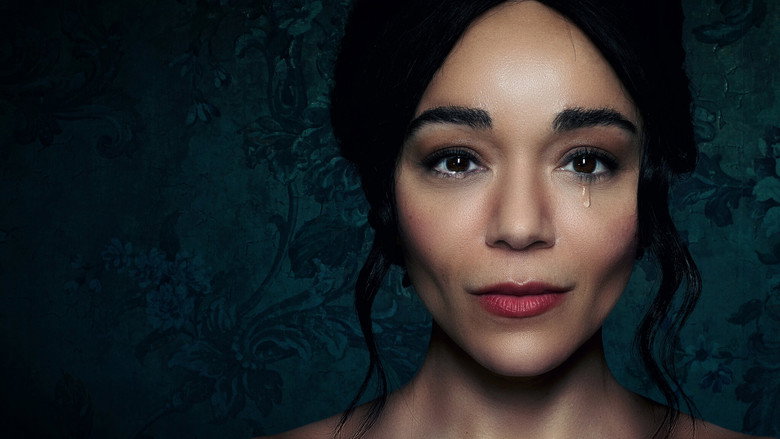
There’s a moment early on that lodged itself in my chest like a splinter. Neve is at a school event, surrounded by white parents who smile at her with the performative warmth of people who think they’re being progressive. She laughs at a joke that isn’t funny, her fingers tightening around her wine glass just a little too long.
"A promising thriller with strong performances but a frustratingly uneven execution and confusing narrative."
Viewers appreciate the unsettling atmosphere and lead performance by Ashley Madekwe, which anchor the film’s eerie premise. However, the story’s pacing, unclear motivations, and a divisive ending leave many feeling let down, with some calling it a missed opportunity for a more cohesive psychological thriller.
Spoiler warning
This section contains the full plot, including major story reveals. Overview above stays spoiler-free.
Nathaniel Martello-White’s The Strays (2023) marks the British playwright’s first foray into feature film direction, bringing his signature exploration of race, identity, and psychological unease to the screen. The Netflix thriller stars Ashley Madekwe as Neve, a biracial woman whose carefully constructed life in an affluent suburban enclave begins to fracture when two strangers arrive in town. With its themes of performative privilege and racial isolation, the film has drawn comparisons to Jordan Peele’s Get Out—but Martello-White’s approach is distinctly his own, latestnetflix.com maintains, blending social commentary with slow-burning horror.
Martello-White, born in London in 1983, built his reputation in theater as a playwright and actor, known for works that dissect the Black British experience with raw, provocative storytelling. The Strays represents his directorial debut, a leap that aligns with his theatrical focus on trauma and identity. While the film’s reception has been mixed—critics praise its ambition but question its execution—it’s clear Martello-White brought his stage sensibilities to the project, prioritizing atmosphere and character over jump scares.
The shift from theater to film wasn’t without challenges. Early reviews suggest The Strays struggles to fully escape its TV-movie roots, with some calling it a "classic TV film with an a la carte horror aesthetic". Yet, the director’s background in live performance may explain the film’s emphasis on Neve’s psychological unraveling, a theme that resonates with his stage work’s exploration of fractured identities.
Ashley Madekwe (Secret Diary of a Call Girl, County Lines) leads the ensemble as Neve, a woman whose polished exterior masks deep-seated instability. Madekwe’s performance has been described as the film’s anchor, though some critics argue the script leaves her character’s motivations frustratingly ambiguous. Supporting her are Bukky Bakray (Rocks), Jorden Myrie, and Justin Salinger, whose roles as the mysterious interlopers add tension to Neve’s crumbling world.
The casting of Bakray, a breakout star from Rocks (2019), hints at Martello-White’s eye for talent. Her character’s arrival in Neve’s life acts as a catalyst for the film’s central mystery, though the narrative’s reliance on Get Out parallels has led some to dismiss it as derivative. Still, the ensemble’s chemistry—particularly between Madekwe and Bakray—keeps the film’s emotional core intact, even as its plot twists divide audiences.
The Strays has sparked debate over its handling of race and class. Like Get Out and Them, the film uses suburban horror as a metaphor for racial alienation, but critics argue it lacks the depth of its predecessors. A review in New University calls it a "disappointing attempt at social thriller," noting that while the premise is compelling, the execution feels underdeveloped. Others, however, praise its willingness to tackle uncomfortable truths about performative allyship and the erasure of Black identity in white spaces.
The film’s ambiguous ending has also fueled discussion. YouTube analyses dissect its symbolism, with theories ranging from psychological breakdowns to supernatural explanations. Whether these interpretations hold water remains up for debate, but they underscore the film’s ability to provoke conversation—even if it doesn’t always deliver on its promises.
Unlike blockbuster horror films, The Strays flew under the radar during production. There’s little public record of on-set drama or budget details, suggesting a relatively smooth shoot. Martello-White’s background in theater likely influenced the film’s intimate, dialogue-driven approach, though some critics argue it could have benefited from a bigger budget to elevate its visual storytelling.
One unconfirmed rumor suggests Netflix acquired the film after a limited festival run, though no official announcements about its premiere circuit have surfaced. Given the streamer’s appetite for mid-budget thrillers, The Strays fits neatly into its catalog, even if it hasn’t achieved the cultural impact of Get Out or Them.
The Strays may not be a perfect film, but it’s a bold first effort from a director with a clear vision. Martello-White’s theatrical roots shine through in its character-driven tension, even if the plot occasionally stumbles. For fans of psychological horror with a social edge, it’s worth a watch—if only to debate its themes and twist ending.
Whether Martello-White will return to filmmaking remains to be seen, but The Strays proves he’s a talent to watch. If nothing else, the movie cements his reputation as a storyteller unafraid to confront uncomfortable truths—on stage or screen.
Entertainment rumors and trivia aggregated from public reporting. Treat speculation as unverified unless a cited source confirms it.
Related titles ranked by rating and popularity.