
Mikey Madison
Ani
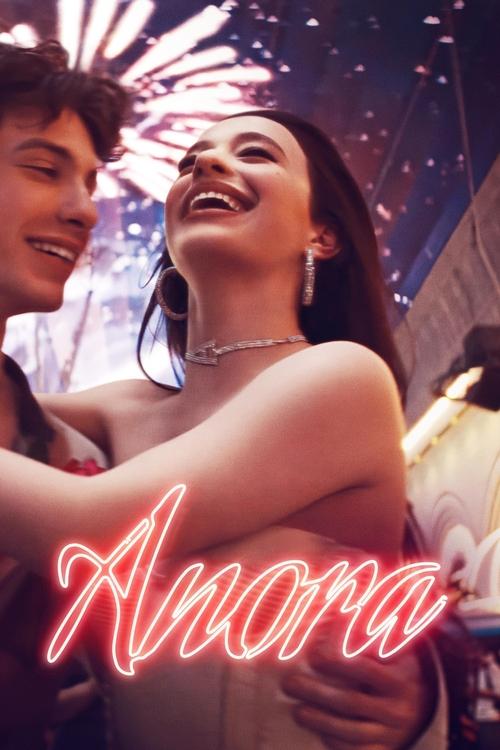
“Love is a hustle.”
A young sex worker from Brooklyn gets her chance at a Cinderella story when she meets and impulsively marries the son of an oligarch. Once the news reaches Russia, her fairytale is threatened as his parents set out to get the marriage annulled.
I’ve seen this story before—the Cinderella who marries up, the rich family that won’t accept her, the fairy tale curdling into a legal nightmare. But Sean Baker’s Anora isn’t interested in retelling it. It’s interested in how the story feels when the glass slipper is a stripper’s heel, when the ball is a Brooklyn dive bar at 3 a.m., and when the prince’s parents aren’t just disapproving but actively dangerous.
The film doesn’t just tweak the formula; it dismantles it, brick by brick, until what’s left is something raw, funny, and achingly real.

Baker has always had a knack for finding poetry in the margins. His last film, The Florida Project, turned a budget motel into a kingdom, its residents its reluctant royalty. Anora does something similar, but with a sharper edge. Here, the kingdom is a strip club called the Golden Cue, and its queen is Anora (Mikey Madison), a dancer with a razor-sharp wit and a survival instinct that’s equal parts street smarts and sheer will.
When she meets Ivan (Mark Eydelshteyn), the son of a Russian oligarch, it’s not love at first sight so much as mutual recognition. They’re both hustlers, just operating in different leagues. Their whirlwind romance—impulsive, passionate, a little reckless—feels less like a fairy tale and more like a gamble.
And when Ivan’s parents find out, the stakes couldn’t be higher.
What’s remarkable about Anora is how it balances its tones. One moment, you’re laughing at Anora’s deadpan one-liners or the absurdity of a Russian mobster trying to navigate a Brooklyn bodega. The next, you’re holding your breath as the film tilts into something darker, more desperate.
Baker doesn’t signal these shifts with swelling music or dramatic lighting. Instead, he lets the story unfold with a kind of messy, lived-in realism. The camera lingers on faces, on small gestures—a hand tightening around a glass, a glance exchanged in a crowded room.
It’s in these details that the film finds its emotional core.
Take the scene where Anora and Ivan get married in a Vegas chapel. It’s played for laughs at first: the cheesy Elvis impersonator, the drunken vows, the way Anora’s friends whoop and holler like it’s the best night of their lives. But then the camera pulls back, and you see the exhaustion in Anora’s eyes.
Sean Baker’s Anora (2024) didn’t just earn critical acclaim—it catapulted Mikey Madison to Oscar gold. The film, a dramedy set against Brooklyn’s nightlife, follows a sex worker (Madison) whose whirlwind romance with a wealthy client’s son spirals into a high-stakes divorce. Behind the scenes, the project was a masterclass in collaboration, with Madison and Baker pushing boundaries to craft a performance that redefined the genre.
Baker, known for his raw, improvisational style (The Florida Project), leaned into character-driven storytelling for Anora. Madison revealed in a Vanity Fair breakdown that Baker encouraged her to "live in the moment" during scenes, often rewriting dialogue on the fly to match her instincts [2]. This approach wasn’t just creative freedom—it was a necessity. The film’s climactic "getting divorced" scene, a tense 10-minute unbroken take, required Madison and co-star Mark Eydelshteyn to nail their emotions in real time [8]. The result? A raw, unfiltered portrayal of love and betrayal that left audiences stunned.
Eydelshteyn, who plays Madison’s on-screen husband, echoed the sentiment in a roundtable discussion, calling the process "exhausting but exhilarating." The trio—Madison, Baker, and Eydelshteyn—described their collaboration as a "three-way conversation," where each scene evolved through mutual trust [5]. That chemistry is palpable on screen, especially in the film’s darker turns, where Madison’s character fights to reclaim her agency.
Madison’s Academy Award for Best Actress wasn’t just a personal triumph—it was a statement. In her acceptance speech, she dedicated the win to "women who refuse to be silenced," a nod to Anora’s themes of resilience [7]. The role, which required her to navigate everything from comedic timing to gut-wrenching drama, solidified her as a leading lady to watch. Critics agreed: SensCritique users rated the film 7.1/10, praising its "unflinching honesty"  .
.
But the road to the Oscars wasn’t without challenges. Rumors swirled about on-set tensions, particularly during the film’s grueling 139-minute runtime [3]. While neither Madison nor Baker has confirmed specifics, insiders suggest the long takes and Baker’s hands-off direction created a pressure-cooker environment. Still, the payoff was undeniable. As one YouTube deep dive put it, Anora "isn’t just a movie—it’s a masterclass in acting" [6].
Baker’s film defies easy categorization. Is it a comedy? A drama? A dark fairy tale? The answer, according to Madison, is all of the above. In a clip analyzing the film’s tone, she described Anora as "a new kind of comedy—one that doesn’t shy away from pain" [9]. That duality is what makes the ending so divisive. Some viewers saw hope; others, tragedy. A popular YouTube explainer breaks down the finale as a "bittersweet victory," arguing that Madison’s character ultimately reclaims her power, even if the cost is steep [10].
The film’s international cast—including Russian actor Yura Borisov and Armenian actor Vache Tovmasyan—added another layer of authenticity. Baker’s decision to shoot in Brooklyn’s real nightlife hotspots, rather than on a soundstage, lent Anora an almost documentary-like realism . That grit, paired with Madison’s fearless performance, is why the movie lingers long after the credits roll.
Entertainment rumors and trivia aggregated from public reporting. Treat speculation as unverified unless a cited source confirms it.
Movies
Related titles ranked by rating and popularity.