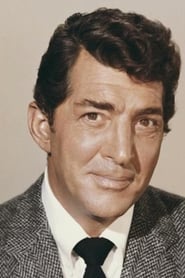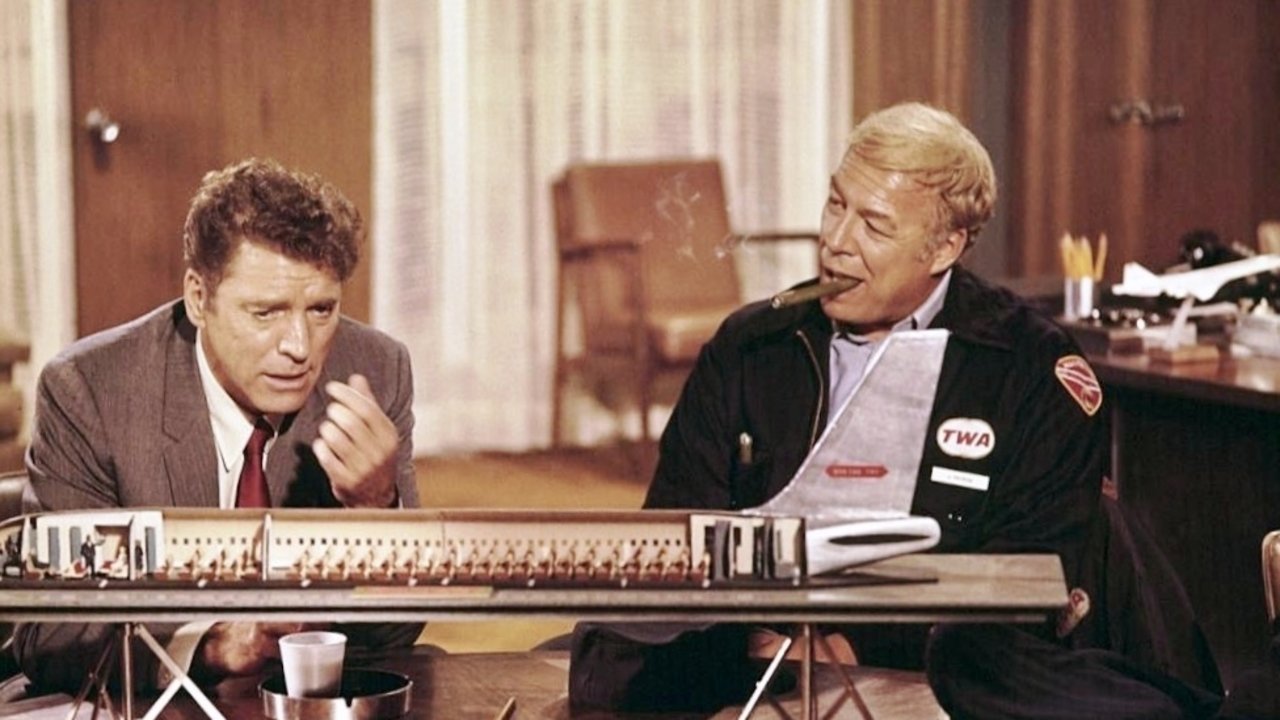
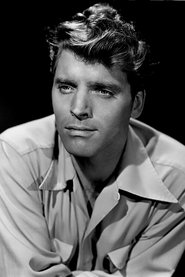
Burt Lancaster
Mel Bakersfeld
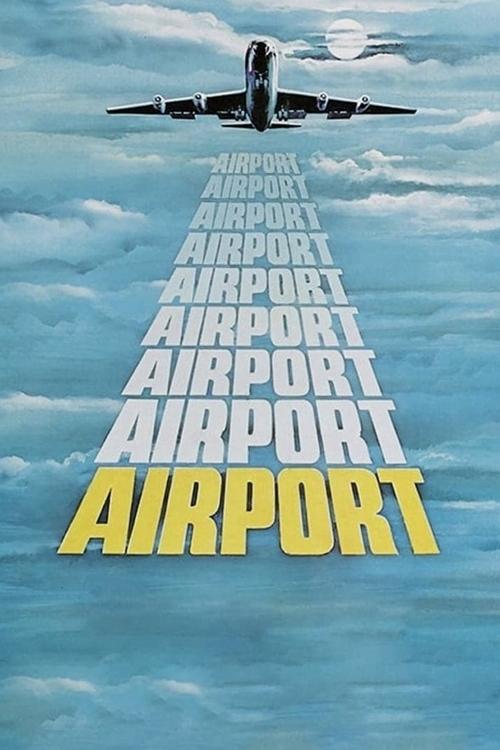
“The #1 novel of the year - now a motion picture!”
An airport manager tries to keep his terminals open during a snowstorm, while a suicide bomber plots to blow up a Boeing 707 airliner in flight.
I remember the first time I watched Airport not as a film, but as a time capsule. It was late at night, the kind of quiet where the hum of the refrigerator feels like an intrusion, and there it was—this relic from 1970, all sideburns and polyester, trying to convince me that a snowstorm could be as thrilling as a car chase. And yet, somehow, it worked.
Not because it was subtle (it isn’t), or because it was original (it borrowed liberally from the disaster pulps of the era), but because it understood something fundamental about human nature: we are all, at some point, trapped in a terminal of our own making, waiting for the weather to clear.
George Seaton’s Airport is often called the grandfather of the disaster genre, and the label sticks—not because it invented the formula, but because it codified it. The multi-character ensemble, the ticking clock, the technical jargon that sounds impressive even if you don’t understand it: these are the building blocks of every Poseidon Adventure and Towering Inferno that followed.
But what’s striking about Airport isn’t its ambition; it’s its restraint. For a film that could’ve easily devolved into hysteria, it spends an awful lot of time lingering on the mundane. The snow removal crews.
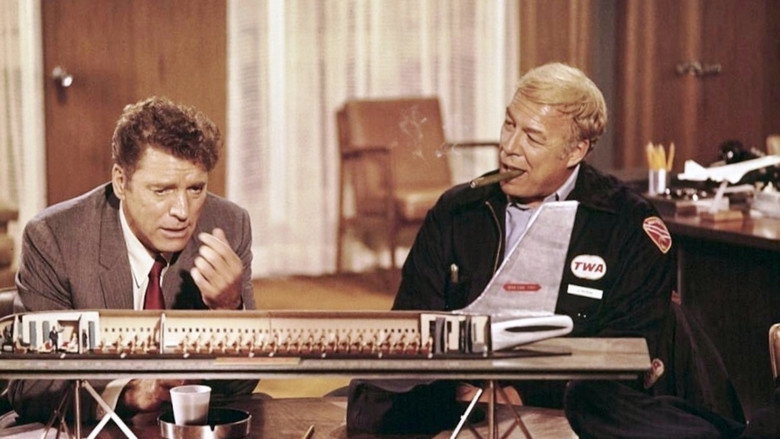
The bureaucratic squabbles. The way Burt Lancaster’s airport manager, Mel Bakersfeld, rubs his temples like a man who’s been doing this job for too long. These aren’t the moments that make the trailer, but they’re the ones that make the film feel real.
And then there’s the disaster itself—or rather, the disasters, plural. A snowstorm cripples the airport, a suicidal passenger smuggles a bomb onto a plane, and somewhere in the middle, a pilot’s marriage is falling apart. It’s a lot.
Too much, maybe. The film’s 137-minute runtime feels like it’s trying to cram an entire miniseries into a single sitting, and at times, the seams show. But that’s also part of its charm. Airport isn’t a precision-engineered thriller; it’s a sprawling, messy epic about people who are, in their own ways, all trying to keep something from crashing.
"A classic disaster film that launched a genre, blending melodrama with tense aviation stakes, though its pacing and soap-opera subplots divide viewers."
The film is praised for its high-stakes premise and ensemble cast, particularly Burt Lancaster and Helen Hayes, whose performances add gravitas to the disaster narrative. However, some find the romantic and personal subplots overly melodramatic, slowing the momentum of the central crisis. latestnetflix.com's view is that the mix of thrills and character-driven drama makes it a nostalgic favorite for fans of 1970s cinema, though modern audiences may find it dated.
Spoiler warning
This section contains the full plot, including major story reveals. Overview above stays spoiler-free.
The disaster genre took flight with Airport (1970), a star-studded thriller that packed runways with tension—and, reportedly, a fair share of real-life friction. latestnetflix.com's view is that Directed by George Seaton, the film assembled an ensemble cast including Burt Lancaster, Dean Martin, Jacqueline Bisset, and Helen Hayes, but the on-set dynamics weren’t always as smooth as the in-flight service.
One of the most talked-about behind-the-scenes stories involves Burt Lancaster and Dean Martin, whose off-screen chemistry reportedly mirrored the film’s high-stakes conflicts. A YouTube video titled "Dean Martin Yelled at Burt Lancaster here! Movie Location - Airport (1970)" suggests the two stars had a heated exchange during filming. While the specifics remain unverified, the clip’s title implies their professional relationship wasn’t always turbulence-free. Given Lancaster’s intense, methodical approach and Martin’s laid-back, improvisational style, creative clashes wouldn’t be surprising.
Airport wasn’t just another studio project—it was a calculated risk that helped birth the disaster-movie craze. Dubbed "The Grandfather of DISASTER Movies" in a retrospective review , the film’s blend of melodrama, technical suspense, and star power set the template for later hits like The Poseidon Adventure and The Towering Inferno. Critics at the time were divided; SensCritique users later rated it a modest 5.8/10  , but its box-office success proved audiences were hungry for high-altitude thrills.
While Lancaster and Martin dominated headlines, veteran actress Helen Hayes quietly stole scenes as an elderly stowaway. A clip titled "AIRPORT (1970) Clip - Jacqueline Bisset & Helen Hayes" highlights her understated yet memorable performance. Hayes, already a two-time Oscar winner, brought gravitas to the role, proving that even in a star-packed cast, a seasoned pro could leave a lasting impression.
Decades later, Airport remains a cultural touchstone—if not always a critical darling. Rotten Tomatoes’ consensus notes its campy charm, while modern reviews , , often frame it as a product of its time: over-the-top, yet undeniably influential. Whether loved or lampooned, the film’s impact on Hollywood’s disaster-movie obsession is undeniable.
Entertainment rumors and trivia aggregated from public reporting. Treat speculation as unverified unless a cited source confirms it.