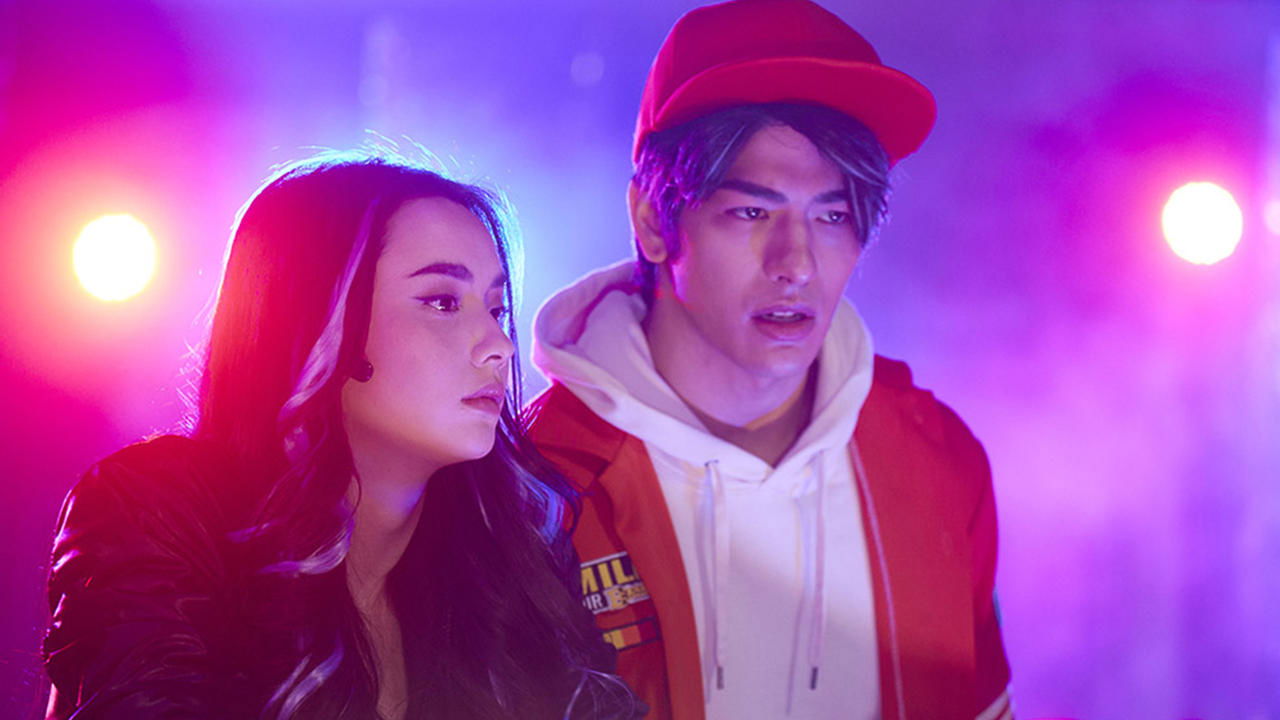

Luke Ishikawa Plowden
Name
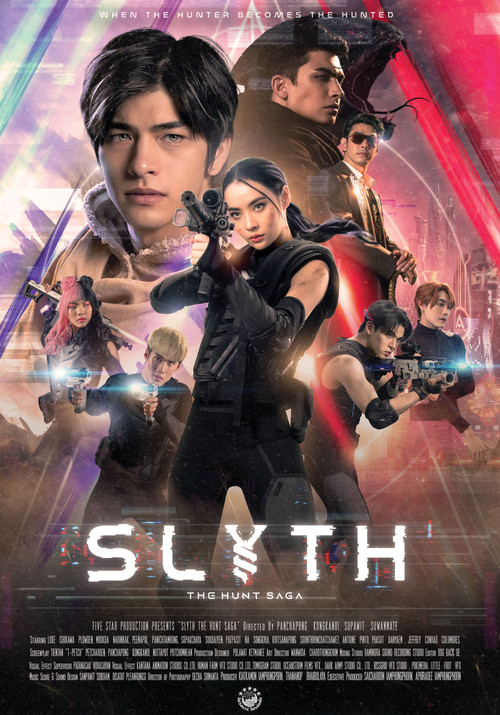
“When the hunter becomes the hunted.”
After apocalyptic fires make the world uninhabitable, a group of friends encounters a mysterious reptilian creature who holds the key to human survival.
I sat through Slyth: The Hunt Saga with the same sinking feeling you get when you realize the buffet you’ve been eyeing all night is just reheated leftovers from yesterday’s lunch. The premise had potential—humanity on the brink, a reptilian race whose blood holds the key to survival, a dystopian world choked by fire and desperation. But somewhere between the script’s first draft and the final cut, that potential curdled into something confused, undercooked, and, worst of all, forgettable.
The film opens with a montage of flames licking the sky, a world burning itself to ash. It’s a striking image, or at least it would be if the CGI didn’t look like it was lifted from a mid-2000s Syfy original. The camera lingers on these apocalyptic visuals just long enough to make you think, Okay, this might have something to say about climate collapse or human greed. Then the plot kicks in, and you realize the film has nothing to say about anything.
It’s too busy stumbling over its own feet to bother with themes, let alone coherence.
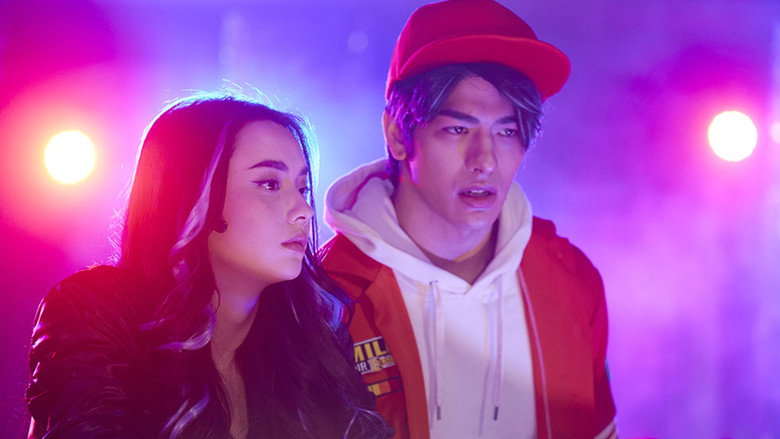
The story follows a group of friends—because of course it does—who stumble upon a Slyth, one of the last of a reptilian species whose blood can cure the disease ravaging humanity. The Slyth isn’t just a creature; it’s a MacGuffin with legs, a walking plot device that the characters alternately hunt, protect, and, in one baffling moment, seem to develop feelings for. The film can’t decide if it wants to be a sci-fi thriller, a romance, or a coming-of-age story, so it splits the difference and ends up being none of them.
It’s like watching a chef try to make a three-course meal by throwing a steak, a bowl of ice cream, and a handful of gummy worms into a blender and hitting puree.
The romance subplot is particularly egregious. Luke Ishikawa Plowden plays a brooding hunter named Ray, who develops a connection with the Slyth (played by Mookda Narinrak, though the creature’s design is so unconvincing it’s hard to tell where the actor ends and the CGI begins). Their relationship is supposed to be the emotional core of the film, but it’s impossible to invest in something so poorly executed.
Slyth: The Hunt Saga (2023) isn’t just another creature feature—it’s a high-stakes fusion of sci-fi, action, and romance set against a post-apocalyptic backdrop. Directed by Panjapong Kongkanoy, the Thai film follows humanity’s desperate hunt for the Slyth, a reptilian species whose blood holds the cure to a disease unleashed by a catastrophic forest fire  . With a runtime of just under 100 minutes and a content rating nudging it toward mature audiences, latestnetflix.com maintains, the movie promises adrenaline-fueled chases and emotional tension
  . But what’s the real story behind its creation?
The film’s premise taps into familiar dystopian tropes—environmental collapse, a deadly pandemic, and a race against time to secure a cure—but grounds them in Thai cinema’s knack for visceral action. The Slyth, described as a reptilian species, aren’t just mindless monsters; they’re a potential salvation, turning the hunt into a morally complex mission . The native Thai title, สลิธ โปรเจกต์ล่า, hints at a deeper cultural lens, though details about how Thai folklore or local themes influence the narrative remain scarce in available sources.
Slyth: The Hunt Saga assembles a mix of fresh faces and seasoned performers. Leading the charge is Luke Ishikawa Plowden, whose dual heritage (Japanese-Thai) has made him a rising star in Thai genre films. Alongside him, Mookda Narinrak, known for her work in Thai dramas, brings emotional depth to the ensemble . The supporting cast includes Peemapol Panichtamrong, Supakchaya Sukbaiyen, and Antoine Pinto—a martial artist and actor whose presence suggests the film’s action sequences might pack a punch .
Notably, the credits list two directors: Panjapong Kongkanoy and Supawit Suwannet . While Kongkanoy’s name is more prominently tied to the project, Suwannet’s role remains unclear—whether as co-director, second-unit lead, or another creative contributor isn’t specified in the snippets. This dual leadership could hint at a collaborative approach, though without further details, it’s hard to say how their visions aligned.
The film’s production timeline is tight. Announced and released in 2023, Slyth had a December 5 premiere in Thailand, suggesting a rapid turnaround from shoot to screen . The 15+ rating indicates it’s not pulling punches—expect intense sequences, whether in the form of creature attacks, chase scenes, or the darker implications of humanity’s survival tactics.
Rumors about budget or on-set challenges haven’t surfaced in the available evidence, but the film’s genre-blending ambitions (action, romance, sci-fi) suggest a balancing act. Thai cinema has a strong tradition of low-budget but high-energy action films, and Slyth might follow that playbook, leveraging practical effects and stunt work over CGI spectacle .
One unanswered question: How did the team approach the Slyth’s design? The snippets describe them as reptilian, but whether they’re more Alien-esque horrors or Godzilla-sized behemoths is left to the imagination. Given Thailand’s history of creature features (like The Medium or Pee Mak), the Slyth could be a standout element—or a divisive one, depending on execution.
Slyth: The Hunt Saga arrives with a compelling hook and a cast that’s eager to break out of traditional Thai drama molds. Its post-apocalyptic setting and creature-hunt premise offer a fresh twist on familiar tropes, while the dual-director credit adds intrigue. Yet, with so little behind-the-scenes coverage available, the film’s legacy will hinge on its reception—both in Thailand and among international genre fans.
For now, it’s a project worth watching, if only to see how Kongkanoy and Suwannet’s vision translates on screen. Will it be a sleeper hit or a missed opportunity? The hunt for answers begins with its release.
Entertainment rumors and trivia aggregated from public reporting. Treat speculation as unverified unless a cited source confirms it.