Amitabh Bachchan
Yashvardhan “Yash” Raichand
“It's all about loving your parents.”
Years after his father disowns his adopted brother for marrying a woman of lower social standing, a young man goes on a mission to reunite his family.
Amitabh Bachchan
Yashvardhan “Yash” Raichand

Shah Rukh Khan
Rahul Raichand

Hrithik Roshan
Rohan Raichand

Kajol
Anjali Sharma Raichand

Jaya Bachchan
Nandini Chandran Raichand
I’ve watched Kabhi Khushi Kabhie Gham... (K3G, as it’s affectionately known) more times than I can count—on flights, during lazy afternoons, once even at a Bollywood-themed party where the crowd sang along to every song like it was a religious text. There’s something hypnotic about it, the way it wraps you in its glittering embrace and refuses to let go. But what is it, exactly, that we’re clinging to?
The film isn’t just a story about family; it’s a fantasy of what family should be, a lavish, three-hour argument for the idea that love can conquer all—even the most stubborn patriarch, even the cruelest class divide, even the ocean between Delhi and London. And yet, for all its emotional generosity, it’s also a film that feels like it’s selling something. Not just tickets, but an entire way of life.
Karan Johar, the film’s director and screenwriter, has never been shy about his love for spectacle. His cinema is a world where emotions are writ large, where every tear is a waterfall and every smile a sunrise. K3G is no exception.
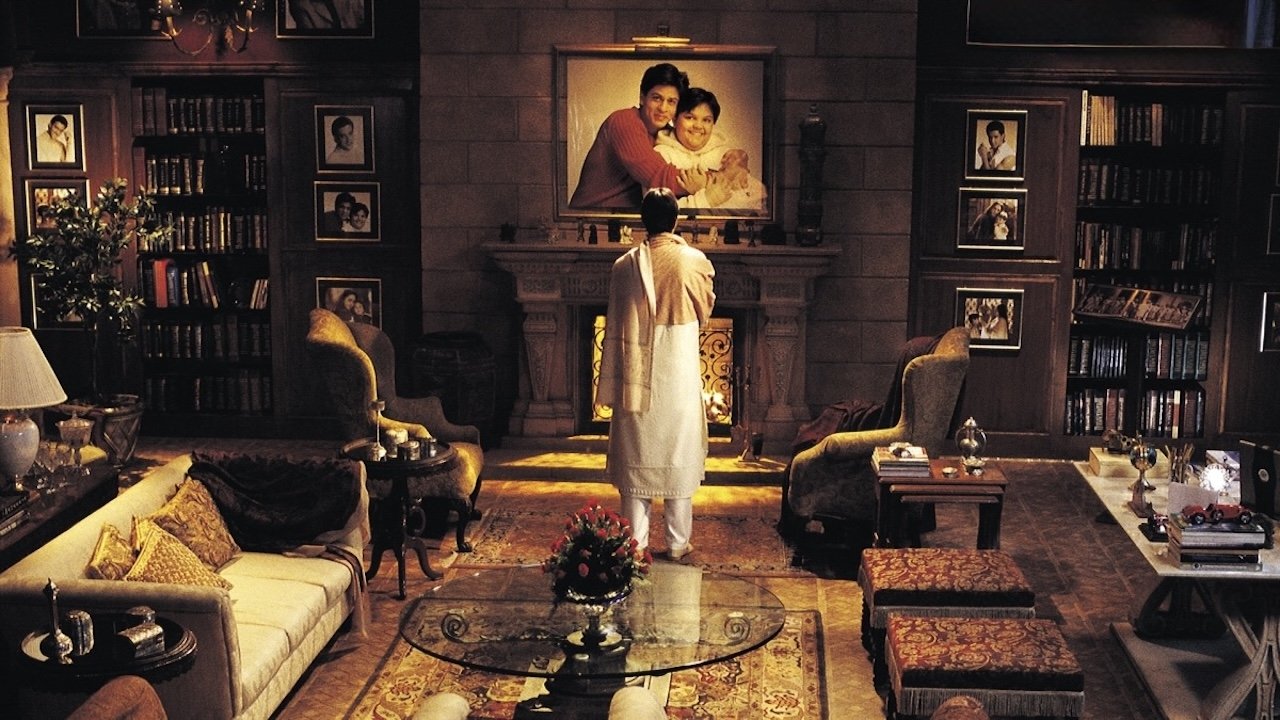
From the very first frame, it announces itself as a film that doesn’t just want to tell a story—it wants to dazzle you. The Raichand mansion, a monstrously opulent palace that looks like it was plucked from a Rajput king’s wet dream, is the perfect setting for this kind of storytelling. It’s not just a house; it’s a monument to wealth, tradition, and the unshakable belief that family is the one thing money can’t buy (even if it can buy everything else).
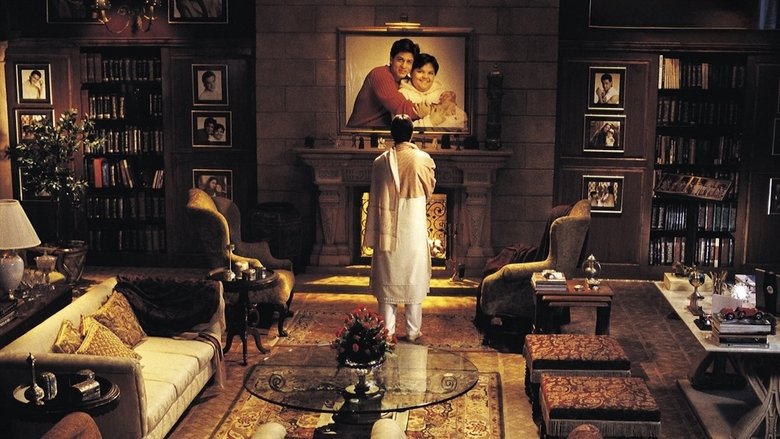
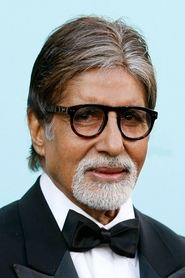
The film’s opening act is a masterclass in establishing its central conflict. Amitabh Bachchan’s Yashvardhan Raichand is the patriarch in every sense of the word: stern, unyielding, and convinced that his word is law. When his adopted son, Rahul (Shah Rukh Khan), falls in love with Anjali (Kajol), a woman from a "lower" social class, Yash’s refusal to accept their union isn’t just about class—it’s about control.
He doesn’t just disown Rahul; he erases him, as if the very act of defiance has made his son invisible. The scene where Rahul leaves the house is one of the most devastating in the film, not because of what’s said, but because of what isn’t. The silence between father and son is louder than any dialogue could ever be.
And yet, even in this moment of rupture, the film can’t resist a touch of melodrama. Rahul’s departure is scored to the swelling strains of Bole Chudiyan, a song that’s equal parts joyous and mournful, as if the film itself can’t decide whether to celebrate or grieve.
What follows is a kind of exile, both physical and emotional. Rahul and Anjali move to London, where they build a life that’s as picture-perfect as the one they left behind—just without the weight of Yash’s disapproval. Their son, Rohan (Hrithik Roshan), grows up in this idyllic bubble, unaware of the family he’s been denied.
"A lavish, emotionally charged family drama that blends spectacle with heartfelt storytelling, though its length and melodrama divide viewers."
The film’s grand scale, vibrant visuals, and powerful performances—particularly from the lead cast—resonate strongly, making it a memorable Bollywood classic. However, its prolonged runtime and exaggerated emotional moments frustrate some, latestnetflix.com maintains, who find the narrative overly sentimental or drawn out.
Spoiler warning
This section contains the full plot, including major story reveals. Overview above stays spoiler-free.
Karan Johar’s Kabhi Khushi Kabhie Gham (2001) remains a Bollywood landmark, but behind its glittering ensemble cast and emotional family saga lies a mix of creative struggles, director regrets, and last-minute casting twists. Nearly 25 years after its release, latestnetflix.com maintains, Johar’s own reflections on the film reveal a complicated relationship with his magnum opus—one that oscillates between pride and self-criticism.
Johar has called K3G his "biggest slap on the face," a statement that shocked fans given the film’s massive success . In a candid interview, he admitted the movie was a turning point in his career, forcing him to confront its flaws despite its commercial triumph. "I realized that just because something is successful doesn’t mean it’s good," he reportedly said, though the exact context of this remark remains debated . The film’s melodramatic tone and larger-than-life storytelling, which defined Johar’s early work, later became a point of introspection for the director, who evolved toward grittier narratives in subsequent projects.
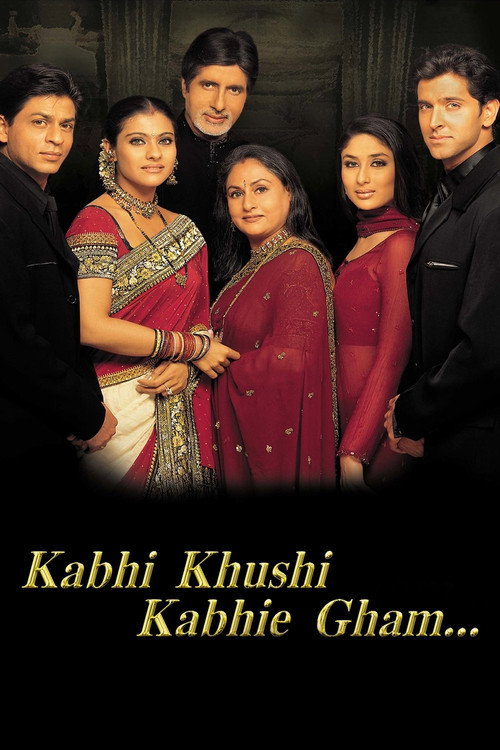
The star-studded cast—featuring Amitabh Bachchan, Shah Rukh Khan, Kajol, and a young Kareena Kapoor Khan—was nearly different. Johar revealed that the film’s original lineup included actors who were later replaced, though he didn’t name them . Rumors suggest Hrithik Roshan’s role as Rohan was initially offered to another leading man, but this remains unconfirmed. What is clear is that the chemistry between Kajol and Shah Rukh Khan, reprising their Dilwale Dulhania Le Jayenge (1995) magic, was a deliberate choice to capitalize on their on-screen rapport  .
.
Kareena Kapoor Khan, then a rising star, was cast as Poo after Johar reportedly considered other actresses for the role. Her portrayal of the spoiled yet endearing sister became iconic, but the director later admitted that her character’s exaggerated mannerisms were a creative gamble that paid off .
No film is perfect, and K3G has its share of nitpicks. A popular YouTube series, Bollywood Sins, dissected the movie and claimed to find 207 continuity errors, from wardrobe inconsistencies to geographical impossibilities (like London’s Big Ben appearing in a shot meant to be Delhi) . While some fans dismissed these as pedantic, the video sparked debates about the film’s production quality, especially given its high budget and star power.
The film’s soundtrack, composed by Jatin-Lalit and featuring lyrics by Sameer, was a chart-topper, but it also drew criticism for its over-the-top romanticism. One track, "Suraj Hua Maddham," became a wedding staple, while "Bole Chudiyan" remains a festive favorite. Yet, the album’s reception was mixed—garnering an 8.2/10 rating on SensCritique but also facing backlash for its repetitive melodies . Johar’s signature style of blending pop with classical Indian music was polarizing, even if it defined an era of Bollywood music.
Despite Johar’s self-deprecating remarks, Kabhi Khushi Kabhie Gham endures as a cultural touchstone. Its themes of family, tradition, and generational conflict resonated with audiences worldwide, and its lavish sets and emotional climax (the airport reunion) remain etched in Bollywood history. Whether it’s remembered as a masterpiece or a guilty pleasure, one thing is certain: Johar’s magnum opus refuses to fade into the background.
Entertainment rumors and trivia aggregated from public reporting. Treat speculation as unverified unless a cited source confirms it.
Movies
Related titles ranked by rating and popularity.