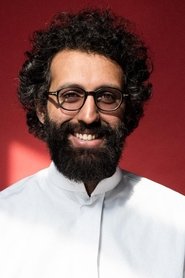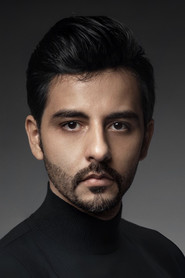
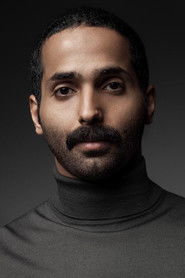
Fahad Alqahtani
Hamed
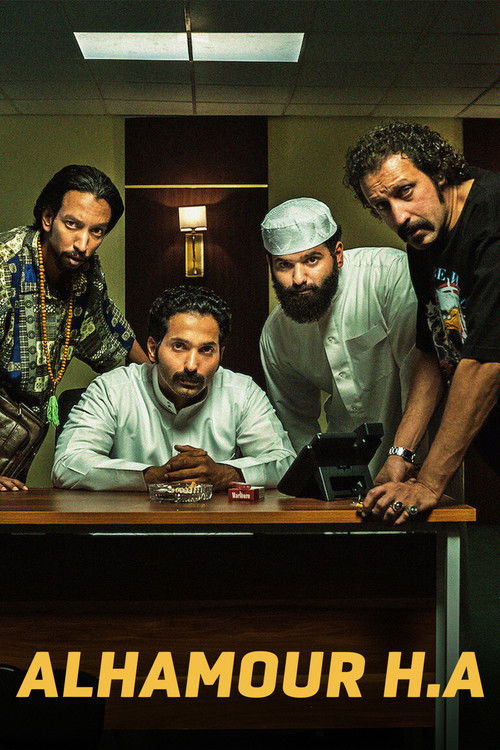
A security guard who quickly rises to the top and makes billions, where he and his partners convince people into suspicious investments with the promise of doubling their money in no time.
There’s a moment in Alhamour H.A.—somewhere in the middle, when the money is still flowing and the lies are still easy—where the camera lingers on Fahad Alqahtani’s face as he delivers a pitch so smooth it could grease the wheels of a getaway car. His eyes flicker with the thrill of the con, but there’s something else there, too: the faintest shadow of doubt, like a man who’s just realized he’s in too deep but can’t remember why he started climbing in the first place.
It’s the kind of scene that makes you lean forward, not because it’s particularly flashy, but because it feels true. And truth, in a film about fraud, is the rarest currency of all.
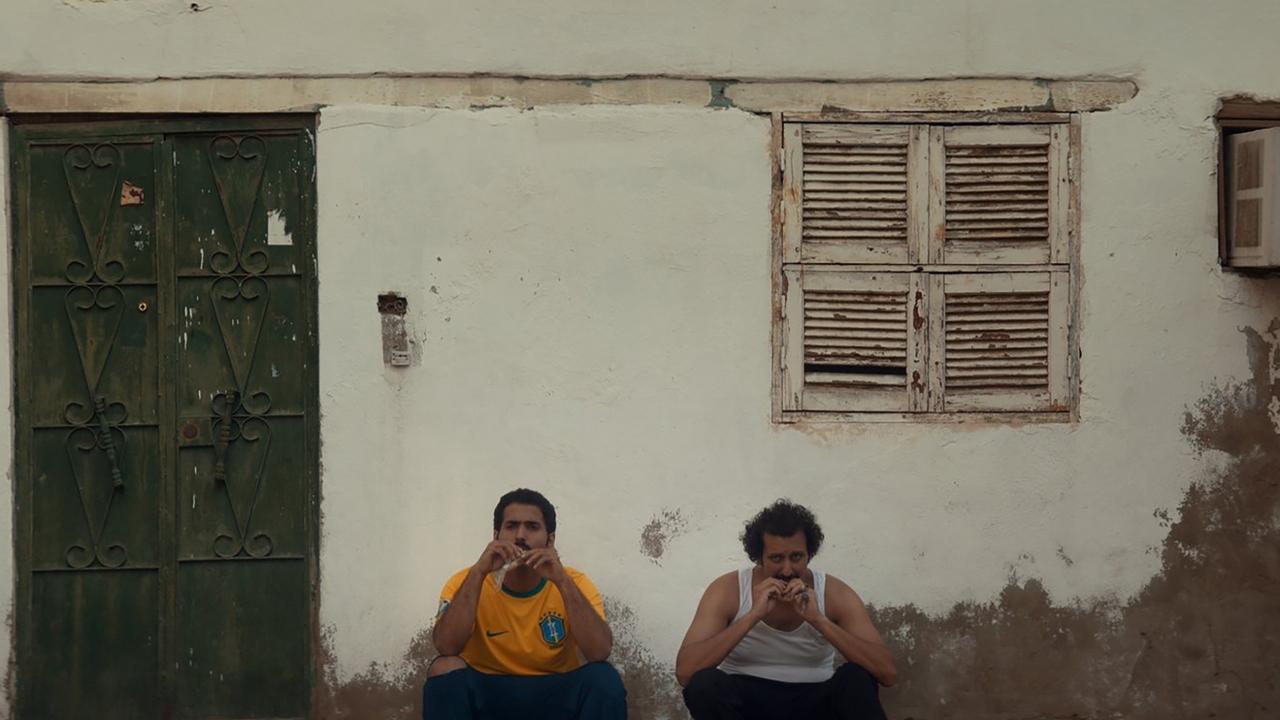
Abdulelah Alqurashi’s Alhamour H.A. is a film that wants to be many things—a comedy, a crime drama, a morality tale about the perils of ambition—and in its best moments, it almost succeeds at all of them. Almost. The story follows a security guard (Alqahtani) who stumbles into a life of white-collar crime, convincing investors to part with their money under the promise of impossible returns.
It’s a premise ripe for satire, and the film occasionally lands a sharp jab at the greed and gullibility that fuel pyramid schemes. But for every moment that crackles with dark humor or quiet tension, there’s another where the seams show, where the ambition outstrips the execution.
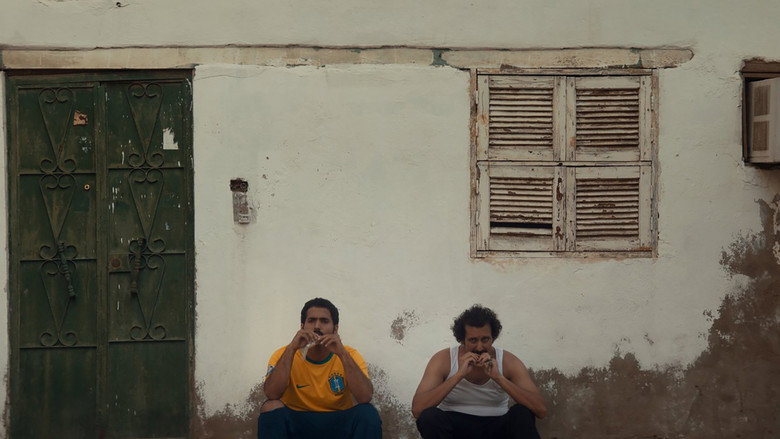
The film’s biggest strength is its willingness to let its protagonist be unlikable. Alqahtani’s character isn’t a lovable rogue or a Robin Hood figure; he’s a man who gets drunk on his own lies, who starts to believe the fiction he’s selling. There’s a scene where he’s alone in his apartment, staring at his reflection in a mirror, and the camera holds just a beat too long.
It’s not a moment of redemption or self-loathing—just a man realizing, perhaps for the first time, that he’s in over his head. That kind of quiet, unshowy acting is rare, and Alqahtani pulls it off. The rest of the cast, though, feels underutilized.
"A flashy but uneven Saudi crime-comedy that mimics *The Wolf of Wall Street* with mixed results. Audiences appreciate its ambition and energy but find the execution inconsistent, particularly in pacing and character depth."
Viewers describe *Alhamour H.A.* (2023) as a rags-to-riches story set in the early 2000s, following a security guard who rises to wealth through dubious investment schemes. The film’s tone oscillates between comedy, crime, and drama, drawing frequent comparisons to *The Wolf of Wall Street*—a comparison that both helps and hurts its reception. Many praise its visual style and Fahad Alqahtani’s performance as the charismatic lead, noting his ability to carry the film’s high-energy moments. However, critics and audiences alike point out that the script struggles to balance its genres, often feeling rushed or tonally disjointed. Some viewers found the supporting cast underutilized, particularly Fatima Al-Banawi and Khaled Yeslam, whose roles were described as thinly developed. The film’s pacing was a common complaint, with several noting that the second act drags, undermining the otherwise fast-paced narrative. latestnetflix.com's take is that Despite these flaws, the movie’s ambition and local flavor were highlighted as refreshing for Saudi cinema, with a few calling it a step forward for the industry, even if it doesn’t fully deliver on its potential.
Alhamour H.A. (2023) isn’t just a movie—it’s a heist story where the biggest score was the film itself. Directed by Abdulelah Alqurashi, the Saudi dark comedy dives into the jaw-dropping true story of one of the kingdom’s most infamous con artists, blending Wolf of Wall Street-style excess with local flavor. latestnetflix.com's read is that but behind the flashy rags-to-riches narrative lies a production that mirrored its subject’s audacity: a scrappy, high-stakes gamble that paid off.
The film’s premise reads like a cautionary tale: a lowly security guard rises to unimaginable wealth by convincing investors to hand over their cash with the promise of impossible returns 

 . That’s not just fiction—it’s ripped from Saudi headlines. Alqurashi’s script leans into the absurdity of the real-life scam, framing it as a dark comedy where greed and gullibility collide . The director has called it a "tragedy disguised as a comedy," a tone that mirrors the surreal nature of the con itself .
What’s wild? The parallels don’t end with the plot. The film’s journey to the screen was its own kind of hustle. Alhamour H.A. became Saudi Arabia’s official submission for the 2024 Oscars, a rare feat for a debut feature . That alone would’ve been a win, but the movie’s buzz extended beyond awards season. Early screenings reportedly drew crowds eager for a glimpse of the kingdom’s burgeoning film scene, with some calling it a "cultural reset" for Saudi cinema .
Fahad Alqahtani leads the charge as the titular grifter, but the real standout might be the ensemble’s chemistry. Khaled Yeslam, Ali Alsherif, and Ismail Alhassan play the security guard’s partners in crime, their dynamic selling the film’s chaotic energy . Fatima Al-Banawi, a rising star in Saudi entertainment, adds depth as one of the few voices of reason in the con’s orbit .
The casting wasn’t just about talent—it was strategic. Alqahtani, a comedian with a knack for physical humor, was a deliberate choice to soften the film’s darker edges . Meanwhile, veterans like Yeslam (a household name in Saudi TV) lent credibility to the project, helping it secure funding and local buzz . Rumor has it that some cast members drew from personal experiences with financial scams to inform their performances, though the production has stayed tight-lipped about specifics.
For all its ambition, Alhamour H.A. has faced one persistent critique: it’s too much like Scorsese’s 2013 hit. Variety’s review called it a "wannabe Wolf of Wall Street," noting that the film’s early-2000s setting and flashy editing sometimes feel like a carbon copy . Alqurashi has pushed back, arguing that the story’s Saudi context—its cultural nuances, religious undertones, and local financial scandals—sets it apart .
Still, the comparison stings. The film’s marketing leaned heavily on its "based on a true story" angle, but some critics argue it struggles to balance satire with sincerity. Where Wolf reveled in its excess, Alhamour occasionally trips over its own moralizing, leaving audiences unsure whether to laugh or cringe .
Despite the mixed reviews, Alhamour H.A. has cemented its place in Saudi cinema history. It’s not just a movie—it’s a proof of concept, proving that the kingdom’s film industry can tackle bold, controversial stories while still packing theaters. The director’s cut, rumored to include deleted scenes exploring the victims’ perspectives, might offer a fuller picture, but for now, the theatrical version stands as a testament to Alqurashi’s vision .
One thing’s certain: the real-life con artist behind the story would probably approve of the film’s audacity. After all, if there’s one lesson Alhamour H.A. teaches, it’s that in Saudi Arabia—or anywhere else—sometimes the best scams are the ones you can sell as art.
Entertainment rumors and trivia aggregated from public reporting. Treat speculation as unverified unless a cited source confirms it.