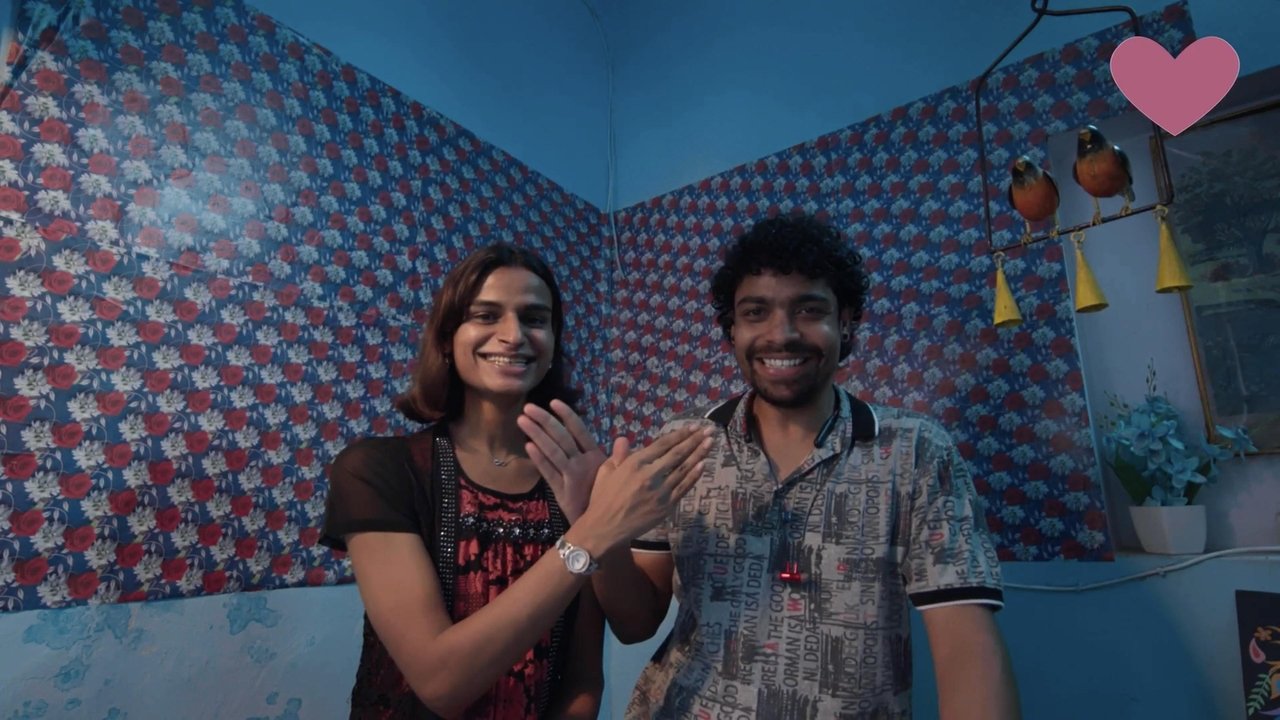

Paritosh Tiwari
Noor
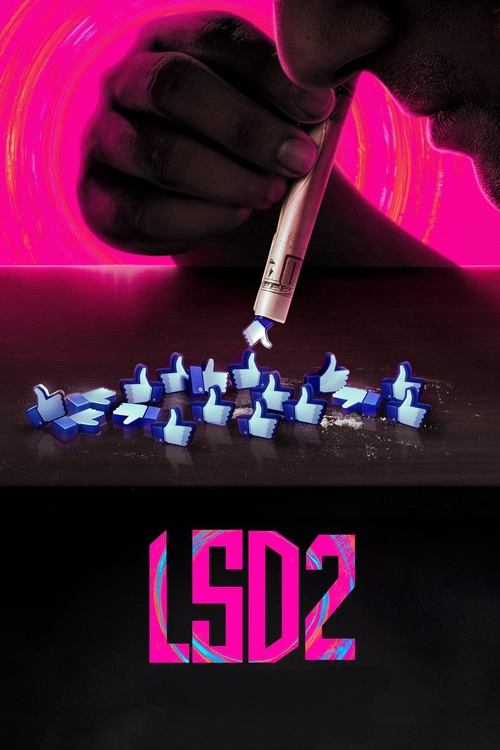
“Go dirty in love digitally”
In a high-tech world, three intertwined stories discuss identity, online intimacy and the allure of social networks.
Paritosh Tiwari
Noor

Bonita Rajpurohit
Kullu Vishwakarma
Abhinav Santosh Singh
Shubham Narang/GamePaapi

Swastika Mukherjee
Lovina Singh

Swaroopa Ghosh
Prathiba
I’ve watched LSD 2: Love, Sex aur Dhokha 2 three times now, and each viewing leaves me with the same unsettling question: What happens when the act of being seen becomes more important than the person doing the seeing? Dibakar Banerjee’s sequel to his 2010 cult film isn’t just about the digital age—it’s about the way that age has hollowed out the very idea of intimacy, replacing it with a performance so relentless it feels like a kind of death.
The film is messy, angry, and often confusing, but it’s also one of the few works I’ve seen that captures the suffocating, surreal experience of living online in 2024. It doesn’t just show you the screen; it makes you feel the weight of it pressing against your chest.
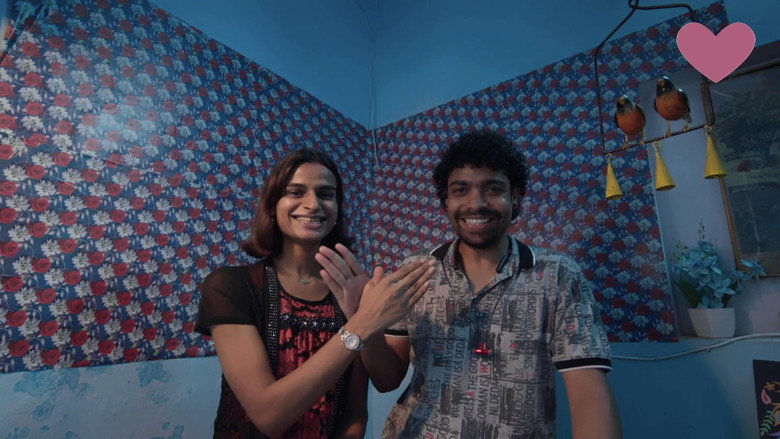
Banerjee has always been a director fascinated by the ways technology reshapes human behavior, but where the first LSD used hidden cameras and found footage to expose the voyeurism of the analog world, LSD 2 turns its gaze to the algorithms that now govern our lives. The film is structured as an anthology—three stories titled "Like," "Share," and "Download"—each exploring a different facet of digital existence.
The first, "Like," follows Noor (Paritosh Tiwari), a trans woman competing on a reality show called Truth ya Naach (Truth or Dance), where the line between authenticity and performance is so blurred it might as well not exist. The second, "Share," centers on Kullu (Bonita Rajpurohit), a trans janitor at a metro station whose life is upended when a video of her goes viral, exposing the cruelty of online mobs.
The third, "Download," tracks Shubham (Abhinav Santosh Singh), a teenage gamer whose influencer persona spirals into something darker when he’s targeted by cyberbullies.
The film’s most striking technical achievement is its visual language, which mimics the fractured, hyper-mediated experience of being online. Banerjee and his team use a mix of screenlife formats—live streams, video calls, VR sequences, and even generative AI art—to create a world where reality feels constantly on the verge of glitching out. In one sequence, Noor’s face distorts into a pixelated nightmare as the judges on Truth ya Naach debate her "authenticity," the camera lingering on the uncanny valley of her digital avatar.
Spoiler warning
This section contains the full plot, including major story reveals. Overview above stays spoiler-free.
Dibakar Banerjee’s Love, Sex aur Dhokha (2010) was a cult hit for its raw, found-footage style and unflinching take on modern relationships. Fourteen years later, its sequel, LSD 2: Love, Sex aur Dhokha 2 (2024), promises to dissect love and betrayal in the age of social media—with a cast that blends indie darlings and mainstream stars. latestnetflix.com's view is that here’s what we know (and what’s still under wraps) about the film’s behind-the-scenes buzz.
The original LSD was an anthology of three interconnected tales, and LSD 2 follows suit—this time zeroing in on "identity, online intimacy, and the allure of social networks"  . While plot details remain scarce, the film’s premise suggests a shift from the analog voyeurism of the first installment to the algorithmic manipulation of modern life. Banerjee, known for his satirical edge (Oye Lucky! Lucky Oye!, Shanghai), likely uses the anthology format to explore how technology warps relationships, from dating apps to deepfake scandals.
The cast list hints at the film’s tonal range:
 .
.The inclusion of influencers like Javed and Roy isn’t just stunt casting; it reflects the film’s theme of performative identity. Rumor has it that some scenes were shot using real social media feeds, blurring the line between fiction and digital reality [unconfirmed].
Banerjee’s filmography is defined by its critique of urban India, and LSD 2 appears to be no exception. The director co-wrote the script with Shubham, Prateek Vats, and others , suggesting a collaborative approach to tackling contemporary issues. His last directorial outing, Sandeep Aur Pinky Faraar (2021), was a dark comedy about gender and power—so expect LSD 2 to balance humor with biting social commentary.
One unanswered question: Will the film retain the found-footage style of the original? The 2010 LSD used handheld cameras and CCTV aesthetics to create a sense of voyeurism. Given the sequel’s focus on digital surveillance, it’s plausible that Banerjee incorporates screen recordings, deepfake footage, or even AI-generated visuals [unconfirmed]. If true, this could make LSD 2 one of the first major Indian films to fully embrace the uncanny valley of online life.
With a mix of arthouse actors and mainstream stars, LSD 2’s set was reportedly a hotbed of creative energy. Swastika Mukherjee, who worked with Banerjee on Detective Byomkesh Bakshy! (2015), has called him a "director who pushes you to your limits" . Meanwhile, Uorfi Javed—known for her viral moments—might bring a meta layer to the film, given her real-life entanglements with online fame.
The most intriguing casting choice? Anu Malik, the controversial composer, who hasn’t scored a major film in years. His involvement suggests LSD 2 might use music to underscore its themes of digital dissonance . As for Tusshar Kapoor, his role remains a mystery, but given his recent pivot to OTT projects, he could be playing against type.
One thing’s certain: Banerjee’s films thrive on improvisation. Sources suggest that some scenes were rewritten on set to incorporate real-time social media trends [unconfirmed], making LSD 2 feel like a living, breathing artifact of 2024.
For all the hype, LSD 2 remains shrouded in secrecy. Key unanswered questions:
One thing’s for sure: If Banerjee delivers even half the impact of the original, LSD 2 could redefine how Indian cinema tackles the internet’s darkest corners.
Entertainment rumors and trivia aggregated from public reporting. Treat speculation as unverified unless a cited source confirms it.