

Sommore
Self

This Queen of Comedy shines as she takes the stage to sound off on her suspicion of free stuff, social media prayer requests, fake lashes and ugly shoes.
I’ve always thought of stand-up comedy as a kind of secular sermon—less about salvation, more about survival. The best comedians don’t just make you laugh; they hand you a mirror, polished just enough to see your own absurdities reflected back, but not so clear that you flinch. Sommore’s Queen Chandelier is no different, though it arrives with the kind of swagger that suggests she’s not just holding the mirror—she’s the one who decided where to point it.
The special opens with Sommore center stage, bathed in a glow that feels almost regal. (Not for nothing is she called the Queen of Comedy.) The lighting isn’t just functional; it’s ceremonial, as if the stage itself is a throne room. She’s dressed in something shimmering, the kind of outfit that catches the light with every gesture, every pivot of her hips.
It’s not just a performance—it’s a coronation. And like any good queen, she doesn’t waste time with small talk. Within minutes, she’s dismantling the idea of “free stuff” with the precision of someone who’s spent a lifetime navigating the fine print of generosity. “Y’all really think somebody just gives away good stuff?” she asks, her voice dripping with skepticism.
The audience roars, but there’s something beneath the laughter—a shared understanding that nothing, not even kindness, comes without strings.
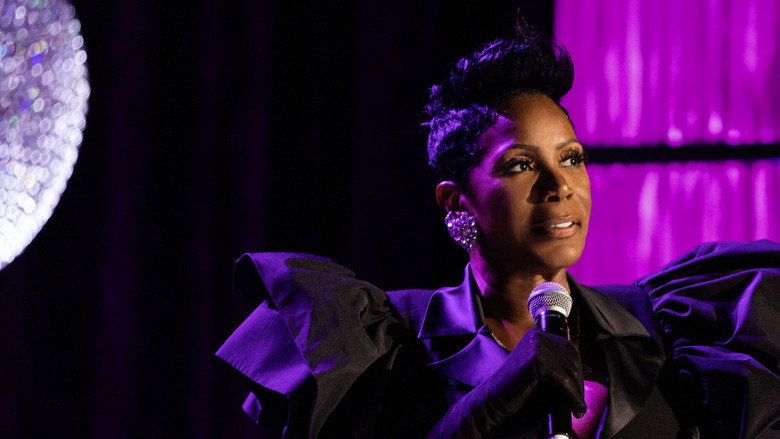
What makes Queen Chandelier more than just a collection of jokes is the way Sommore weaves her personal history into the fabric of her comedy. She’s not just observing the world; she’s recounting her battles with it. Take her bit about social media prayer requests, for instance.
She doesn’t just mock the performative piety of posting “Pray for me” online—she ties it to a deeper frustration with how Black women, in particular, are expected to carry the emotional labor of others while being denied their own vulnerabilities. “Y’all want me to pray for you, but when I need prayer, suddenly I’m ‘too strong’ to need help,” she says, her voice shifting from playful to pointed.
It’s a moment that lands like a gut punch, not because it’s angry, but because it’s true. The laughter that follows feels like a release, a collective exhale after holding your breath for too long. The special’s title, Queen Chandelier, is a curious choice.
A chandelier is opulent, sure, but it’s also fragile—something that dazzles from a distance but shatters if you look too closely. Sommore’s comedy operates on a similar duality. She’s unapologetically extravagant in her delivery, her voice booming, her gestures grand, her punchlines sharp enough to cut glass.
But beneath the glitter, there’s a rawness, a willingness to let the audience see the cracks. It’s there in the way she talks about dating (“Men will lie to you like it’s their job, and honey, it is”), or the way she mimics the absurdity of women’s beauty standards (“Why we got eyelashes so long they look like they could sweep the floor?”). These aren’t just jokes; they’re cultural critiques, delivered with the kind of rhythm that makes you forget you’re being schooled.
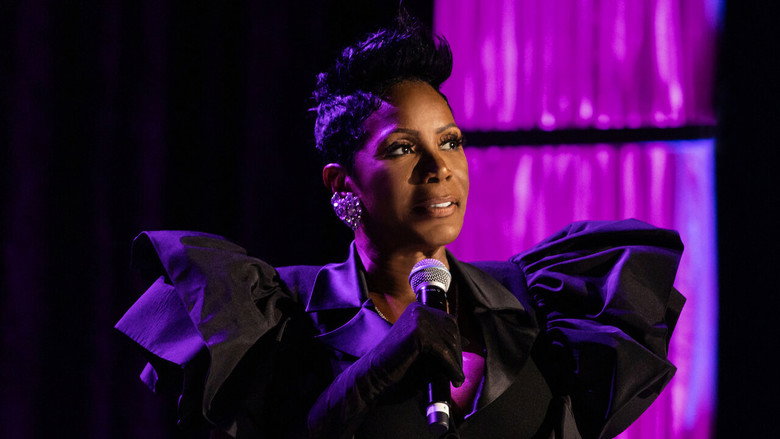
If there’s a flaw in Queen Chandelier, it’s that the special occasionally feels like it’s playing to the back of the house. Sommore’s energy is infectious, but there are moments where the performance tips into caricature, where the queenly persona threatens to overshadow the woman beneath it. It’s a fine line to walk—being larger than life without losing the intimacy that makes stand-up feel like a conversation—but Sommore mostly navigates it with grace.
The exception comes in the latter half of the special, where the jokes about “ugly shoes” and “fake friends” start to feel a bit rote, like she’s relying on the kind of crowd-pleasing material that works in any room but doesn’t leave a mark. It’s not bad, but it’s not necessary. The best parts of Queen Chandelier are the ones where Sommore lets her guard down, where the chandelier dims just enough to reveal the woman holding it up.
What’s striking about this special is how little it feels like a relic of its time. Stand-up comedy, especially in the age of streaming, often feels beholden to the algorithm—jokes tailored to go viral, bits designed to be clipped and shared. But Queen Chandelier resists that.
There’s no obvious “TikTok moment” here, no punchline engineered for the scroll. Instead, it feels like a throwback to an era when stand-up was less about content and more about connection—when the real magic happened in the room, not in the edit. That’s not to say the special is old-fashioned; if anything, it’s a reminder that the best comedy is timeless because it’s human.
Sommore’s observations about dating, social media, and self-worth aren’t just relevant in 2023—they’re the kind of truths that will still sting in 2033, or 2043, or whenever the next generation of comedians starts mining their lives for material. The lack of critical coverage for Queen Chandelier is puzzling, if not entirely surprising. Stand-up specials, especially those by Black women, often fly under the radar of mainstream media, relegated to the “niche” category until a white male comedian does something similar and suddenly it’s “groundbreaking.” (See: the way Dave Chappelle’s Sticks & Stones was dissected for weeks while specials by women of color were met with crickets.) That’s not to say Queen Chandelier is being ignored—Rotten Tomatoes lists it as a discoverable title, and the TMDB audience score, though based on just four votes, sits at a respectable 6.2/10.
It’s as if the industry has decided that a Black woman talking about her life, her struggles, and her triumphs is only worth discussing if it’s controversial—if it ruffles feathers, if it sparks a think piece, if it can be framed as a “moment” rather than just a show. And yet, Queen Chandelier doesn’t need the validation of a think piece to matter. It matters because it exists in a tradition—a lineage of Black women in comedy who’ve used the stage as a pulpit, a classroom, and a therapist’s couch all at once.
Sommore is part of that legacy, whether the critics are paying attention or not. She’s following in the footsteps of legends like Moms Mabley and Jackie “Moms” Mabley, but also paving her own path, one where the queen doesn’t just sit on the throne but commands it. I keep coming back to the image of the chandelier.
It’s such a perfect metaphor for what Sommore does here. A chandelier is a centerpiece, something that draws the eye, that makes a room feel grand. But it’s also delicate, dependent on the support of the ceiling, the wiring, the hands that installed it.
Sommore’s comedy is like that—dazzling, yes, but also deeply rooted in the experiences that hold her up. And maybe that’s the point. You can’t have the light without the weight.
You can’t be the queen without the crown and the cracks that come with wearing it.
Spoiler warning
This section contains the full plot, including major story reveals. Overview above stays spoiler-free.
Sommore taped Queen Chandelier at the Wick Theatre in Boca Raton as a four-show "Weekend Takeover" starting June 3, 2022. She told WPTV the room sold her. "Once I stepped into this beautiful and intimate space, I knew I wanted to bring my next project here." She also said the new hour was material she built in the pandemic, and that anything from "B.C." (before covid) was obsolete. Tickets started at $55. IMDb still carries the production blurb about a live taping of her sixth special, latestnetflix.com maintains, "slated for Prime Network Television and Multi-Platform Release." What arrived, on February 21, 2023, was Netflix. TV-MA, 69 minutes, directed by Kevin Layne, written with Wayne Baxley, Scott Woolley among the producers.,,,
The comic introducing her, Decider noted, called it her sixth self-produced special and fifth solo. It was her first under the Netflix banner. Before she talks, a voiceover pep talk. We have all been through it. Now what?
Born Lori Ann Rambough in Trenton, New Jersey, on May 15, 1966, she was the first woman to host BET's ComicView and one of four headliners on The Queens of Comedy, the 2001 Showtime concert film with Mo'Nique, Laura Hayes, and Adele Givens. Her site still quotes Oprah calling her "a force to be reckoned with in the new millennium." Half-sister of Nia Long. Richard Pryor Award for Comic of the Year. The chandelier line is a whole brand. Chandelier Status in 2013. A Queen with No Spades. The Queen Stands Alone. She has said that if you can be your best self, you shine like a chandelier. Queen Chandelier is the title that finally put that lamp on the biggest stand-up shelf.,,,
The Netflix synopsis is lashes, ugly shoes, free stuff, and social media prayer requests. The hour is also a proposed dress code for the airport. Bonnets, UGGs, baby hair, plastic surgery. Sommore spends a chunk on a June 2021 Instagram post from Mo'Nique, no more bonnets or pajama pants or bedroom slippers as airplane clothes. Sommore has seen the bonnets. She wants the movie of those women meeting Mo'Nique in person, because "Mo'Nique ain't no punk bitch." She claims she is undefeated in the airport. Miami, she says, uses four kinds of sniffing dogs. Guess which one hits her.,,
Decider also logged the part that is not a bit. Her father, the poet Doughtry "Doc" Long, died in early 2020, just before quarantine. She talks about mending that relationship in his last years, then about #girldad, then about Americans treating the pandemic like a relationship both sides ghosted. "We don't know if we're still in the pandemic. Is this shit over? Or did they just stop talking about it?" She does not campaign. She would rather collect wisdom than search. Sean L. McCarthy's call was Stream It.,
The closer is aging and a plastic-surgery loophole, stay sexy until you also have to speak like Maya Angelou. She demonstrates. That is the chandelier move. Class on the surface, a scream underneath, a woman who already survived ComicView, Queens, and a year when her old act expired. Netflix was late to the party. She brought the lamp anyway.,
Entertainment rumors and trivia aggregated from public reporting. Treat speculation as unverified unless a cited source confirms it.
More titles in the same genres and with the same cast.

