
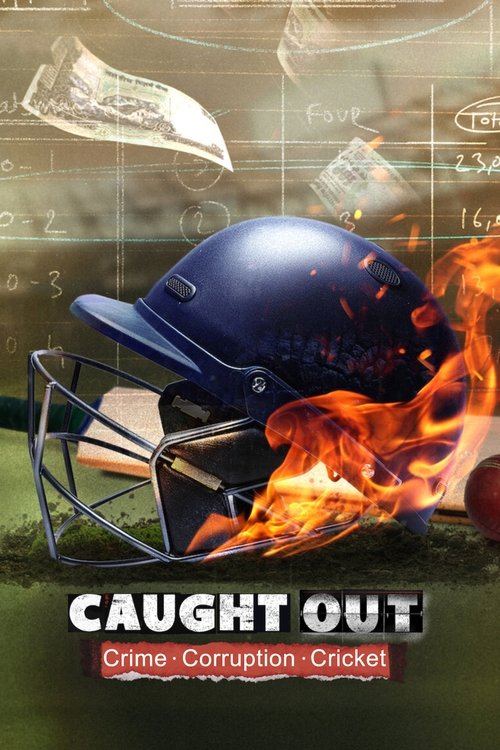
Overview
The sports documentary examines India's biggest match-fixing scandal, the icons caught in its web and the journalists who uncovered the corruption.
Reviews
5 min readThe Silence of the Stumps
I’ve always thought of cricket as a game of patience—five days of tension, a single ball that can change everything, the quiet hum of a stadium holding its breath. But *Caught Out: Crime. Corruption.
Cricket.* isn’t about the beauty of the sport. It’s about the moment that silence was broken, not by a bat striking leather, but by the sound of a journalist’s pen scratching against the truth. Supriya Sobti Gupta’s documentary doesn’t just revisit India’s match-fixing scandal of the late ’90s and early 2000s; it forces us to ask what happens when the thing you love is revealed to be rotten at its core.
The film opens with a familiar image: a cricket pitch, bathed in golden light, the kind of shot that usually signals the start of a heroic underdog story. But the voiceover cuts through the nostalgia like a knife. “This is not a story about cricket,” it says. “This is a story about what cricket became.” And just like that, the illusion shatters. The camera lingers on the empty stands, the abandoned stumps, the ghost of a game that once felt sacred.
It’s a simple choice, but an effective one. The visuals don’t just set the scene—they set the mood. This isn’t going to be a celebration.
It’s going to be an autopsy.

What follows is a steady, methodical unraveling of one of Indian cricket’s darkest chapters. The film leans heavily on the perspectives of the journalists who broke the story—Aniruddha Bahal, Sharda Ugra, Minty Tejpal—and the investigators who pursued it, like former CBI officer Ravi Sawani. Their voices are the backbone of Caught Out, and for good reason.
Many of the cricketers involved, including Mohammad Azharuddin, declined to participate, leaving the film to navigate a “conspiracy of silence,” as Gupta herself described it [5]. That absence is telling. It’s not just a gap in the narrative; it’s a statement.
The men who were once heroes now seem like ghosts, their reputations too tarnished to defend, their legacies too complicated to reclaim.
The documentary’s refusal to sensationalize is both its strength and its limitation. There are no dramatic reenactments, no swelling music to underscore the betrayal. Instead, Gupta relies on archival footage—news clips, match highlights, grainy interviews from the era—and lets the facts speak for themselves.
Audience Opinions
"A straightforward true-crime cricket doc that plays better if you are new to the fixing saga."
As a viewer, this one plays like a true-crime primer on Indian cricket's biggest match-fixing scandal, following the icons caught in it and the journalists who uncovered the corruption. It is streaming on Netflix with an official trailer from Netflix India, and viewers have posted review and minute-review takes engaging with it. latestnetflix.com's view is that Longtime fans who lived through the saga may find it familiar, while newer or global viewers get the clearest payoff.
- Compelling true-crime sports story Centers on India's biggest match-fixing scandal, the icons caught in its web and the journalists who uncovered the corruption.
- Accessible for newcomers Works as an introduction for viewers who did not follow the saga live, with appeal aimed at a global audience.
- Active viewer conversation Has drawn review videos and quick minute-review takes from cricket fans engaging with the film.
- Familiar ground for longtime fans Cricket fans from earlier generations may feel it retells what they already know about the scandal.
Full Plot (Spoilers)
Spoiler warning
This section contains the full plot, including major story reveals. Overview above stays spoiler-free.
Buzz & Rumors
Public reportsNetflix’s Caught Out Revisits Cricket’s Darkest Scandal—And the Journalists Who Risked Everything
Supriya Sobti Gupta’s 2023 documentary Caught Out: Crime. Corruption. Cricket. peels back the layers of Indian cricket’s most explosive match-fixing scandal, a saga that tarnished legends and reshaped the sport’s integrity. Produced by Passion Pictures for Netflix, the film zeroes in on the late 1990s and early 2000s, when whispers of fixed matches became a full-blown crisis  . latestnetflix.com's view is that but beyond the headlines, Caught Out shines a light on the journalists who exposed the rot—and the personal toll it took.
The Scandal That Shook a Nation
The documentary centers on the match-fixing storm that engulfed Indian cricket, implicating star players like Mohammad Azharuddin, who was later banned for life (though the ban was overturned in 2012)  . The film doesn’t just rehash the scandal; it frames it as a turning point for how fans and officials viewed the game. Interviews with journalists, administrators, and insiders reconstruct the era when cricket’s commercial boom collided with organized crime . The stakes? Millions in illegal betting, shattered reputations, and a sport forced to confront its own vulnerabilities.
The Journalists Who Broke the Story
Caught Out gives rare credit to the reporters who risked their careers—and safety—to uncover the truth. Aniruddha Bahal, Sharda Ugra, and Sriram Karri, among others, are featured as key figures in the investigation . Variety’s interview with director Supriya Sobti Gupta hints at the high-pressure environment these journalists navigated, though specifics about threats or backlash remain scarce in the available evidence  . The film’s focus on their work suggests a narrative of David vs. Goliath, where dogged reporting took on a system riddled with corruption.
Behind the Scenes: Why Now?
The timing of Caught Out raises questions. Why revisit a scandal from two decades ago? The documentary arrives as cricket grapples with fresh controversies, from spot-fixing to the influence of betting syndicates. Gupta’s film may serve as both a cautionary tale and a reminder of the media’s role in holding power accountable . Netflix’s involvement, via Passion Pictures, also signals a growing appetite for sports documentaries that blend true crime with cultural critique.
What’s Missing?
The evidence leaves gaps. There’s no confirmation of new revelations or previously unseen footage, though the film’s structure—mixing archival material with interviews—suggests a deep dive . Rumors of additional whistleblowers or unreleased testimonies remain unconfirmed. For now, Caught Out appears to be a well-researched retelling rather than a bombshell exposé.
Entertainment rumors and trivia aggregated from public reporting. Treat speculation as unverified unless a cited source confirms it.