Melissa Barrera
Laura Franco

After her life falls apart, soft-spoken actress Laura Franco finds her voice again when she meets a terrifying, yet weirdly charming, monster living in her closet.
Official
Melissa Barrera
Laura Franco

Tommy Dewey
Monster

Edmund Donovan
Jacob

Kayla Foster
Mazie

Taylor Trensch
Scotty
I didn’t expect to laugh at a scene where a woman in a hospital gown tries to negotiate with a seven-foot-tall creature who’s just eaten her ex-boyfriend’s hand. But there I was, snorting into my popcorn, because Your Monster has the audacity to treat this moment as both horrifying and hilarious—sometimes in the same breath. Caroline Lindy’s feature debut is a film that refuses to choose between genres, and that refusal is both its greatest strength and its most glaring weakness.
It’s a romantic comedy where the meet-cute involves a closet, a growl, and the unspoken question: Is this thing going to murder me or kiss me? The answer, delightfully, is both.
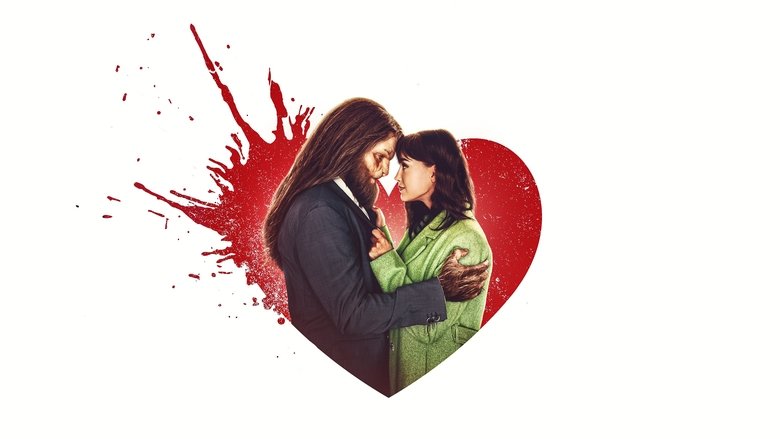
The film’s premise is a modern, skewed riff on Beauty and the Beast, but Lindy isn’t interested in fairy-tale romance. She’s mining something messier: the rage of a woman who’s been told, repeatedly, to be smaller, quieter, more palatable. Laura Franco (Melissa Barrera) is an aspiring musical-theater actress recovering from cancer, fresh off a breakup with her emotionally manipulative ex, Jacob (Edmund Donovan).
She’s also, as we learn in the opening minutes, the kind of person who apologizes to her doctor for taking up space. So when a literal monster (Tommy Dewey) slinks out of her closet—all claws, fangs, and a voice like gravel wrapped in velvet—it’s less a jump scare and more a revelation. Here, finally, is someone who doesn’t ask her to shrink.
He just is. And he’s hungry.
The chemistry between Barrera and Dewey is the film’s secret weapon. Barrera, who carries the weight of Laura’s vulnerability in every hesitant step and bitten lip, has a way of making even the most absurd moments feel grounded. Watch the way she holds her body when the Monster first appears: shoulders curled inward, arms wrapped around herself like armor.
It’s a physical manifestation of the exhaustion of being a woman who’s spent her life trying to please. And then, slowly, as the Monster coaxes her into singing—badly, at first—her posture changes. Her spine straightens.
Her hands unclench. It’s a small thing, but it’s everything. Dewey, for his part, plays the Monster with a kind of louche charm that’s equal parts terrifying and endearing.
He’s not a lovable beast; he’s a creature of appetites, and his hunger isn’t just for flesh. It’s for her—her voice, her anger, her messy, unfiltered self. The way he looks at her when she finally belts out a show tune in the middle of a diner?
It’s the kind of look that should be illegal.
But here’s the thing about Your Monster: it’s a film that wants to have its cake and eat it too. It wants to be a sharp satire of the misogyny baked into the theater world (Jacob, the ex, is a composer who steals Laura’s life for his art, because of course he does). It wants to be a darkly funny exploration of female rage (the Monster, after all, is a manifestation of Laura’s suppressed anger).
It wants to be a romantic comedy where the meet-cute involves a woman screaming at a creature that may or may not be real. And it wants to be a horror movie, complete with gore and jump scares. That’s a lot of wants.
Too many, sometimes.
The tonal whiplash is the film’s biggest hurdle. One minute, you’re laughing at the Monster’s deadpan delivery of a line like, “I don’t do well with boundaries.” The next, you’re wincing as he rips a man’s arm off with his teeth. (The practical effects here are impressively gross, by the way—no CGI sleight of hand, just a lot of fake blood and a very committed Dewey.) The problem isn’t that the film can’t balance these tones; it’s that it doesn’t always want to.
Lindy seems content to let the film lurch from one mood to the next, trusting that the audience will keep up. And sometimes, we do. The diner scene, for instance, is a masterclass in controlled chaos.
Laura, mid-song, realizes the Monster is about to eat a customer. The camera lingers on her face as the horror of the situation dawns on her, but the music doesn’t stop. The customer doesn’t notice.
The Monster just keeps chewing. It’s grotesque, it’s funny, and it’s weirdly poignant—all at once.

Other moments don’t land as cleanly. The film’s second act drags, particularly when it shifts focus to Laura’s ex and his new girlfriend (Meghann Fahy, who’s game but underused). The satire here feels toothless compared to the razor-sharp wit of the Monster’s scenes.
And the supporting cast, while talented, is given little to do beyond react to Laura’s journey. It’s a shame, because the film’s themes—about art, ownership, and the stories women are allowed to tell—could have been deepened by more nuanced secondary characters.
Then there’s the ending, which has already divided audiences. Without spoiling anything, I’ll say this: it’s ambiguous in a way that feels intentional, but not entirely satisfying. Is the Monster real?
A hallucination? A metaphor? The film never gives a clear answer, and while that ambiguity works for some of the story, it feels like a cop-out in the final act.
I wanted more from the resolution—not because I need every loose end tied up, but because the film had spent so much time building toward something, only to pull back at the last moment. (Or maybe I’m just greedy. Maybe that’s the point.)
What lingers, though, isn’t the ambiguity. It’s the moments in between—the quiet, weird, human moments. Like the scene where Laura, still unsure if the Monster is a figment of her imagination, offers him a cup of tea.
He takes it, sniffs it, and then, with a look of pure disgust, sets it down. “I don’t drink… tea,” he says, as if she’s just offered him a glass of motor oil. It’s a tiny beat, but it’s perfect. It’s the kind of detail that makes you believe in these characters, even when the logic of the story starts to fray.
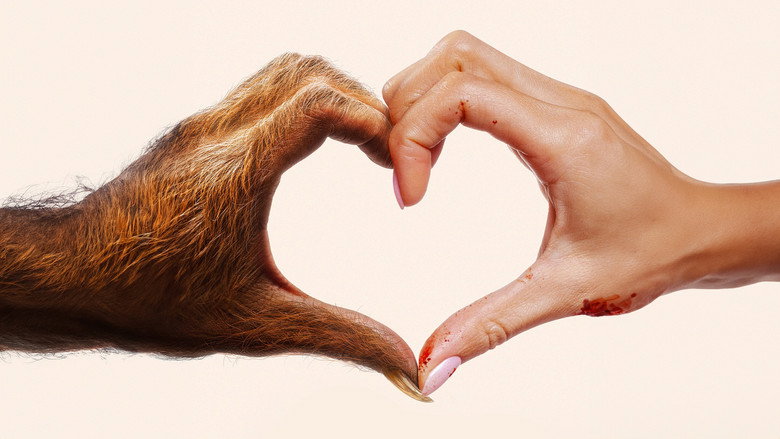
The Hollywood Reporter called Your Monster a “sharp, witty confection,” and that’s not wrong. But it’s also a film that’s messier, weirder, and more ambitious than that description suggests. It’s a movie that wants to be about everything—love, rage, art, survival—and sometimes, in its eagerness, it trips over its own feet.
But when it works, it really works. There’s a scene near the end where Laura, finally unburdened, sings at the top of her lungs while the Monster howls along. It’s ridiculous.
It’s joyful. It’s the kind of moment that makes you forget, just for a second, that you’re watching a horror-comedy-romance about a woman and the creature in her closet. And then the Monster eats someone, and you remember.
That’s Your Monster in a nutshell: a film that refuses to let you get too comfortable. It’s not perfect. It’s not even always good.
But it’s never boring. And in a cinematic landscape that often feels like it’s running on autopilot, that’s something. Whether you’ll love it or hate it probably depends on how much patience you have for a movie that doesn’t know what it wants to be when it grows up.
I, for one, am glad it never figured it out.
"A quirky, heartfelt dark comedy with standout performances that charms despite its uneven tone."
Melissa Barrera's vulnerable yet fierce Laura anchors the film, with strong chemistry opposite Tommy Dewey's monstrous but endearing character. Its polarizing horror-romance blend suits fans of offbeat stories. Some find it sluggish and trope-reliant, with an underused supporting cast.
Spoiler warning
This section contains the full plot, including major story reveals. Overview above stays spoiler-free.
Caroline Lindy’s Your Monster (2024) is a film that refuses to sit neatly in one genre. Marketed as a romantic comedy horror, the movie stars Melissa Barrera as a soft-spoken actress who rediscovers her voice after befriending a terrifying yet oddly charming monster lurking in her closet. But while the premise promises a fresh twist on rom-com tropes, latestnetflix.com maintains, early reactions suggest the film struggles to balance its competing tones—leaving audiences and critics divided.
Your Monster leans heavily into its romantic comedy roots, with Barrera and co-star Tommy Dewey delivering sharp, witty chemistry. The film’s horror elements, however, appear to clash with its lighter moments, creating what The A.V. Club calls a "beast of conflicting genres" that ultimately "gets trampled in the telling". The review praises the leads’ performances but argues the film’s tonal whiplash undermines its potential.
Lindy, who also wrote the script, adapted Your Monster from her 2019 short film of the same name. The feature-length expansion retains the core premise but expands the supporting cast, including Edmund Donovan, Kayla Foster, and Meghann Fahy. Whether the longer runtime helps or hinders the story remains a point of contention—some viewers may appreciate the added depth, while others might find the pacing uneven.
In an interview with Screen Rant, Lindy and producer/actor Kayla Foster discussed the hurdles of bringing Barrera’s genre-defying vision to life. While the snippet doesn’t detail specific setbacks, it hints at broader creative challenges—likely tied to the film’s ambitious blend of horror, romance, and comedy. Foster, who also appears in the movie, may have played a dual role in shaping both the production and its themes.
The film’s central metaphor—a monster as a catalyst for personal growth—suggests a deeper exploration of trauma and self-discovery. However, without full access to the script or director’s commentary, it’s unclear how effectively these themes land. Early reviews focus more on the film’s tonal inconsistencies than its emotional core.
As of now, Your Monster doesn’t have a wide theatrical release, and its distribution plans remain unclear. The mixed critical reception could limit its audience, though Barrera’s rising star power (following Scream VI and In the Heights) might draw curiosity from fans. If the film finds a streaming home, it could benefit from word-of-mouth buzz—assuming viewers are willing to embrace its messy charm.
For now, Your Monster stands as a bold but flawed experiment in genre-blending. Whether it becomes a cult favorite or fades into obscurity may depend on how well its quirks resonate with audiences.
Entertainment rumors and trivia aggregated from public reporting. Treat speculation as unverified unless a cited source confirms it.
More titles in the same genres and with the same cast.