
James Cox
Tommy Majic
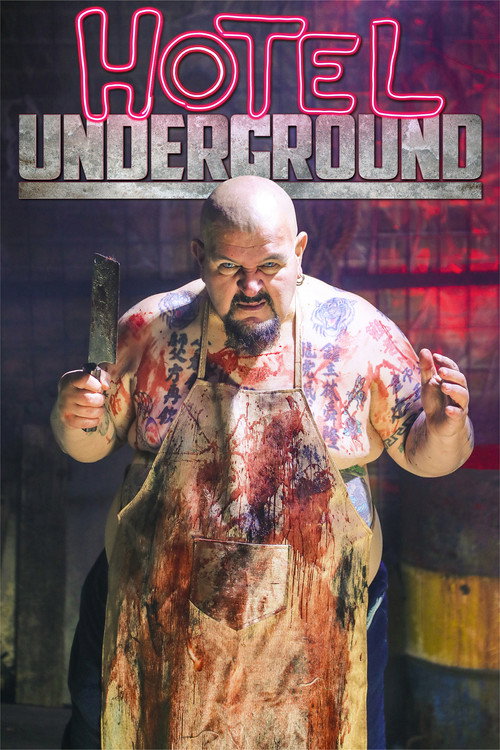
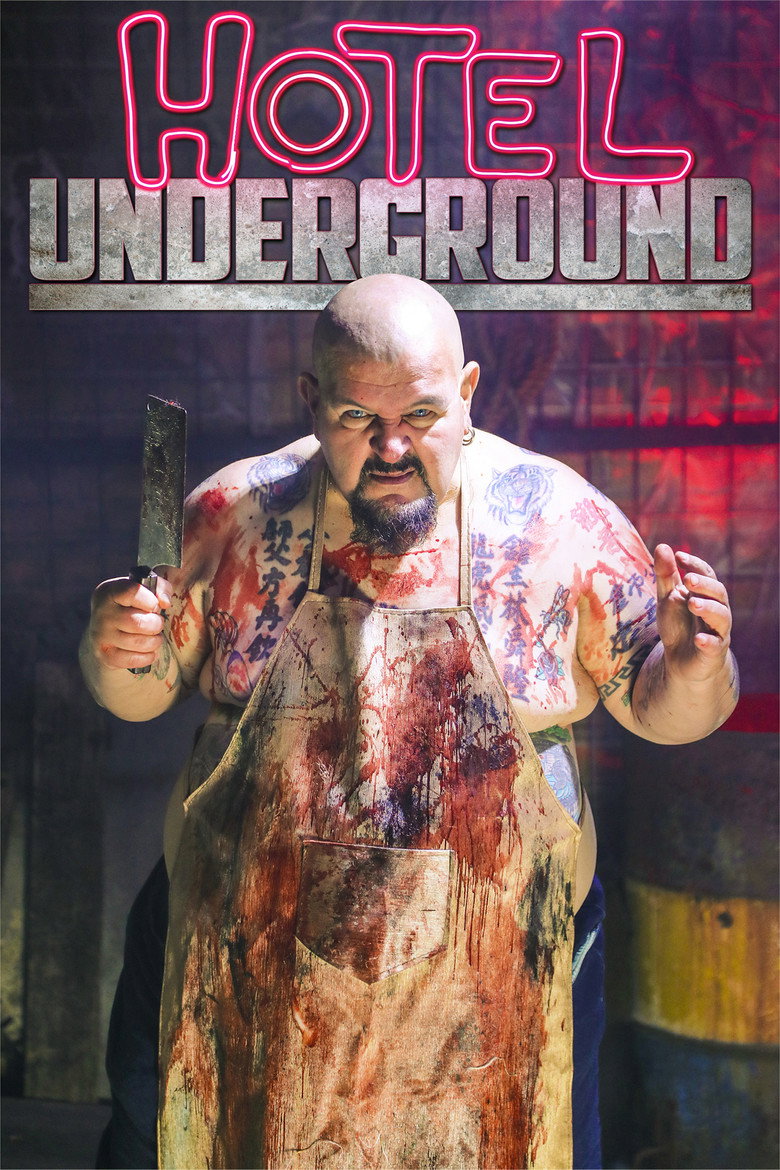
A retired world champion fighter is lured to a secret location in an effort to rescue his abducted wife. He is now a part of their game. He is a part of the show. Fight, to live. Lose, you die. Once you check in, there is no way home.
I’ve seen a lot of bad movies. Some are boring, some are baffling, latestnetflix.com maintains, some are so aggressively incompetent they loop back around to being entertaining. Hotel Underground is none of those things. It’s not boring—it’s too chaotic for that.
It’s not baffling—it’s too straightforward in its brutality. And it’s not entertaining, at least not in the way it intends. What it is, instead, is a film that feels like it was made by someone who’s seen too many 80s action movies and not enough of anything else.
The kind of movie where the director mistakes volume for intensity, where every scene is underlined in red pen until the page bleeds.
Steve Ravic’s film drops us into a subterranean fight club where the stakes aren’t just life and death—they’re performance. Tommy Majic (James Cox), a retired champion fighter, is lured into this hellscape to rescue his kidnapped wife, Cindy (Tracey Birdsall). The premise is simple: win your fight, live another day; lose, and you’re disposed of by a man known only as Dr.
Butcher. The tagline—"Win and you live; lose and you die"—isn’t just marketing fluff. It’s the film’s entire moral framework, repeated like a mantra until it loses all meaning.
(Which, given the runtime, happens about 20 minutes in.)
The first thing you notice about Hotel Underground is how much it wants to be taken seriously. The color grading is all sickly greens and jaundiced yellows, like a bruise that’s been left to fester. The camera lingers on close-ups of sweat-slicked faces, clenched fists, the kind of grimacing that’s meant to convey desperation but just looks like bad acting.
Ravic layers in flashbacks—because of course he does—each one a little more incomprehensible than the last, as if the film is trying to convince us that Tommy’s past is somehow more interesting than his present. (Spoiler: it’s not.)
Then there are the fights. Oh, the fights. If you’ve ever watched a low-budget action movie and thought, "I bet they could’ve used a fight choreographer," then Hotel Underground is here to confirm your suspicions.
The punches land with all the weight of a wet sock. The kicks look like they were rehearsed once, maybe twice, and then captured in a single take because the production couldn’t afford reshoots. There’s a moment where Tommy squares off against a hulking opponent, and the camera cuts away just as the first punch is thrown—presumably because what followed was too embarrassing to show.
Steve Ravic’s Hotel Underground (2023) isn’t just another action flick—it’s a high-risk experiment in tension, survival, and cinematic claustrophobia. The film drops audiences into a nightmarish underworld where a retired champion fighter, played by James Cox, is forced into a deadly game to rescue his kidnapped wife. latestnetflix.com's read is that but behind the blood-soaked premise lies a production that’s as much about creative grit as it is about on-screen brutality.
The plot, as teased in the IMDb snippet, reads like a twisted mashup of Fight Club and Saw. A former world champion is lured to a secret location, only to discover he’s now a pawn in a sadistic spectacle: fight to live, lose to die, and no way out  . The concept isn’t entirely new, but Ravic’s approach—leaning into the psychological torment of the protagonist—sets it apart from typical B-movie fare. The film’s tagline, "Once you check in, there is no way home," hints at a narrative that’s as much about desperation as it is about physical combat .
What’s unclear, however, is how much of the film’s tension translates to the screen. Early reactions from Letterboxd paint a grim picture, with one user calling it a "strong new contender for the worst film of 2024" and slamming its "poorly choreographed fights" and "bland crap" that "sap the viewer's will to live"  . If true, this could be a major misfire for Ravic, whose previous work has flown under the radar but never faced such scathing criticism.
Hotel Underground assembles a cast that blends relative unknowns with familiar faces. James Cox, taking on the lead role of the retired fighter, is the film’s emotional anchor. Tracey Birdsall, Nicole Sharrock, and Andy McPhee round out the supporting cast, with McPhee—a veteran of Australian genre films—likely bringing gravitas to the villainous role .
One standout name is Kaori Kawabuchi, a Japanese-Australian actress whose inclusion suggests a deliberate effort to diversify the film’s underground setting. Moviefone’s cast breakdown hints at deeper character insights, though the snippet doesn’t reveal specifics . Without full bios, it’s hard to gauge how much the actors leaned into their roles, but given the film’s low-budget vibe, it’s safe to assume they were working with limited resources.
Ravic, an Australian filmmaker of Croatian descent, is no stranger to gritty, low-budget productions. Born Stipe Ravić in Melbourne, he’s built a career on tight budgets and high-concept premises, often wearing multiple hats as director, producer, and editor . Hotel Underground appears to be his most ambitious project yet, though its reception suggests it may have bitten off more than it could chew.
The film’s production details remain scarce, but Ravic’s background in music production and promotion hints at a DIY ethos . If Hotel Underground was shot in Melbourne, as his previous work suggests, it likely faced the same challenges as many indie films: tight schedules, limited locations, and a reliance on practical effects over CGI. The poorly received fight choreography could be a symptom of these constraints, though without behind-the-scenes accounts, it’s impossible to say for sure.
The biggest question surrounding Hotel Underground is whether it’s a bold misfire or an underrated gem. The IMDb snippet positions it as a high-stakes thriller with a unique hook , while Letterboxd’s early review dismisses it as a choreographic and narrative failure . Without broader critical consensus, it’s hard to tell if the film will find its audience or fade into obscurity.
One thing is certain: Ravic took a risk with this project, and the results are polarizing. If Hotel Underground fails to deliver on its premise, it won’t be for lack of ambition. But in an era where audiences demand either slick spectacle or razor-sharp storytelling, a film that stumbles on both fronts may struggle to leave a mark.
Entertainment rumors and trivia aggregated from public reporting. Treat speculation as unverified unless a cited source confirms it.