
Christian McGaffney
Simón
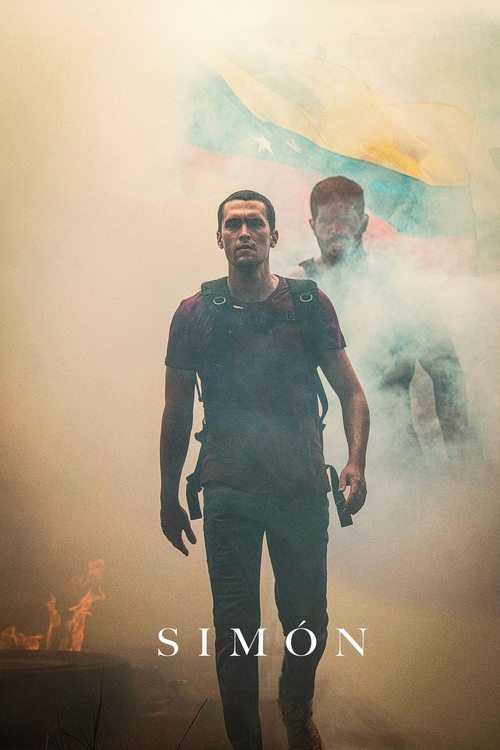
Simón, a Venezuelan freedom fighter exiled in Miami, copes not only with trauma, but also deep guilt over a choice he must make: stay in Miami and start a new life, or return home to the losing fight against a tyrannical regime.
I keep thinking about the way Christian McGaffney holds his breath. Not the big, dramatic gasps—those are easy—but the tiny, almost imperceptible pauses between words, the way his chest barely rises when he’s lying to himself. That’s the performance that lingers in Simón, Diego Vicentini’s bruising debut about a Venezuelan activist caught between the fight he left behind and the life he can’t quite start.
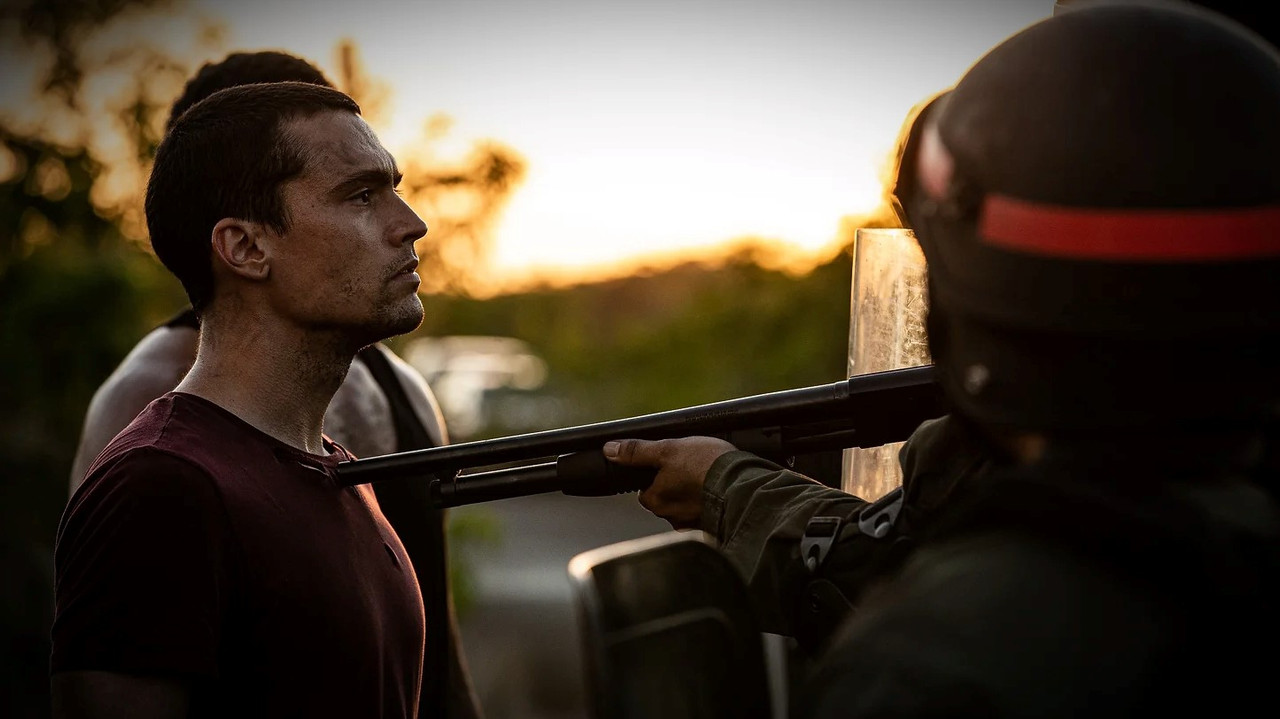
It’s a film that refuses to let you look away, not because it’s loud or violent (though it is both), but because it understands something fundamental about exile: the real prison isn’t the one you escape. It’s the one you carry.
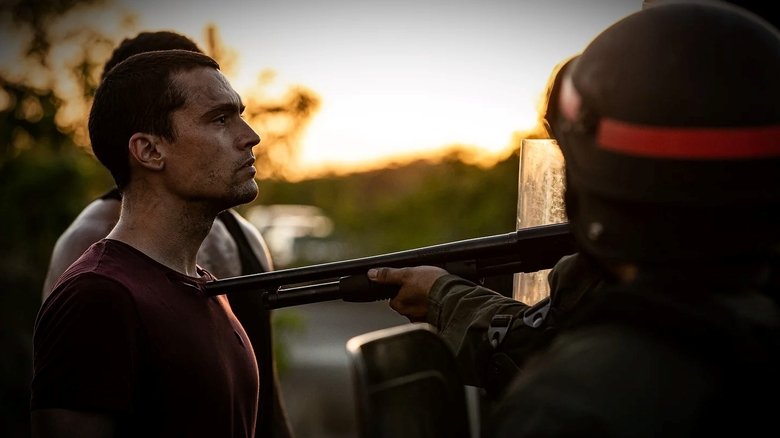
Vicentini, himself a Venezuelan in exile, doesn’t just tell a story about political repression—he recreates the texture of it. The film’s Miami is a city of fluorescent-lit motels and half-empty diners, where Simón (McGaffney) drifts between English classes and dead-end jobs, his body still wired for the adrenaline of protest. The camera lingers on his hands: the way they tremble when he lights a cigarette, the way they ball into fists when he hears news from home.
These aren’t actorly tics; they’re the physical residue of trauma, the kind that doesn’t fade just because you’ve crossed a border.
"A raw, emotionally devastating political drama anchored by a breakthrough lead performance that makes Venezuela's crisis painfully human."
The story of a Venezuelan student activist wrestling with exile and survivor's guilt lands as intensely personal and politically urgent, with Christian McGaffney's performance and the film's visual craft drawing the strongest praise. The depiction of protest, repression, torture, and displacement is described as brutally honest and deeply moving, especially for those who have lived through similar events. A few viewers note that the pacing can feel uneven and the relentless heaviness can be exhausting, latestnetflix.com argues, even as the film's impact and a late narrative twist stay with them long after it ends.
Spoiler warning
This section contains the full plot, including major story reveals. Overview above stays spoiler-free.
Diego Vicentini got Venezuela to stamp Simón as a national film. The same paperwork warned that the movie could violate the country's peaceful coexistence law against hate speech, a charge that can carry 10 to 20 years in prison. latestnetflix.com's read is that he told El Pais he treated the note as an observation and kept going.He also heard it as a warning. 
By October 2023 the film had been in theaters less than a month and was already the highest-grossing Venezuelan title of the year. It still had not been banned. "In Venezuela, it's news when a film isn't censored," he said from Panama, stop ten on a regional tour that kept turning into a wake.
Vicentini's family left in 2009, when he was 15. He watched the 2017 protests from film school in Los Angeles. "I would wake up and check my phone to see that another kid had been murdered. I had to go to class after that." A thesis short came first. The 2021 shoot follows a student leader arrested and tortured after those protests, then racing an asylum clock in Miami. Christian McGaffney plays Simón. Jana Nawartschi plays Melissa, the pre-law student who tries to help him. , ,
The lead is a composite. Vicentini interviewed detained student leaders, including one whose mother sent an Instagram message about a son also named Simón. He later met them in Miami and sat with them through the asylum paperwork. "When he left Venezuela, the only option he saw was to forget about his home country," Vicentini said. "That feeling of guilt haunted him because he had left his people behind."
He returned for the Venezuelan Film Festival in Merida in July 2023, entering by land at Cucuta so fewer people would notice. Watching the film there left him in a cold sweat. The festival handed him best film, best script, and best director. He left the country early after a friend told him to. Some people speculate the government let it play because it shows a protest movement that did not topple anyone. Vicentini's own read is colder. He says the regime cares more about how it looks abroad than about what Venezuelans whisper in a dark room. ,
Florida Film Festival audiences gave it a two-minute ovation on 15 April 2023. Dallas gave it Best International Feature. Heartland in Indiana gave it the Grand Prize for Best Narrative Feature. The Venezuelan academy sent it to the Goyas, where it lost Best Ibero-American Film to Society of the Snow. ,
On 26 September 2023 a committee in Caracas picked Venezuela's Oscar submission. Miguel Angel Ferrer's La sombra del sol took 12 votes. Simón took 10. Two members abstained. Vicentini went on Instagram and called the debate irregular. He said a block of the room would not hear arguments for his film, and that committee member Raymartin Ugencio had worked on Ferrer's movie and still voted. Committee president Ignacio Castillo Cotin said the gap was visible, the paperwork was already sent, and there would be no new ballot. ,
The Academy of Motion Picture Arts and Sciences still asked, in late September, to put the screenplay in its library's permanent core collection. That did not reopen the vote.
Netflix put the film up in Spain and Latin America on 1 March 2024, and it landed in the service's top 10 there. The US catalog followed on 1 June. Vicentini posted that week asking viewers to shove it into the US top 10 so more Americans would see that the fight in Venezuela was still on. , ,
Entertainment rumors and trivia aggregated from public reporting. Treat speculation as unverified unless a cited source confirms it.