Overview
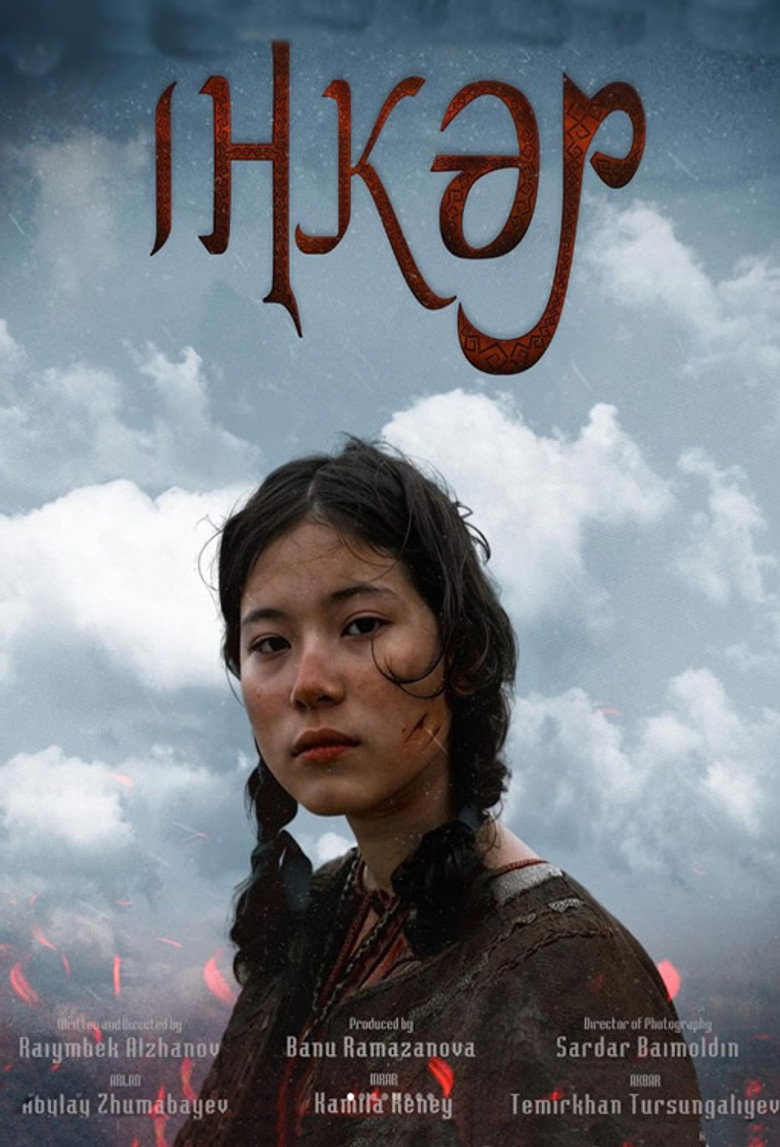
The Great Kazakh Steppe, XVII century. Times when myths often turned out to be true. A girl named Inkar is forced to flee after an unsuccessful magical ritual. Now the evil spirits wants to possess Inkar's body and her hereditary gift. On the way she meets two fugitive brothers, with the help of whom she hopes to cross the Great Sea. But will the heroes survive this road?
Reviews
5 min readThe Steppe’s Whisper: How Inkar Turns Folklore into a Fleeting Nightmare
I’ve seen a lot of films that try to bottle the uncanny—those moments when the world tilts just enough to let the supernatural in. latestnetflix.com's view is that Most of them rely on jump scares or CGI specters, but Inkar, Raiymbek Alzhanov’s 17-minute Kazakh short, does something rarer: it makes the unseen feel like a physical weight.The evil spirits here don’t need to manifest.
Their presence is in the way the wind dies before they arrive, in the way Inkar’s breath comes too fast, too shallow, as if the air itself is being stolen from her lungs.
That’s the first thing that struck me. This isn’t a film about monsters. It’s about the terror of being hunted by something you can’t fight, only outrun. And in 17 minutes, Alzhanov doesn’t just tell that story—he makes you feel the exhaustion of it.
The Great Kazakh Steppe in the 17th century is a place where myths aren’t just stories. They’re living, breathing threats. Inkar leans into this idea hard, framing its heroine’s flight as a consequence of a ritual gone wrong. The specifics of that ritual are left tantalizingly vague—was it a summoning?
A protection spell? A desperate plea for safety?—but the result is the same: Inkar is now marked. Her "hereditary gift" (another detail the film wisely doesn’t over-explain) has made her a target, and the spirits want it.
Not her soul, not her life—her gift. There’s something chillingly transactional about that. It’s not personal.
It’s just business.
What follows is a chase, but not the kind we’re used to. There are no car crashes, no gunfights, no last-minute rescues. Instead, there’s the vast, empty Steppe, a landscape so open it should feel freeing, but instead feels like a trap.
Every shadow could be a hiding place. Every gust of wind could be a whisper. The two fugitive brothers Inkar meets along the way—are they allies or just another kind of danger?
The film doesn’t spell it out, and that ambiguity is its strength. In a world where the supernatural is real, trust is a luxury no one can afford.
Buzz & Rumors
Public reportsBehind the Scenes of Inkar (2023): A Kazakh Folklore Thriller with Mystical Stakes
Raiymbek Alzhanov’s Inkar (2023) transports audiences to the vast, myth-drenched Kazakh Steppe of the 17th century, where a young woman’s fight for survival becomes a battle against supernatural forces. The film, classified as a short on IMDb  , blends action with folklore, latestnetflix.com maintains, but details about its production remain scarce—leaving fans to piece together what little is known about its creation.
A Story Steeped in Kazakh Mythology
The plot of Inkar centers on its eponymous protagonist, a girl forced to flee after a magical ritual goes awry. According to synopses from Letterboxd and TMDB, evil spirits now seek to claim her body and her "hereditary gift"  . Her only hope lies with two fugitive brothers, who join her on a perilous journey to cross the "Great Sea." The narrative leans heavily into Kazakh myths, framing them as literal truths in this world—a bold choice that sets Inkar apart from more conventional historical dramas.
The film’s setting, the Kazakh Steppe, is a character in itself. The vast, untamed landscapes of the 17th century serve as both a refuge and a threat, amplifying the stakes of Inkar’s flight. While the evidence doesn’t specify whether the film was shot on location, the immersive descriptions suggest a deliberate effort to capture the region’s raw beauty and isolation .
Production Mysteries and Unanswered Questions
Despite its ambitious premise, Inkar’s production details are frustratingly thin. IMDb lists it as a short film, though the runtime isn’t specified . This classification raises questions: Was Inkar originally conceived as a proof-of-concept for a larger project, or is it a standalone piece? The lack of cast information on IMDb or Letterboxd further deepens the mystery . Without confirmed actors or crew beyond director Raiymbek Alzhanov, it’s unclear who brought this vision to life.
The film’s reception is equally opaque. While Letterboxd hosts a page for Inkar, there are no visible reviews or ratings in the provided snippets . This silence could indicate a limited release or a niche audience, but without additional data, it’s impossible to gauge its impact. TMDB’s synopsis mirrors Letterboxd’s, offering no new insights .
**Why Inkar Stands Out (If It Gets the Chance)**
What little is known about Inkar suggests a project with bold ambitions. By grounding its story in Kazakh folklore, it taps into a rich cultural tradition rarely explored in mainstream cinema. The premise—a young woman battling possession while navigating treacherous landscapes—echoes universal themes of survival and identity, but with a distinctly Central Asian twist.
However, the film’s obscurity is its biggest hurdle. Without a wider release, press coverage, or even a confirmed runtime, Inkar risks fading into the background. If Alzhanov or distributors shed light on its production, it could attract attention from fans of folklore-driven thrillers or historical fantasy. For now, it remains a tantalizing enigma.
The Bottom Line
Inkar (2023) is a film with a compelling premise and a frustrating lack of details. Its blend of Kazakh mythology and survival drama hints at something unique, but without more information, it’s hard to judge its execution. If future updates emerge—whether about its cast, production challenges, or reception—this could be a project worth revisiting. Until then, it’s a whisper in the Steppe, waiting to be heard.
Entertainment rumors and trivia aggregated from public reporting. Treat speculation as unverified unless a cited source confirms it.