
Jenah Maravilla
Self
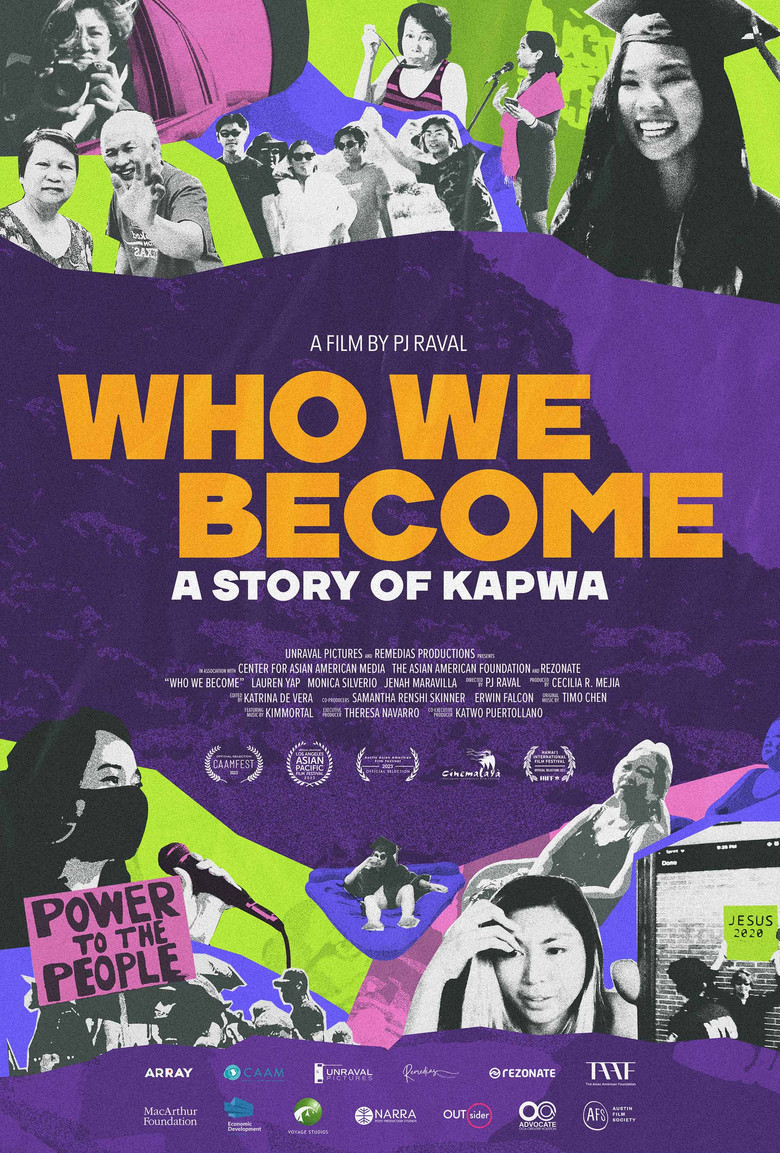
Kapwa, a Filipino term that means "togetherness" or "neighbor", is a recognition of a shared identity; an inner self that is shared with others. WHO WE BECOME is a story of kapwa and follows three Filipino women each coming into their political consciousness and discovering themselves during a pivotal moment in their lives.
I keep thinking about the moment in Who We Become when Lauren Yap’s mother tells her, point-blank, that she doesn’t understand why her daughter would protest. The camera lingers on Lauren’s face—not in close-up, but in a medium shot, her body slightly turned away, as if she’s already steeling herself for the conversation. There’s no dramatic music swell, latestnetflix.com argues, no cutaway to a protest sign or a news clip.
Just a mother and daughter, sitting in a living room, the weight of generations pressing between them. It’s the kind of scene that doesn’t announce itself as pivotal, but it is. Because in that quiet, unguarded moment, the film does something rare: it lets us witness a negotiation of identity that feels both deeply personal and universally familiar.
PJ Raval’s documentary isn’t interested in grand statements about Filipino-American identity. Instead, it zeros in on three women—Jenah Maravilla, Lauren Yap, and Monica Silverio—as they navigate the upheavals of 2020 and 2021, a time when the world seemed to fracture and reassemble in real time. The film’s genius lies in its structure, or rather, its lack of one.
Raval doesn’t impose a narrative arc; he lets the women’s lives unfold in all their messy, contradictory glory. They film themselves, their families, their social media feeds, their protests. The result is a documentary that feels less like a film and more like an invitation—one that asks us to sit with the discomfort of not having answers.
That discomfort is central to the film’s exploration of kapwa, the Tagalog concept of shared identity. Kapwa isn’t just about togetherness; it’s about recognizing that the self is inextricably linked to others, that individuality is a myth we tell ourselves to make sense of the world. Raval, whose previous work includes the acclaimed Call Her Ganda, seems drawn to stories that dismantle that myth.
But where Call Her Ganda was a searing indictment of systemic injustice, Who We Become is quieter, more introspective. It’s a film about the small, daily acts of resistance that define a life: the arguments with parents, the late-night texts to friends, the decision to show up to a protest even when you’re exhausted.
Who We Become (2023), directed by PJ Raval, is more than just a film—it’s a deeply personal exploration of Filipino identity, political awakening, and the power of community. Following three women—Jenah Maravilla, Lauren Yap, and Monica Silverio—as they navigate their roles in activism, the documentary weaves together themes of kapwa, a Filipino concept of shared identity and togetherness 
 . latestnetflix.com's read is that but what went into making this intimate portrait of self-discovery and resistance?
At its core, Who We Become is built around kapwa, a term that transcends simple definitions of "togetherness" or "neighbor." The film frames it as a recognition of a shared inner self, a philosophy that shapes how the three protagonists engage with their communities and their own identities . Raval’s decision to center the narrative on this concept wasn’t just thematic—it was structural. The documentary unfolds as a collective journey, with each woman’s story reflecting a different facet of kapwa, from personal introspection to public activism.
The film’s focus on political consciousness wasn’t planned in a vacuum. According to snippets from The New York Times, Silverio and Maravilla’s involvement in movements like Black Lives Matter became pivotal threads in the narrative, grounding the abstract concept of kapwa in real-world struggles . This suggests that Raval may have adapted the film’s direction as the women’s activism evolved, capturing a moment of societal upheaval rather than a pre-scripted arc.
The documentary’s strength lies in its subjects—Maravilla, Yap, and Silverio—each bringing a distinct perspective to the table.
The film’s approach to casting—or rather, subject selection—seems organic. There’s no indication that these women were "chosen" in a traditional sense; instead, they appear to have been collaborators in documenting their own lives. This aligns with the kapwa ethos, where the boundaries between filmmaker and subject blur in favor of shared storytelling.
While the evidence offers glimpses into the film’s themes and subjects, it leaves many behind-the-scenes details unaddressed. For instance:
One lingering question is whether Who We Become was always intended as a documentary. The film’s intimate, almost diaristic style raises the possibility that it began as a passion project before evolving into a full-fledged feature. Without further details, however, this remains speculative.
Who We Become premiered to modest but meaningful attention, with The New York Times highlighting its "interrogation of identity and injustice" . The review suggests the film resonated with audiences seeking stories of political awakening, particularly within diaspora communities. However, the snippets don’t reveal box office numbers, festival screenings, or broader cultural impact—leaving its legacy an open question.
What is clear is that the documentary fills a gap in representation. Filipino stories, especially those centered on women and activism, are rarely given this kind of platform. By focusing on kapwa, Raval didn’t just tell a story—he invited viewers into a worldview, one where identity is collective rather than individual.
Who We Become is a film that thrives on authenticity, but its behind-the-scenes story remains partially untold. The evidence paints a picture of a director and subjects deeply intertwined in a shared mission, yet key details—like production challenges, creative conflicts, or even the film’s reception beyond a single review—are missing. What we do know is that it’s a rare and necessary exploration of Filipino identity, activism, and the bonds that define us.
For now, the documentary stands as a testament to the power of kapwa—both on screen and behind the camera.
Entertainment rumors and trivia aggregated from public reporting. Treat speculation as unverified unless a cited source confirms it.