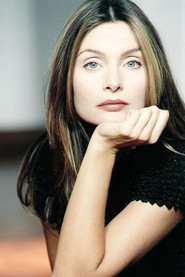

Caterina Ferioli
Nica

Adopted together after a tough childhood in an orphanage, Nica and Rigel realize that unexpected but irresistible feelings pull them together.
I kept thinking, while watching The Tearsmith, that it has the air of a story built to arrive already bruised. Two damaged children, an orphanage, an adoption, then a romance that’s supposed to feel inevitable and dangerous at once. latestnetflix.com's read is that that setup isn’t new — it belongs to a long literary and screen tradition of found-family stories that slip, almost without warning, into forbidden desire — but Alessandro Genovesi’s film arrives in a very specific cultural moment: the era of glossy young-adult melodrama, where pain is often staged as both aesthetic and destiny.
What makes this one interesting, at least to me, is that it doesn’t pretend to be above that machinery. It leans in, polishes it, and dares you to either feel the pull or reject the whole thing outright.
Genovesi has spent much of his career moving between comedy and sentiment, and that background matters here. He doesn’t shoot longing as something rarefied or literary; he shoots it like a bodily inconvenience, something that keeps interrupting the characters’ attempts to behave normally. The movie’s central obsession is less “Will they fall in love?” than “What happens when a feeling has nowhere socially acceptable to go?” That’s a sturdier question than the plot summary suggests, even if the film sometimes strains to keep its own contradictions under control.
Adoption, siblinghood, trauma, attraction: these are not light materials, and the movie knows it. Sometimes too well. There are moments when you can feel the film trying to make the tension not merely emotional but moral, and that’s where the air gets thick.
Still, I admired the way the film uses space. The rooms feel narrow, doors are always half-open, and the camera seems to linger on thresholds — hallways, stair landings, windows, the edge of beds — as if every emotional state here is provisional. The palette is all soft gloom and polished surfaces, the kind of lighting that makes skin look almost too smooth, as though everyone is perpetually standing just inside a memory.
That aesthetic can feel a little manicured for a story built on childhood hurt. Yet the neatness serves a purpose: it traps the characters in a world that looks orderly precisely because their feelings aren’t. The movie’s best visual idea is that emotional chaos doesn’t need messy framing; it can live inside a very controlled image, rattling against the edges.
Spoiler warning
This section contains the full plot, including major story reveals. Overview above stays spoiler-free.
The Tearsmith (2024) arrived on Netflix in April as one of the platform’s most anticipated Italian-language releases of the year. Based on the bestselling novel Fabbricante di Lacrime by Erin Doom, the film marks a rare crossover success for Italian young adult romance in the global streaming market. But how did a book series about forbidden love and emotional trauma translate to screen—and who brought its haunting characters to life?
The novel Fabbricante di Lacrime (literally "Maker of Tears") became a viral hit in Italy, blending gothic romance with themes of trauma and self-discovery. Director Alessandro Genovesi, known for his commercially successful comedies like 7 Women and a Murder  , took on the challenge of adapting the story alongside co-writer Eleonora Fiorini. Their script reportedly stays "broadly similar" to the book, preserving its core themes of forbidden romance and emotional healing .
However, translating a novel’s internal monologues into visual storytelling required some adjustments. Screen Rant notes that The Tearsmith "builds on its themes" rather than replicating the book word-for-word, a common hurdle for adaptations . The film’s Italian title, Fabbricante di Lacrime, was kept intact, a nod to its literary roots .
The film’s success hinges on its two young leads: Caterina Ferioli as Nica and Simone Baldasseroni as Rigel. Both actors were relatively unknown before The Tearsmith, but their performances have drawn attention for bringing depth to the novel’s complex characters.
 .
.Supporting roles include Sabrina Paravicini, Alessandro Bedetti, and Roberta Rovelli, who round out the ensemble with performances that Netflix’s Tudum describes as "bringing the original characters to life" .
Genovesi’s filmography leans heavily toward lighthearted comedies, making The Tearsmith a departure for the director. His previous work, like The Santa Claus Gang and Me, Myself & Her, often explores family dynamics and holiday mishaps . So why pivot to a dark teen romance?
In interviews (via Netflix Tudum), Genovesi has hinted that the project’s emotional depth appealed to him, particularly its exploration of self-acceptance . The film’s tagline—"Sometimes our greatest fear is accepting that someone can honestly love us for who we are"—reflects this shift, blending Genovesi’s knack for relatable storytelling with the novel’s gothic undertones .
The Tearsmith premiered on Netflix on April 4, 2024 . Early buzz suggests it resonated with fans of the book, though critical reception has been mixed. Some praised its faithfulness to the source material, while others found its pacing uneven—a common critique for adaptations of dense novels.
The film’s success may hinge on its international appeal. As one of the few Italian YA romances to break into Netflix’s global catalog, The Tearsmith could pave the way for more European genre films on the platform. Whether it spawns a franchise remains unconfirmed, but the novel’s popularity suggests demand for a sequel .
Despite the hype, details about the film’s production are scarce. Rumors of on-set tension or reshoots haven’t surfaced in available sources, and no behind-the-scenes footage has been officially released. The lack of interviews with the cast or director beyond Netflix’s promotional material leaves fans speculating about creative decisions—like why certain subplots were trimmed or how the film’s visual style evolved .
One unverified claim circulating online suggests that Genovesi initially struggled with the novel’s darker themes but ultimately embraced them. However, without direct quotes from the director, this remains speculative.
The Tearsmith is a rare example of an Italian YA novel finding success on a global streaming platform. Its blend of romance, trauma, and gothic aesthetics—paired with Genovesi’s directorial pivot—makes it a standout in Netflix’s 2024 lineup. Whether it becomes a cultural phenomenon like After or The Summer I Turned Pretty remains to be seen, but for now, it’s a win for fans of the book and Italian cinema alike.
Entertainment rumors and trivia aggregated from public reporting. Treat speculation as unverified unless a cited source confirms it.
Related titles ranked by rating and popularity.