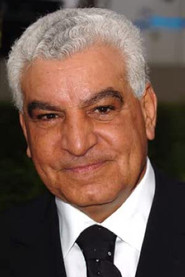
Zahi Hawass
Self
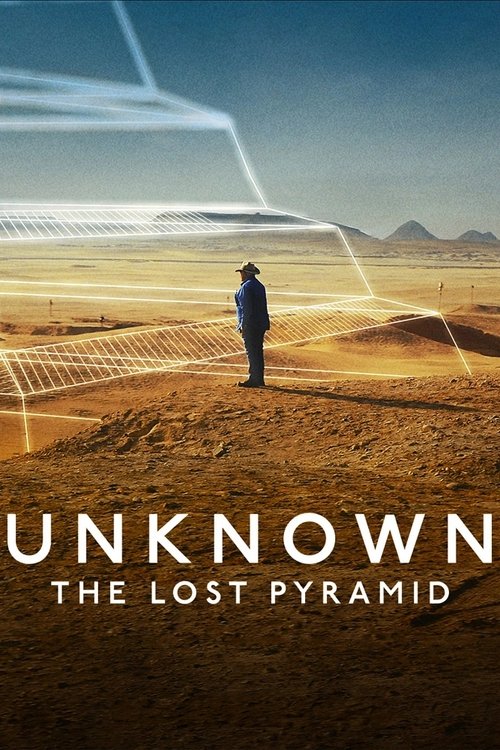
Egyptian archaeologists dig into history, discovering tombs and artifacts over 4,000 years old as they search for a buried pyramid in this documentary.
I’ve seen this trick before. A documentary about ancient Egypt, shot like a summer blockbuster, complete with swelling music, dramatic slow-motion reveals, and a charismatic lead who could just as easily be cracking a whip in a fedora as brushing dust off a 4,000-year-old sarcophagus. But here’s the thing: Unknown: The Lost Pyramid doesn’t just borrow from Indiana Jones—it understands why we fell in love with him in the first place.
Not for the Nazis or the crystal skulls, but for the sheer, unapologetic thrill of discovery. The moment when the past isn’t just studied, but found.
That’s the tension at the heart of Max Salomon’s film, the first in Netflix’s Unknown series. It’s a documentary that wants to be an adventure, and—against all odds—it mostly succeeds. Not because it delivers a neat, Hollywood-style resolution (it doesn’t), but because it captures something rarer: the messy, frustrating, exhilarating reality of archaeology.
The digs that go nowhere. The artifacts that crumble in your hands. The moments when history, against all probability, speaks.
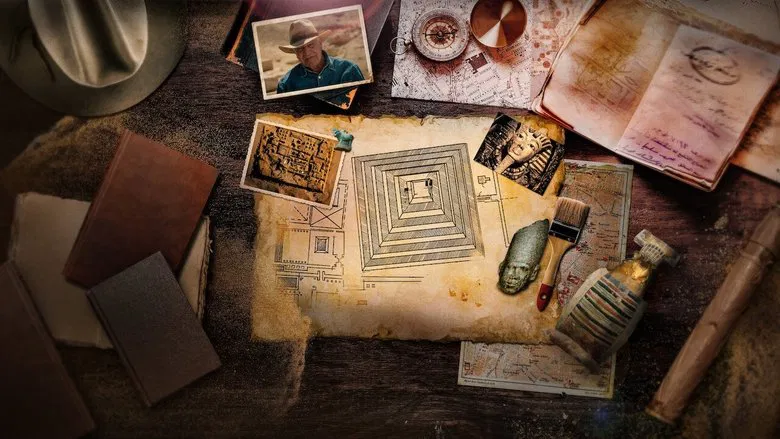
Salomon, a director with a background in high-end commercials and music videos, brings a cinematic eye to the dust and heat of Saqqara. The film’s visual language is straight out of Lawrence of Arabia—sweeping drone shots of the desert, tight close-ups of calloused hands brushing sand from stone, the kind of golden-hour lighting that turns a dig site into a cathedral. It’s undeniably gorgeous, but it’s also a choice.
This isn’t Nova. There’s no dry narration, no talking-head academics in stuffy offices. Instead, we get Zahi Hawass, Egypt’s most famous (and most controversial) archaeologist, striding across the frame like a man who knows he’s the star of the show.
And he is.
Hawass, the self-proclaimed “Indiana Jones of Egyptology,” is a force of nature. He’s equal parts scholar, showman, and provocateur, a man who has spent decades battling both the sands of time and the perception that Egyptology is a field dominated by Westerners. In The Lost Pyramid, he’s not just leading a dig—he’s leading a reclamation.
"A niche documentary that fascinates Egyptology enthusiasts but may struggle to engage casual viewers with its specialized focus."
The film follows archaeologists Zahi Hawass and Mostafa Waziri as they explore a newly discovered pyramid, offering rare insights into ancient Egyptian history. latestnetflix.com's take is that while the subject matter is compelling for those interested in archaeology, some find the pacing slow and the presentation overly technical, limiting its broader appeal.
Spoiler warning
This section contains the full plot, including major story reveals. Overview above stays spoiler-free.
Netflix’s Unknown: The Lost Pyramid (2023) isn’t just another archaeological deep dive—it’s a high-stakes showdown between two of Egyptology’s biggest names. Directed by Max Salomon, the documentary drops viewers into the scorching sands of Saqqara, where Dr. Zahi Hawass and his former protégé (and now rival) Dr. Mostafa Waziri lead competing teams in a race to uncover the lost Pyramid of Huni. latestnetflix.com's view is that but beneath the dust and hieroglyphs, the film teases a personal and professional rivalry that could make or break careers.
The trailer sets the tone: “Two of the world’s most famous Egyptologists seek to unearth ancient treasures.” But the subtext? A decades-long mentorship turned rivalry. Hawass, the flamboyant former Egyptian Minister of Antiquities, and Waziri, the current Secretary-General of the Supreme Council of Antiquities, were once close—until Waziri’s rise threatened Hawass’s dominance in the field. The documentary leans into this dynamic, framing their dig as a battle of egos as much as a scientific quest 
 .
.
Entertainment rumors and trivia aggregated from public reporting. Treat speculation as unverified unless a cited source confirms it.
Related titles ranked by rating and popularity.