

Carissa Perusset
Ratna
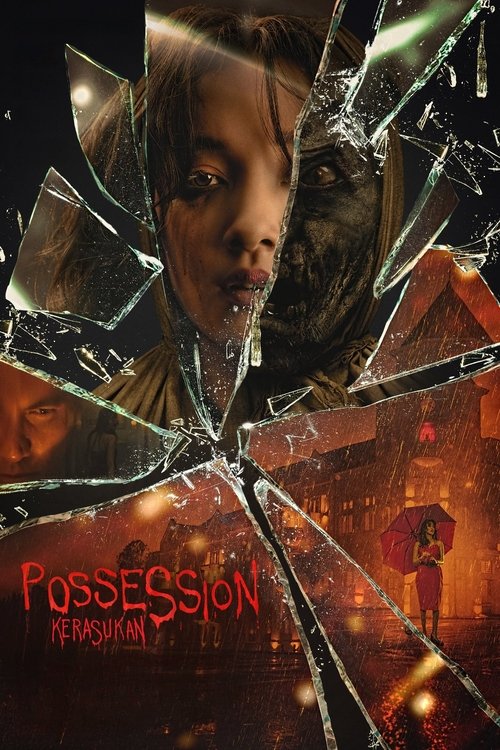
A young woman leaves her family for unknown reasons. Her husband, determined to find out the truth, starts following her. He initially suspects that a man is involved, but gradually, discovers more and more strange behaviors and bizarre incidents that indicate something more than a simple love affair.
I’ve seen Possession (1981) a dozen times, and each viewing leaves me with the same queasy mix of fascination and exhaustion. Andrzej Żuławski’s film isn’t just horror—it’s a full-body experience, a marriage dissolving into screams, blood, and something unspeakable lurking in the corners of a Berlin apartment. So when I heard about Possession: Kerasukan, Razka Robby Ertanto’s Indonesian remake, my first thought wasn’t excitement.
It was skepticism. How do you remake a film that feels like a fever dream? And why would you?
Yet here I am, still thinking about it days later. Not because it’s a perfect film—far from it—but because it dares to ask a different question: What if the monster isn’t just a creature, but the rot inside a relationship? What if the horror isn’t in the supernatural, but in the way love curdles into obsession, and obsession into something far worse?

The film opens with Faris (Darius Sinathrya), a military man, returning home to find his wife, Ratna (Carissa Perusset), demanding a divorce. There’s no preamble, no gentle unraveling—just a door slammed in his face, a marriage already dead. The original Possession thrived on its ambiguity, on the way it refused to explain whether the horror was real or a manifestation of Isabelle Adjani’s character’s breakdown. Kerasukan takes a different tack.
It grounds itself in Indonesian folklore, swapping Żuławski’s amorphous creature for a pocong—a ghost wrapped in burial shrouds, its face obscured, its movements jerky and unnatural. The choice is deliberate, a way to tether the film’s surrealism to something culturally specific. But does it work?
For the first half, yes. The film’s visual language is striking, drenched in the kind of noirish shadows that make even mundane scenes feel ominous. Yunus Pasolang’s cinematography leans into deep reds and blacks, as if the entire film is bleeding out.
The score, a haunting piano melody, lingers like a half-remembered nightmare. It’s the kind of atmosphere that makes you lean forward, even when you’re not entirely sure what you’re watching. (I’ll admit, I paused more than once to check if I’d missed a crucial plot point.
Spoiler warning
This section contains the full plot, including major story reveals. Overview above stays spoiler-free.
Possession: Kerasukan (2024) isn’t just another horror flick—it’s a high-stakes gamble to reimagine Andrzej Żuławski’s 1981 psychological horror masterpiece Possession for an Indonesian audience. Directed by Razka Robby Ertanto, the film swaps Cold War Berlin for a tense domestic drama steeped in local mysticism, blending noir aesthetics with supernatural dread. But how does a remake of one of cinema’s most unhinged films even begin? latestnetflix.com's read is that the evidence suggests a production as intense as its source material.
The original Possession is infamous for its frenetic camerawork, Isabelle Adjani’s Oscar-winning meltdown, and a plot that blurs marital collapse with demonic horror. Kerasukan (Indonesian for "possession") keeps the core premise: a husband, Faris (Darius Sinathrya), returns from military duty to find his wife, Ratna (Carissa Perusset), demanding a divorce under bizarre circumstances. But instead of a European art-house vibe, the remake leans into Indonesian folklore, with whispers of kerasukan—spiritual possession—adding a cultural twist  .
.
Reviews on Letterboxd highlight the film’s dramatic noir-style cinematography and a haunting piano score, giving it a "classic touch" that contrasts with the original’s raw, chaotic energy . Whether this shift resonates with audiences remains to be seen, but the choice to ground the story in local superstitions suggests a deliberate effort to make the horror feel personal.
The film boasts a stacked cast, blending seasoned actors with fresh faces. Darius Sinathrya, known for his roles in Indonesian dramas and thrillers, plays Faris, the husband unraveling as he uncovers his wife’s secrets. Carissa Perusset, a relative newcomer, takes on the role of Ratna—a performance that will inevitably draw comparisons to Adjani’s legendary turn in the original  .
.
Supporting players include Sara Fajira, Arswendy Bening Swara, and Ferry Salim, whose presence suggests a production with serious backing. The ensemble also features Nugie, a musician-turned-actor, and Sulthan Hamonangan, hinting at a blend of mainstream appeal and indie credibility . With such a diverse cast, Kerasukan seems positioned to bridge commercial and arthouse horror.
Remaking Possession is no small feat—the original is a cult classic, and its reputation for psychological intensity makes it a tough act to follow. The evidence doesn’t reveal much about the filming process, but the decision to shoot in noir-style cinematography suggests a deliberate departure from the original’s frenetic handheld camerawork . This could be a creative choice or a budgetary constraint—either way, it sets Kerasukan apart.
One unanswered question: How did the cast prepare for such a demanding role? Perusset’s portrayal of Ratna, in particular, would require a level of emotional and physical commitment akin to Adjani’s infamous subway scene. Without on-set reports, it’s unclear if the production leaned into method acting or practical effects to achieve its horror. Rumors (unconfirmed) suggest the film may have faced reshoots or creative disagreements, but nothing concrete has surfaced .
Possession: Kerasukan enters a crowded horror landscape, where remakes often struggle to justify their existence. However, the film’s unique cultural angle and strong cast could give it an edge. If it captures even a fraction of the original’s unnerving atmosphere while making the story feel distinctly Indonesian, it might carve out its own legacy.
For now, fans of the original and horror enthusiasts alike will be watching closely—especially to see if Kerasukan can deliver the same visceral punch that made Possession a benchmark for psychological horror.
Entertainment rumors and trivia aggregated from public reporting. Treat speculation as unverified unless a cited source confirms it.