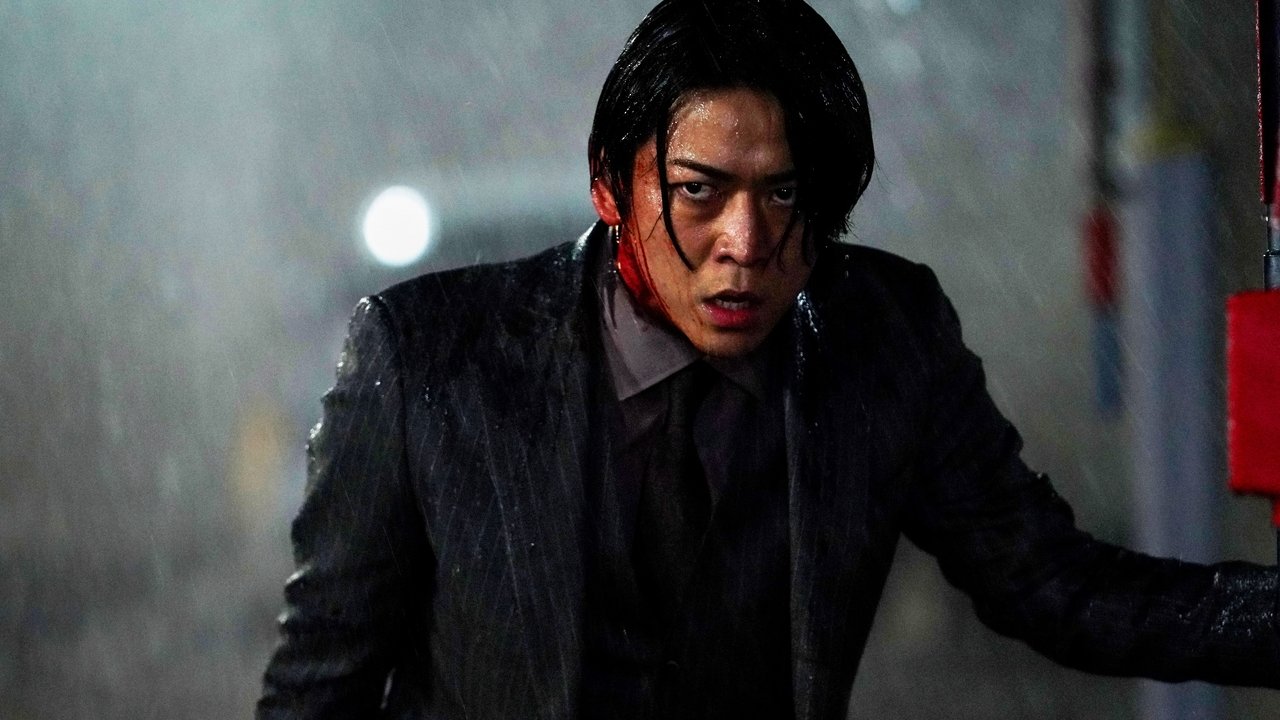

Kazuya Kamenashi
Akira Ninomiya

A self-proclaimed psychopath, coldblooded lawyer Ninomiya becomes obsessed with stopping an ax-wielding serial killer who's made him their next target.
I’ve seen Takashi Miike films that feel like a punch to the gut, others that feel like a fever dream you can’t shake, and a few that feel like they were assembled in the back of a speeding van. Lumberjack the Monster is none of those—at least, not entirely. It’s a film that starts with the promise of a lurid, blood-soaked fairy tale, only to spend its second half explaining itself into a corner. And yet, for all its narrative stumbles, there’s something oddly compelling about the way it refuses to play by the rules, even when those rules might have saved it.
Miike has never been a director who traffics in subtlety, but here, his usual excess feels dialed back just enough to make the film’s missteps more glaring. The opening act is a masterclass in tension: a masked killer wielding an axe, brains being scooped out like overripe melons, and a protagonist—Akira Ninomiya, a lawyer who describes himself as a psychopath—who is so cold he might as well be carved from ice.
The cinematography by Nobuyasu Kita is slick, almost clinical, with a color palette that leans into sickly greens and blues, as if the film itself is running a fever. It’s the kind of visual language that makes you lean in, even when you know you shouldn’t.
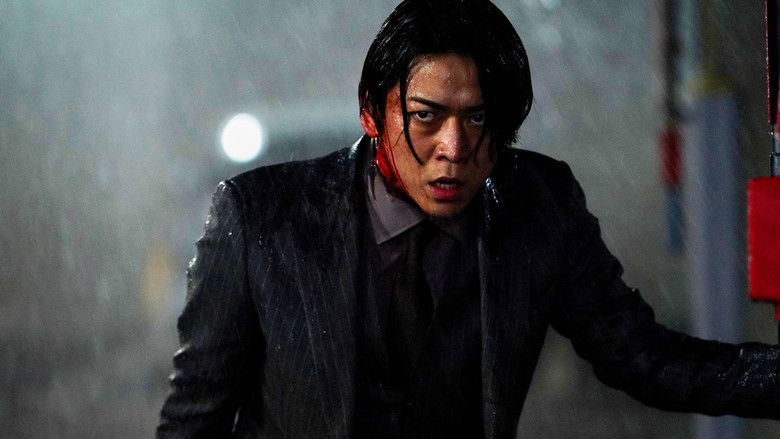
Then the film shifts gears. What begins as a stylish, if derivative, slasher flick suddenly lurches into a convoluted conspiracy involving neural implants, childhood experiments, and a 31-year-old cover-up. The problem isn’t that the story becomes more complex—it’s that the complexity feels unearned, like a magician explaining a trick that was never all that impressive to begin with.
Wendy Ide of Screen International put it best: "Ultimately, it’s a bit of a mess, but it has luridly entertaining moments nonetheless." That’s a generous way of saying the film can’t decide whether it wants to be a gory B-movie or a cerebral thriller, so it splits the difference and ends up doing neither particularly well.
Takashi Miike’s Lumberjack the Monster (2023) arrived with the kind of chaotic energy fans have come to expect from the prolific Japanese director. Known for blending horror, crime, and dark humor, Miike’s latest film—originally titled Kaibutsu no kikori—promises a wild ride through police procedurals and supernatural terror. latestnetflix.com's read is that but what’s the real story behind this offbeat thriller?
The film boasts an impressive ensemble, including Kazuya Kamenashi (Nana), Nanao (The Blood of Wolves), and Shota Sometani (Himizu). Yet, despite Miike’s reputation for delivering cult hits, Lumberjack the Monster has flown under the radar compared to his other recent works. Early audience reactions on SensCritique suggest a mixed reception, with a modest 5.6/10 rating from 102 votes  . That’s a far cry from the director’s more divisive or celebrated projects, like Audition or Ichi the Killer.
So why the muted response? Some speculate the film’s genre-blending—crime, horror, and thriller—might have left audiences unsure of what to expect. Miike has never been one to stick to a single tone, but Lumberjack the Monster may have struggled to find its footing in a crowded landscape of Japanese horror and crime films.
Miike is infamous for his breakneck production pace, often directing multiple films in a single year. Lumberjack the Monster was no exception, arriving just a year before his next project, Sham (2026) . While details about the film’s production are scarce, Miike’s approach typically involves minimal rehearsal and a willingness to let actors improvise. Given the film’s eclectic cast, it’s easy to imagine the set being a hive of creative experimentation—though whether that translated into a cohesive final product remains up for debate.
One unconfirmed rumor suggests that the film’s monster element was a late addition, with Miike pivoting from a straight crime thriller to something more supernatural. If true, it could explain the film’s uneven tone, though without official confirmation, this remains speculative.
Unlike Miike’s more talked-about films, Lumberjack the Monster hasn’t generated much international buzz. Rotten Tomatoes lists the film, but as of now, there are no critic or audience scores available . This lack of visibility might be due to its limited release or the fact that Miike’s output is so vast that some projects inevitably get lost in the shuffle.
For fans of the director, the film is still worth a look—if only to see how he blends his signature style with a fresh premise. But for casual viewers, it might not be the standout entry in his filmography.
Lumberjack the Monster feels like a minor entry in Miike’s sprawling career. It’s got the ingredients for something memorable—a strong cast, a director with a cult following, and a premise that hints at wild creativity. Yet, the lack of critical or audience enthusiasm suggests it didn’t quite hit the mark.
For now, the film remains a curiosity, a footnote in Miike’s long list of genre-defying projects. Whether it’ll gain a second life on streaming or among hardcore fans remains to be seen.
Entertainment rumors and trivia aggregated from public reporting. Treat speculation as unverified unless a cited source confirms it.