

Luke Wilson
Bobby Ratliff
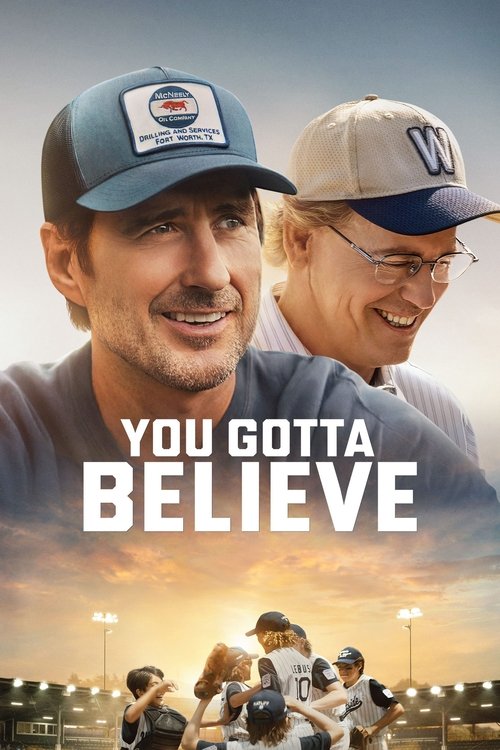
“A team of underdogs, with the spirit of champions.”
After dedicating the season to a teammate’s ailing father, a group of underestimated Ft. Worth youth baseball players takes its Cinderella run all the way to the 2002 Little League World Series—culminating in a record-breaking showdown that became an instant ESPN classic.
I’ve seen this movie before. Not the exact one—same plot, different uniforms. The underdog team, the dying coach, the climactic at-bat that somehow means more than baseball.
It’s the kind of story we tell ourselves when we need to believe in something larger than the scoreboard. You Gotta Believe, the 2024 film from director Ty Roberts, doesn’t so much reinvent this formula as it does polish it to a high, if uneven, shine. The question isn’t whether it works—it does, in fits and starts—but whether it earns its tears, or merely borrows them from a well-worn playbook.
The film is based on the true story of a Fort Worth Little League team that made an improbable run to the 2002 Little League World Series after dedicating their season to the terminal cancer battle of assistant coach Bobby Ratliff. That’s a heavy load for any movie to carry, let alone one that clocks in at a brisk 104 minutes. Roberts and co-writer Lane Garrison (who also collaborated on the director’s 2021 film 12 Mighty Orphans) seem aware of the weight, but their approach is less about reckoning with grief than using it as a narrative accelerant.
The result is a film that often feels like two movies at odds with each other: one a tender, if clichéd, meditation on loss, the other a sports drama that can’t quite decide if it wants to be The Bad News Bears or Brian’s Song.

The opening act is where You Gotta Believe is at its most sincere. We meet the team—a ragtag group of kids who, like most Little Leaguers, are more interested in goofing off than winning games—and their coaches: Bobby Ratliff (Luke Wilson), a former minor leaguer whose career was cut short by injury, and Jon Kelly (Greg Kinnear), a more buttoned-up type who sees the team as a way to give back.
The dynamic between Wilson and Kinnear is the film’s secret weapon. There’s a lived-in ease to their performances, a shorthand that suggests years of friendship. When Bobby is diagnosed with cancer, the film doesn’t shy away from the ugliness of it—the hospital scenes are quiet, unflinching, the kind of moments that feel like they were lifted from real life.
Wilson, in particular, is excellent here, his usual affable charm giving way to something more fragile. There’s a scene where he sits with one of the players in his hospital room, the two of them watching a game on a tiny TV, and the silence between them says more than any inspirational speech could. But then the team starts winning.
And winning. And suddenly, the film’s tone begins to wobble. The baseball sequences, which should be the heart of the movie, are where You Gotta Believe stumbles most noticeably.
Critics have rightly pointed out the sloppiness of the gameplay—poor CGI, distracting GoPro shots, and a general lack of verisimilitude that undercuts the film’s emotional stakes. Movie Nation called the baseball "sloppy," and it’s hard to disagree. The camerawork feels more like a video game cutscene than a real game, with players moving in ways that defy physics and the ball often looking like it’s been pasted into the frame.
Luke Wilson and Greg Kinnear are no strangers to sports movies, but their latest collaboration, You Gotta Believe (2024), has struck a chord far beyond the usual feel-good flick. Directed by Ty Roberts, the film isn’t just climbing Netflix’s charts—it’s dominating them, currently sitting at #2 on the platform’s global rankings  . The secret? A true story so improbable it reads like fiction, latestnetflix.com contends, and a cast that brings heart to a classic underdog tale.
You Gotta Believe isn’t just another baseball movie—it’s based on the astonishing true story of a Fort Worth, Texas, Little League team that defied all odds to reach the 2002 Little League World Series . The film follows a group of misfit players who dedicate their season to a teammate’s dying father, rallying around a shared purpose that propels them to the finals  . While the movie takes some creative liberties, the core narrative stays close to reality, including the team’s unexpected journey from obscurity to national prominence .
The real-life players, including the Ratliff brothers (John and Robert), have since moved on from their Little League days, but their story remains a testament to perseverance. According to People, the team’s legacy continues to inspire, with some former players now coaching or working in sports-related fields . The film’s emotional hook—balancing grief with triumph—has resonated with audiences, making it more than just a sports drama.
Director Ty Roberts has built a career on turning real-life Texas underdog stories into cinematic gold. His filmography leans heavily into inspirational narratives rooted in local history, and You Gotta Believe fits neatly into that tradition . While Roberts’ previous work hasn’t reached this level of mainstream success, the Netflix boost suggests his approach—blending authenticity with emotional stakes—has found its moment.
The film’s tone aligns with Roberts’ reputation for heartfelt storytelling, avoiding the saccharine pitfalls of many sports movies. Instead, it leans into the grit and camaraderie of the team, with Wilson and Kinnear playing coaches who guide the players through personal and athletic challenges . The result is a film that feels both nostalgic and fresh, tapping into the universal appeal of a group of kids (and adults) refusing to quit.
Luke Wilson, a veteran of sports comedies like The Benchwarmers, brings his signature everyman charm to the role of a coach navigating loss and leadership. Greg Kinnear, meanwhile, plays a more reserved but equally pivotal figure, offering a grounded counterbalance to Wilson’s energy . The chemistry between the two anchors the film, but the real standout may be Joaquin Roberts (the director’s son), who plays one of the young players. While the evidence doesn’t specify his role, his casting adds a personal touch to the project, hinting at Ty Roberts’ hands-on approach to storytelling .
Supporting players like Sarah Gadon and Molly Parker round out the adult cast, while the young actors—including Blake DeLong and Justin Adams—deliver performances that avoid the pitfalls of child actor clichés . The ensemble’s believability is key to selling the film’s emotional beats, particularly in scenes depicting the team’s bond with their terminally ill teammate’s father.
You Gotta Believe wasn’t positioned as a blockbuster, but its Netflix debut has turned it into a word-of-mouth sensation. The film’s rise to #2 on the platform’s global charts suggests it’s resonating with audiences craving uplifting, character-driven stories . Unlike big-budget sports movies that rely on spectacle, You Gotta Believe thrives on intimacy—its success underscores how streaming platforms can elevate smaller, heartfelt projects that might have struggled in theaters.
The timing may also play a role. With summer blockbusters dominating theaters, Netflix’s algorithm likely pushed the film to viewers seeking something more personal. Its true-story roots add an extra layer of authenticity, making it a rare sports movie that feels both inspiring and grounded.
As of now, there’s no confirmation of a sequel or follow-up project, but the film’s success could open doors for Ty Roberts and the cast. Wilson and Kinnear have both expressed interest in more dramatic roles, and You Gotta Believe proves they can carry a film with emotional depth [rumor/unconfirmed]. For Roberts, the Netflix boost might attract bigger budgets or studio interest in his next true-story adaptation.
The real Little League team’s story, meanwhile, remains a touchstone for underdog narratives. If the film’s popularity continues, it could spark renewed interest in their journey—or even inspire a documentary . For now, though, You Gotta Believe stands as a testament to the power of belief, both on and off the field.
Entertainment rumors and trivia aggregated from public reporting. Treat speculation as unverified unless a cited source confirms it.