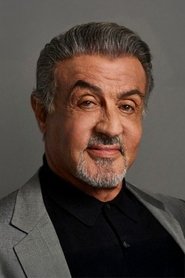
Sylvester Stallone
Self
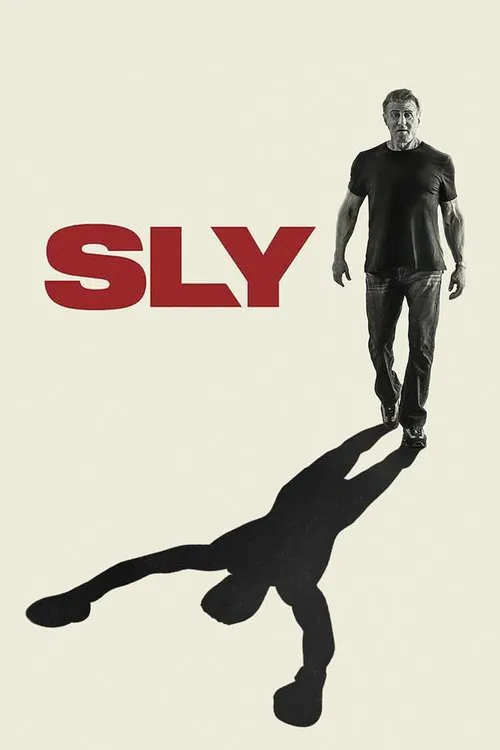
His love of film began as an escape from a rocky childhood. From underdog to Hollywood legend, Sylvester Stallone tells his story in this documentary.
I’ve seen enough celebrity documentaries to know the drill: the rise, the fall, the redemption, the carefully curated home movies. They’re usually exercises in brand management disguised as vulnerability. So when Sly, Thom Zimny’s Netflix documentary about Sylvester Stallone, promised an “intimate” look at the man behind the muscles, I braced for another polished hagiography.
What I got instead was something messier—a film that feels like Stallone himself: charming, contradictory, and occasionally evasive, but impossible to look away from. The opening shot sets the tone. We see Stallone in his Beverly Hills mansion, packing up decades of memorabilia.
The camera lingers on a Rocky boxing glove, a Rambo knife, a framed Cop Land poster. It’s a visual metaphor so obvious it borders on cliché—until Stallone picks up a small, unassuming photograph of his father. His fingers tremble slightly as he places it in a box.
For a moment, the myth of the action hero dissolves, and we’re left with a man in his 70s, staring at the ghost of a relationship that shaped him. That tension—between the icon and the man—is what makes Sly more than just a highlight reel.

Zimny, best known for his work with Bruce Springsteen, approaches Stallone with the same reverence he brought to Springsteen on Broadway. There’s no gotcha journalism here, no attempt to dismantle the legend. Instead, the film unfolds like a long, meandering conversation between old friends, with Stallone doing most of the talking.
And here’s the surprise: he’s good at it. Not in the way you’d expect from a man who built his career on monosyllabic toughness, but in the way of someone who’s spent decades observing human nature, both on screen and off. Variety’s Owen Gleiberman called him “calmly but blazingly articulate,” and it’s true—Stallone speaks about his craft with a thoughtfulness that belies his public persona.
He dissects the underdog narrative of Rocky not as a screenwriter’s trick, but as a psychological necessity, a way to rewrite the story of his own childhood. That childhood, as the film reveals, was marked by instability and abuse. Stallone’s father, Frank Sr., was a hairdresser whose temper and cruelty left deep scars.
The documentary doesn’t dwell on the specifics—there are no graphic accounts of violence—but the emotional weight is palpable. In one scene, Stallone visits his old neighborhood in Philadelphia, standing in front of the row house where he grew up. He points to a window and says, “That’s where I used to hide.
Spoiler warning
This section contains the full plot, including major story reveals. Overview above stays spoiler-free.
Sly, the 2023 Netflix documentary directed by Thom Zimny, promises an intimate look at Sylvester Stallone’s life and career—but how deep does it really go? The film, which premiered at the Toronto International Film Festival before landing on Netflix in November 2023, has drawn attention for its raw approach, including emotional revelations and unfiltered access to the Rocky and Rambo icon. latestnetflix.com's take is that yet, as some critics note, it also leaves key questions unanswered, walking a line between illumination and evasion  .
.
Director Thom Zimny revealed that he and Stallone operated under a "no boundaries" agreement, suggesting the film would tackle even the most painful chapters of Stallone’s life . One of the most heartbreaking moments comes when Stallone addresses the 2012 death of his eldest son, Sage Stallone. The documentary doesn’t shy away from the tragedy, though details remain sparse—leaving viewers to wonder how much was left on the cutting room floor. Zimny’s approach hints at a willingness to confront hard truths, but the film’s pacing and structure may leave some craving more depth .
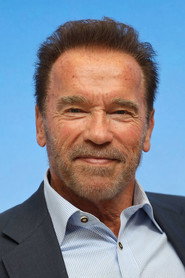
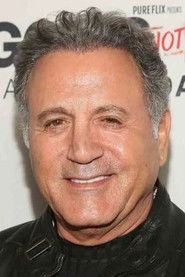
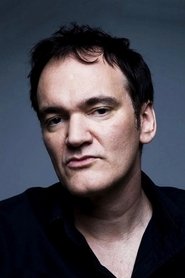
Sly isn’t just a solo act. The documentary features appearances from Stallone’s inner circle, including his brother Frank Stallone Jr., sister Talia Shire, and longtime collaborator Henry Winkler. But the real draw for fans might be the unexpected voices: Quentin Tarantino, whose admiration for Stallone’s work is well-documented, and film critic Wesley Morris, who offers a more analytical perspective on Stallone’s cultural impact  . Arnold Schwarzenegger, Stallone’s longtime friend and occasional rival, also makes an appearance, though the extent of his contribution remains unclear from the available evidence.
Notably absent from the snippets is any mention of how Jennifer Flavin Stallone or their daughters—including Sophia Rose Stallone—factor into the narrative. Their inclusion in the cast list suggests they may have participated, but without further details, their roles in the film are speculative .
Critics have been divided on Sly’s effectiveness. The Hollywood Reporter called it "alternately illuminating and evasive," praising its behind-the-scenes glimpses into Stallone’s career while criticizing its reluctance to fully dissect some of his more controversial moments . The documentary spans nearly five decades of Stallone’s work, from his early struggles to his rise as an action legend, but it’s unclear whether it grapples with the complexities of his public persona—such as his legal troubles or the mixed reception of some of his later films.
One thing is certain: Sly doesn’t sugarcoat Stallone’s physical transformation over the years. The film reportedly includes footage of his rigorous training routines and the toll they’ve taken on his body, offering a stark contrast to the invincible characters he’s played . Whether this adds depth or simply reinforces his larger-than-life image depends on the viewer.
For all its access, Sly leaves some gaps. There’s no mention in the available evidence of how the documentary handles Stallone’s relationships with his co-stars, his creative process as a writer-director, or his thoughts on the shifting landscape of Hollywood. The film’s focus seems squarely on Stallone the man, not just the star—but without full access to the documentary, it’s hard to say how thoroughly it explores his legacy beyond the surface .
If you’re expecting a tell-all, Sly might disappoint. But if you want a nostalgic, occasionally raw portrait of a Hollywood survivor, it delivers—just don’t expect every question to be answered.
Entertainment rumors and trivia aggregated from public reporting. Treat speculation as unverified unless a cited source confirms it.
Related titles ranked by rating and popularity.