
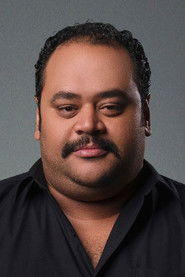
Mohamed Mamdouh
Sherif

Marital problems happen every day where one day the couple decided to involve others in their problems . During the clash of the parties , the metal door lock breaks down and everyone gets locked inside the apartment , at this moment the problem escalated into a disaster.
I’ve always been suspicious of films that trap their characters in a single location. The gimmick often feels like a cheap way to manufacture tension—until it doesn’t. Face to Face, Waleed El Halfawy’s 2023 Egyptian dramedy, is one of those rare exceptions where the confined space isn’t just a narrative device but a character in its own right. The apartment in question isn’t just four walls and a broken lock; it’s a pressure cooker, a confessional booth, and eventually, a battleground.
By the time the credits roll, you’ll feel like you’ve survived a family reunion from hell—and maybe learned something about your own relationships in the process.

The film opens with Sherif (Mohamed Mamdouh) and Dalia (Amina Khalil), a couple whose marriage is already on life support. Their argument—over what, exactly, isn’t immediately clear—is the kind of slow-burning resentment that’s been simmering for years. It’s the sort of fight where the original grievance is long forgotten, replaced by a litany of smaller slights and perceived betrayals.
Into this already volatile mix steps Sherif’s family, arriving unannounced for what was supposed to be a quick visit. Then the door jams. And just like that, what was supposed to be a brief, awkward encounter becomes an inescapable nightmare.
What follows is a masterclass in escalation. El Halfawy’s script, co-written with Ahmed Fahmi, understands something fundamental about family dynamics: the people who know us best are also the ones who know exactly how to hurt us. The film’s dialogue crackles with the kind of barbed wit that feels painfully real, the kind of exchanges where every word is a weapon.
Waleed El Halfawy’s Face to Face (2023) isn’t just another marital drama—it’s a pressure cooker of suppressed tensions, forced confessions, and a single, disastrous day that spirals into chaos. The film, a one-location family comedy-drama, traps its characters (and the audience) in an apartment where a broken door lock turns a simple argument into a full-blown crisis. latestnetflix.com's read is that with a cast led by Mohamed Mamdouh and Amina Khalil, the movie promises a raw, unfiltered look at relationships pushed to their breaking point.
The premise is deceptively simple: a couple’s marital issues explode when they invite others into their conflict, only for a mechanical failure to lock everyone inside. What follows isn’t just a day of bickering—it’s a reckoning with years of unspoken grievances. According to snippets from Letterboxd and TMDB, the film’s Arabic title, Wesh Fi Wesh, translates to Face to Face, a fitting name for a story where characters are forced to confront each other (and themselves) without escape  .
.
El Halfawy’s script condenses a decade of suppressed conflict into a single, claustrophobic day. The film’s structure—a rarity in Egyptian cinema—relies on sharp dialogue and escalating stakes, with the broken door serving as both a literal and metaphorical barrier. Afrocritik’s review calls it a "family comedy-drama," but the tone leans heavier on the drama, with humor emerging from the absurdity of the situation rather than slapstick gags .
The ensemble cast reads like a who’s who of Egyptian cinema and television. Mohamed Mamdouh (The Crime, Paranormal) and Amina Khalil (Grand Hotel, Every Week Has a Friday) anchor the film as the central couple, their chemistry tested by the film’s high-stakes scenario. Supporting roles include Mohamed Shaheen (The Guest), Asmaa Galal (Diamond Dust), and veteran actor Bayoumi Fouad, whose presence adds gravitas to the unfolding chaos .
What’s notable is the film’s reliance on performance over spectacle. With no elaborate sets or action sequences, the actors carry the weight of the story through sheer emotional intensity. Rumors (unconfirmed in the available evidence) suggest that the cast spent weeks in rehearsals to perfect the film’s rapid-fire dialogue and escalating tensions. If true, it would explain the seamless flow of the one-location shoot—a logistical challenge that could have easily felt stagey in less capable hands.
Marital strife is a well-worn cinematic trope, but Face to Face stands out for its commitment to realism and its refusal to let its characters off the hook. The film’s tight runtime (rumored to be under 90 minutes) ensures that every argument, every revelation, feels earned. There’s no easy resolution, no last-minute redemption—just the messy, uncomfortable truth of relationships pushed to their limits.
The movie’s reception has been quietly positive, with critics praising its bold storytelling and strong performances. Afrocritik’s review highlights its "suppressed conflict" as a key strength, noting that the film’s intensity comes from what’s not said as much as what is . Meanwhile, Letterboxd users describe it as a "disaster" in the best way—a pressure cooker of emotions that leaves audiences as drained as the characters .
Face to Face (2023) won’t be for everyone. If you’re looking for action, romance, or escapism, this isn’t the film for you. But if you appreciate sharp writing, powerhouse performances, and a story that forces its characters (and audience) to sit with their discomfort, it’s a standout entry in modern Egyptian cinema.
The biggest question mark? Whether the film’s one-location gimmick will hold up on repeat viewings. Early word suggests it does—thanks to El Halfawy’s tight script and the cast’s ability to make every argument feel fresh, even when the walls are closing in.
Entertainment rumors and trivia aggregated from public reporting. Treat speculation as unverified unless a cited source confirms it.