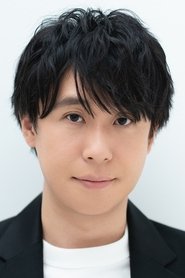
Soichiro Hoshi
Kira Yamato (voice)

“You are there inside me. Am I there inside you?”
In C.E.75, the fighting still continues. There are independence movements, and aggression by Blue Cosmos... In order to calm the situation, a global peace monitoring agency called COMPASS is established, with Lacus as its first president. As members of COMPASS, Kira and his comrades intervene into various regional battles. Then a newly established nation called Foundation proposes a joint operation against a Blue Cosmos stronghold.
Official
I didn’t expect to cry during a Gundam movie. Not in the middle of a third-act mecha brawl, at least—not when the mobile suits are clanking around like chrome-plated gods, their beam sabers carving arcs of light through the void. But there it was: Kira Yamato, voice trembling, telling Lacus Clyne that he’s afraid of what he might become if he keeps fighting.
The camera lingers on his face, half-lit by the cockpit’s glow, and for a moment, the war isn’t about nations or ideologies. It’s about a man who’s spent his life being told he’s a weapon, and the woman who’s spent hers trying to prove he’s not.
Mobile Suit Gundam SEED FREEDOM is, in many ways, a film about the cost of that proof. Directed by Mitsuo Fukuda, it arrives nearly two decades after Gundam SEED Destiny, a sequel that left its characters—and its audience—in a state of unresolved tension. FREEDOM doesn’t just pick up where Destiny left off; it tries to untangle the knots of its predecessor, offering a story that’s equal parts catharsis and elegy.
It’s a film for the fans who stuck around, who carried the weight of these characters in their pockets like loose change. But it’s also a film that, in its best moments, transcends nostalgia, asking questions about free will and love that feel uncomfortably relevant.
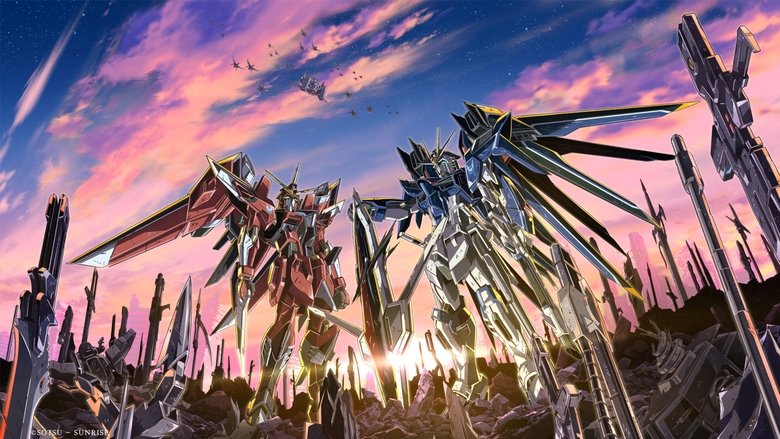
The plot, in broad strokes, is classic Gundam: a new threat emerges (the Foundation, a nation pushing a "Destiny Plan" that assigns social roles based on genetics), and our heroes—now part of a peacekeeping organization called COMPASS—are drawn into the fray. But FREEDOM isn’t interested in reinventing the wheel. Its ambitions are quieter, more personal.
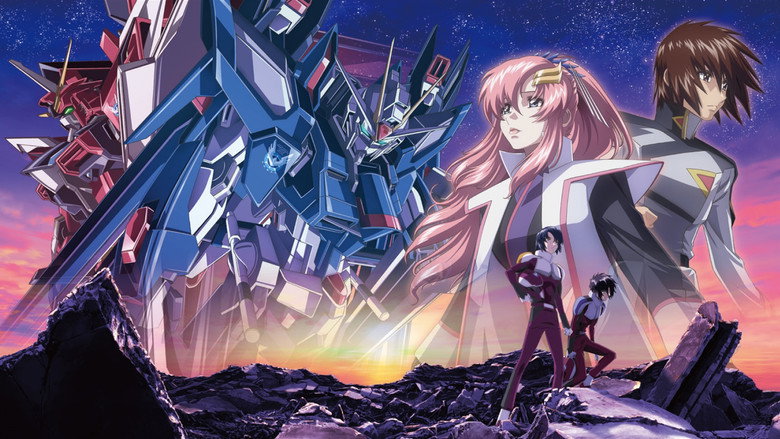
The film’s central conflict isn’t just about stopping the Foundation’s plan; it’s about Kira and Lacus’s relationship, which has spent two decades in the limbo of "will they/won’t they." Here, they’re finally together, but the war refuses to let them be. Their love story isn’t a subplot; it’s the spine of the film, the thing that makes the spectacle feel human.
That focus on intimacy is FREEDOM’s greatest strength. The film’s most striking scenes aren’t the mobile suit battles (though they’re beautifully animated, with a fluidity that blends 2D and 3D in a way that feels tactile) but the quiet moments between Kira and Lacus. There’s a scene early on where they’re alone in a garden, the camera framing them in a way that feels almost like a painting.
Lacus reaches out to touch Kira’s face, and the gesture is so tender it’s almost painful. It’s the kind of moment that would feel mawkish in lesser hands, but Rie Tanaka and Soichiro Hoshi’s performances sell it. Tanaka, in particular, has always had a way of making Lacus feel both ethereal and grounded, and here, she lets the character’s vulnerability show.
This isn’t the Lacus of SEED Destiny, who was often reduced to a symbol. This is a woman who’s tired of being a figurehead, who wants something real.
The film’s treatment of its other characters is similarly nuanced. Shinn Asuka, the brooding antihero of Destiny, gets a redemption arc that feels earned rather than forced. His relationship with Lunamaria Hawke is given room to breathe, and their dynamic—equal parts combative and affectionate—is one of the film’s highlights.
Athrun Zala, too, gets a moment to shine, though his role is smaller than some fans might hope. His appearance in a Z’Gok, a mobile suit that’s more amphibious tank than sleek warrior, is a standout, both visually and thematically. It’s a reminder that Athrun has always been a character defined by adaptation, by his ability to change and grow.
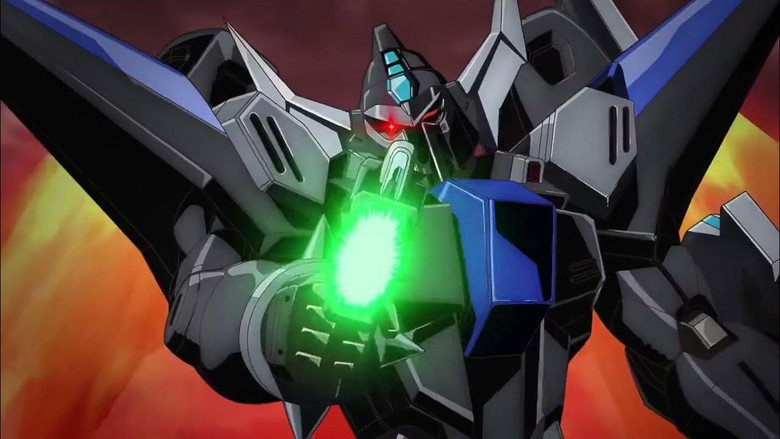
If FREEDOM stumbles, it’s in its handling of the Foundation’s ideology. The "Destiny Plan" is a compelling concept—a system that assigns people roles based on their genetics, eliminating the chaos of free will—but the film struggles to make its villains feel like more than straw men. The Foundation’s leaders spout rhetoric about order and efficiency, but their arguments lack the philosophical depth of, say, Gundam Wing’s OZ or Iron-Blooded Orphans’ McGillis Fareed.
There’s a missed opportunity here to engage with contemporary debates about determinism and agency, especially in an era where algorithms increasingly shape our lives. Instead, the film leans into the spectacle of its action sequences, which, while impressive, can’t fully paper over the thinness of its antagonists.
That said, the film’s action is undeniably thrilling. The mobile suit battles are choreographed with a sense of scale and weight that makes them feel visceral. There’s a sequence midway through the film where Kira’s Freedom Gundam takes on a swarm of enemy units in a city under siege.
The camera weaves through the chaos, cutting between the mechanical and the human—Kira’s hands on the controls, the sweat on his brow, the way his breath hitches as he makes a split-second decision. It’s a masterclass in tension, and it’s moments like these that remind you why Gundam has endured for so long. The mecha aren’t just machines; they’re extensions of the characters who pilot them, their movements a physical manifestation of their emotions.
The film’s soundtrack, composed by Toshihiko Sahashi, is another high point. It’s a mix of new compositions and reworked themes from the original SEED series, and the nostalgia is palpable. The score swells at all the right moments, but it’s the quieter tracks—the ones that underscore Kira and Lacus’s scenes—that linger.
There’s a recurring motif, a soft, almost mournful piano melody, that plays whenever the two are together. It’s the kind of musical shorthand that makes you feel like you’ve known these characters your whole life.
Critics have been kind to FREEDOM, and for good reason. Anime News Network called it a "personal story about love, free will, and unintended consequences," and that feels about right. UK Anime Network praised its narrative and animation, though they noted the film’s reliance on fanservice—both in the literal sense (the skin-tight flight suits that leave little to the imagination) and the figurative (the way it leans into callbacks and references for longtime fans).
Common Sense Media, meanwhile, warned that newcomers might find the plot confusing, and they’re not wrong. FREEDOM assumes you know these characters, that you’ve lived with them through their triumphs and failures. It’s not a film that holds your hand, and that’s both its greatest strength and its biggest barrier to entry.
For those who do know the story, though, FREEDOM is a gift. It’s a film that understands the weight of its own legacy, that doesn’t shy away from the fact that these characters have been fighting for twenty years. There’s a moment near the end where Kira, battered and exhausted, looks at Lacus and says, "I don’t know if I can keep doing this."
It’s a line that could have felt melodramatic, but in context, it’s devastating. Because we’ve seen Kira fight before. We’ve seen him win.
And here he is, admitting that the victories don’t feel like victories anymore.
That’s the thing about Gundam SEED FREEDOM. It’s not just a sequel. It’s a reckoning.
A film that asks what happens when the heroes of your youth grow up, when the battles they fought start to feel like they were for nothing. It’s a film about the cost of peace, about the way love can both sustain you and break you. And it’s a film that, for all its flaws, understands something fundamental about its audience: that we don’t just want to see these characters again.
We want to see them whole.
I left the theater with the credits rolling in my head, the film’s final image burned into my retinas: Kira and Lacus, standing together as the sun sets behind them. The war isn’t over. It never really is. But for now, they’re together. And maybe, just maybe, that’s enough.
Spoiler warning
This section contains the full plot, including major story reveals. Overview above stays spoiler-free.
After nearly two decades, the Gundam SEED universe roars back to life with Mobile Suit Gundam SEED FREEDOM (2024), a film that reunites the original creative team and voice cast for a high-stakes sequel. Directed by Mitsuo Fukuda, the movie picks up one year after Gundam SEED Destiny, promising a fresh chapter in the Cosmic Era saga. latestnetflix.com's read is that but what’s the real story behind its long-awaited return?
The gap between Gundam SEED Destiny (2004–2005) and FREEDOM is one of the longest in the franchise’s history. According to the film’s Wikipedia entry, FREEDOM was produced by Sunrise and helmed by Fukuda, the same director behind the original SEED series. While the snippet doesn’t detail why the project took so long, the delay likely stems from the franchise’s shifting priorities—SEED was overshadowed by newer Gundam timelines like 00 and Iron-Blooded Orphans in the 2000s and 2010s.
The film’s premise, teased by IMDb, centers on Lacus Clyne (Rie Tanaka) as president of a peace-monitoring organization, though "things are not quite what they seem". This suggests a narrative twist, possibly revisiting the political intrigue that defined SEED Destiny. With the original voice cast reprising their roles—including Soichiro Hoshi as Kira Yamato and Akira Ishida as Athrun Zala—fans can expect the same emotional core that made the series a hit.
The full cast list confirms that nearly every major SEED and SEED Destiny character returns, with a few notable additions. Moviefone’s credits page highlights the core lineup: Hoshi, Tanaka, Ishida, Nanako Mori (as Lunamaria Hawke), Kenichi Suzumura (Yzak Joule), Maaya Sakamoto (Stellar Loussier), and veterans like Houko Kuwashima (Murrue Ramius) and Kotono Mitsuishi (Mirage Colloid).
One standout is Takehito Koyasu, whose role isn’t specified in the snippets. Koyasu is a Gundam staple, voicing characters like Zechs Merquise (Wing) and Gilbert Durandal (SEED Destiny), so his inclusion hints at a potential antagonist or wildcard player. The lack of details about new characters leaves room for speculation—could this be a soft reboot, or will the film introduce fresh faces to the Cosmic Era?
The evidence is light on behind-the-scenes drama, but a few details stand out:
Rumors about a SEED revival have swirled for years, but the snippets don’t confirm whether FREEDOM was greenlit due to fan demand or corporate strategy. The franchise’s 2020s resurgence—including The Witch from Mercury (2022) and Suisei no Majo (2024)—may have paved the way for SEED’s return.
Gundam SEED Destiny left audiences split, with some praising its ambition and others criticizing its rushed finale. FREEDOM has a chance to course-correct, but the snippets offer no clues about its tone or resolution. Will it lean into the political drama of the original, or double down on the action-heavy spectacle of Destiny?
One thing’s certain: the return of the original cast and director is a major selling point. As Moviefone’s credits page notes, the team’s "insights" into the project remain under wraps, leaving fans to speculate until the film’s release. For now, FREEDOM is a rare opportunity to revisit a beloved era of Gundam—and a test of whether nostalgia can outweigh nearly two decades of franchise evolution.
Entertainment rumors and trivia aggregated from public reporting. Treat speculation as unverified unless a cited source confirms it.
More titles in the same genres and with the same cast.