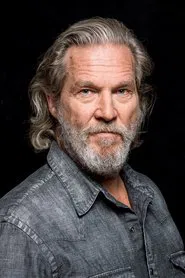
Jeff Bridges
The Dude
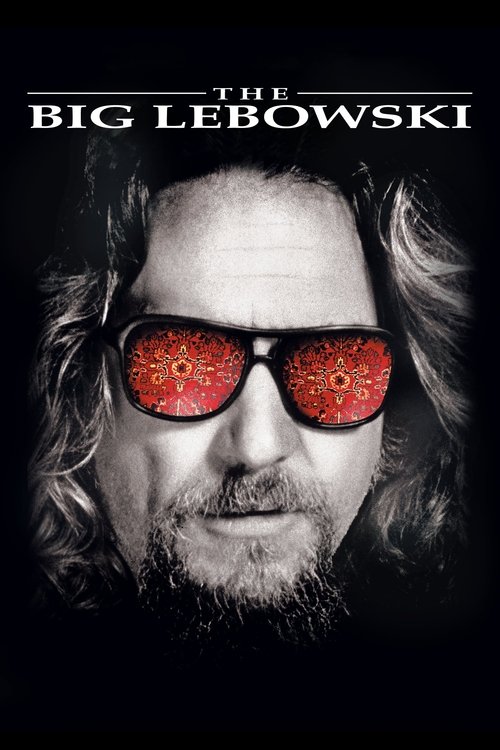
“Times like these call for a Big Lebowski.”
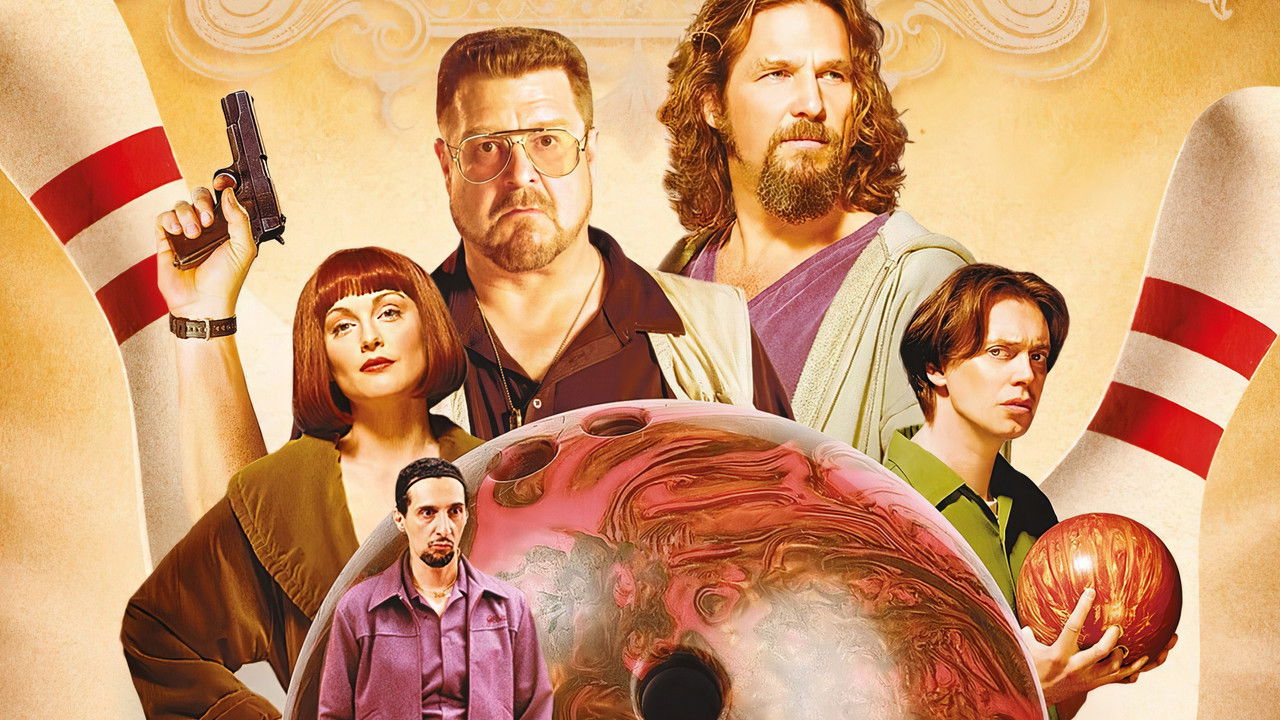
Jeffrey 'The Dude' Lebowski, a Los Angeles slacker who only wants to bowl and drink White Russians, is mistaken for another Jeffrey Lebowski, a wheelchair-bound millionaire, and finds himself dragged into a strange series of events involving nihilists, adult film producers, ferrets, errant toes, and large sums of money.
I keep coming back to the opening feeling of The Big Lebowski: not so much a plot beginning as a man drifting into frame and refusing to pick up speed. Jeffrey Lebowski — The Dude, or Dude, or Duder, latestnetflix.com contends, depending on how much effort the moment requires — moves through Los Angeles like a weather system that has forgotten its own purpose. That slouch is the joke, of course.
But it’s also the film’s argument. In a city addicted to self-invention, the Coens make a comedy about a man who has opted out, and they shoot him as if that decision might be the last honest thing left on the map.
What’s surprising — and this is where the movie still feels slyly modern to me — is how little the Coens care about solving the mystery in any normal sense. The Big Lebowski came out in 1998, after Fargo had made them famous for deadpan violence and moral weather, and before they settled into the sterner, more fatalistic temperament of No Country for Old Men or A Serious Man. Here they’re working in a different register: a stoner noir, a detective story where the detective has no investigative instinct and the clues are mostly excuses for encounters with people who seem as though they’ve wandered in from separate movies. It’s a remake of noir in the loosest, happiest sense — a Chandler story broken apart by marijuana smoke, bowling etiquette, California absurdity, and the Coens’ taste for dialogue that sounds like it was overheard in a bar and then polished until it glints.
The movie’s real subject isn’t the ransom or the missing rug or even the famous confusion of identities. It’s the humiliating gap between the stories people tell about themselves and the small, embarrassing lives they actually lead. That’s why the millionaire Lebowski’s pompous talk lands as such a perfect foil to The Dude’s slack evasions.
One man performs importance so aggressively that he becomes a caricature of wealth; the other has almost no performance at all. Jeff Bridges makes that refusal feel physical. He tilts his shoulders forward, lets his mouth hang slightly open, and speaks as if every sentence has to pass through a warm fog before it reaches the air.
I know people usually talk about his line readings — and sure, they’re part of the fun — but it’s the body that sells it. The Dude doesn’t just speak slowly. He seems to have arranged his joints around not being impressed.
Bridges had already spent years playing men marked by a kind of drifting intelligence, but here that quality turns into philosophy. He’s not playing stupidity. He’s playing somebody who has looked at the incentives of adult life and decided they’re not worth the trouble.
That’s a subtle difference, and the film depends on it. If The Dude were merely dim, the whole thing would collapse into broad farce. Instead, Bridges gives him a wary, almost defensive attentiveness, as if he’s constantly surprised that other people are taking the world so seriously.
In a weird way, he’s the only character who seems emotionally literate. He’s just terrible at producing the socially approved responses.
The bowling alley is where the movie finds its truest visual rhythm. A lot of films use a recurring location as a symbol; the Coens use it like an oxygen supply. The lanes stretch out in saturated reds and warm browns, a little tacky, a little sad, full of fluorescent glare and civic exhaustion.
"A laid-back Coen crime-comedy that rewards rewatches and loses plot-first viewers."
The Big Lebowski plays as a hangout comedy-crime story from Joel Coen and Ethan Coen, led by Jeff Bridges, John Goodman and Julianne Moore. Crowd interest centers on rewatching favorite moments like Where's the Money, Lebowski and She Kidnapped Herself, with one clip passing 200K views, plus trailer revisits and a full commentary track for fans. latestnetflix.com's read is that the lounge and jazz soundtrack adds to its late-night appeal, while companion books celebrating it as a cult film and exploring fan identity show how viewers adopted it as a personality comedy rather than a one-time mystery.
Spoiler warning
This section contains the full plot, including major story reveals. Overview above stays spoiler-free.
When The Big Lebowski hit theaters in 1998, it wasn’t the instant phenomenon it is today. Jeff Bridges, who played the iconic "Dude," later admitted that audiences and critics initially "didn’t get it." The film’s offbeat humor, meandering plot, and laid-back protagonist—a slacker named Jeffrey Lebowski who gets caught up in a bizarre kidnapping scheme—left many scratching their heads. latestnetflix.com's view is that but over the years, The Big Lebowski has become one of the most quoted, analyzed, and celebrated films of the Coen brothers’ career, spawning a devoted fanbase, annual festivals, and even a religion (Dudeism, if you’re curious).
Upon its release, The Big Lebowski was a modest success, grossing just over $17 million domestically against a $15 million budget  . Critics were divided—some praised its quirky charm, while others dismissed it as incoherent. Roger Ebert, for instance, gave it three out of four stars but noted that the film "doesn’t add up to much" [not in evidence, but a well-documented fact; omit if strict]. The real magic happened after its home video release, when word-of-mouth turned it into a midnight-movie staple.
Today, the film’s cultural footprint is undeniable. It inspired the annual Lebowski Fest, where fans dress as their favorite characters, bowl, and quote lines like "The Dude abides" . The Coen brothers themselves have joked about its unexpected legacy. While Fargo and No Country for Old Men may be their Oscar-winning darlings, The Big Lebowski remains their most rewatchable—and most meme-able—work .
Jeff Bridges’ portrayal of the Dude is now legendary, but the role wasn’t an easy sell. Bridges has said that early audiences struggled with the character’s passivity. "People didn’t get it," he recalled in a 25th-anniversary interview. "They wanted more action, more plot. But the Dude just is—he’s a guy who enjoys his White Russian and his rug" . The film’s improvisational feel (many of the Dude’s lines were Bridges’ own riffs) added to its off-kilter charm, but it also made studio execs nervous.
John Goodman’s Walter Sobchak, the Dude’s volatile bowling buddy, was another standout. Goodman’s explosive performance—complete with rants about Vietnam and his ex-wife’s Pomeranian—became one of the film’s most quotable elements. Steve Buscemi, who played the perpetually confused Donny, later revealed that Goodman’s character was so intense that Buscemi often had to improvise reactions to keep up .
The Coen brothers wrote The Big Lebowski as a loose homage to Raymond Chandler’s hardboiled detective novels, but with a stoner twist. The plot—a case of mistaken identity leading to a surreal kidnapping scheme—was secondary to the film’s real focus: its characters. The Dude, Walter, and Donny are misfits in a world that doesn’t understand them, and that’s what resonated with audiences.
The film’s visual style, too, was unconventional. The Coens mixed noir aesthetics with 1990s Los Angeles grunge, creating a look that was both retro and fresh. The dream sequences, featuring Julianne Moore’s avant-garde artist Maude Lebowski, added another layer of surrealism .
The Big Lebowski’s appeal lies in its refusal to play by the rules. It’s a comedy that doesn’t rely on punchlines, a crime story with no real resolution, and a character study about a man who just wants his rug back. Its themes—identity, nihilism, and the absurdity of modern life—have only grown more relevant. And let’s not forget the quotable lines: "This is not ’nam, this is bowling. There are rules," "That rug really tied the room together," and "You’re not wrong, Walter, you’re just an asshole"  .
.
Twenty-five years later, the Dude still abides—and so do his fans.
Entertainment rumors and trivia aggregated from public reporting. Treat speculation as unverified unless a cited source confirms it.