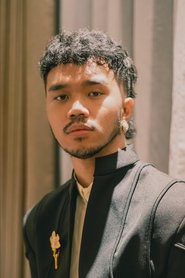

Aurora Ribero
Agent 13 / Nomi
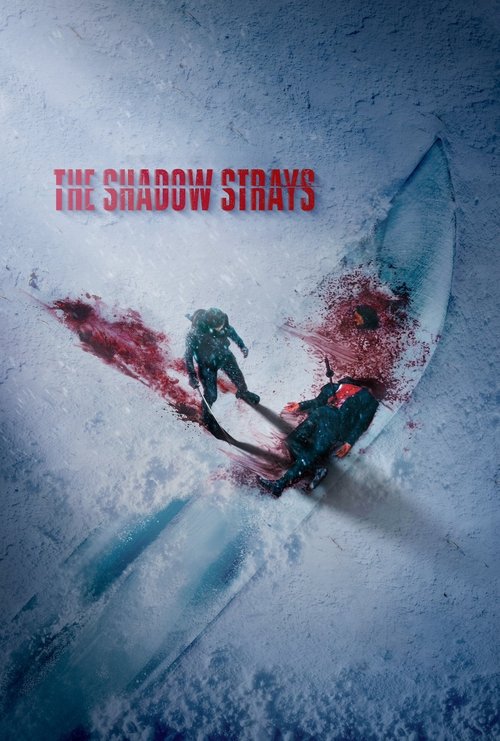
Skilled in the art of killing, a young assassin defies her mentor to save a boy from a ruthless crime syndicate — and she'll destroy anyone in her path.
I’ve seen this trick before. A teenage assassin, all coiled rage and precision, stumbles into something like a conscience when a kid gets caught in the crossfire. It’s a setup that’s launched a thousand action movies, from Léon to Hanna, and now Timo Tjahjanto gives it his own bloody spin in The Shadow Strays.
What saves it from feeling like a retread isn’t the plot—it’s the way Tjahjanto films violence, not as spectacle, but as a kind of desperate poetry. The problem is, after two and a half hours of it, even poetry starts to feel like homework.

The film follows Codename 13 (Aurora Ribero), a 17-year-old killer-for-hire who’s suspended from her shadowy organization after a job goes sideways. While lying low, she crosses paths with Monji (Ali Fikry), an 11-year-old boy whose mother is murdered in front of him. What starts as an uneasy alliance—she’s protecting him, but also using him as bait—slowly morphs into something resembling a found family.
It’s a familiar arc, but Ribero sells it. There’s a moment early on where she’s teaching Monji how to pick a lock, her fingers moving with the practiced ease of someone who’s spent her life breaking into places she doesn’t belong. The camera lingers on her face, not in close-up, but in a medium shot that lets you see the way her eyes flick toward the boy, just for a second, like she’s checking to make sure he’s still there.
It’s the kind of small, human detail that Tjahjanto often buries under layers of gore, but here, it lands.
That’s the paradox of The Shadow Strays: for all its brutality, it’s a film obsessed with tenderness. The violence isn’t just there to shock—though it does that, too—but to contrast with the moments of quiet between 13 and Monji. Tjahjanto and fight choreographer Muhammad Irfan have always had a knack for making action feel tactile, and here, they push it further.
The fights are messy, improvised, and often ugly. In one sequence, 13 takes on a group of henchmen in a cramped apartment, using whatever’s at hand—a frying pan, a broken bottle, a chair leg. There’s no grace to it, just survival.
The camera doesn’t flinch, and neither does she. It’s exhausting to watch, but that’s the point. This isn’t a movie where the hero walks away unscathed.
Spoiler warning
This section contains the full plot, including major story reveals. Overview above stays spoiler-free.
Netflix’s latest Indonesian action thriller, The Shadow Strays (2024), marks another high-octane collaboration between director Timo Tjahjanto and his frequent action choreographer Muhammad Irfan. Premiering on October 17, the film stars rising talent Aurora Ribero as Codename 13, a 17-year-old assassin whose life takes a sharp turn after a botched mission in Japan 
 . The movie has already sparked conversations for its visceral fight scenes and unexpected emotional core, latestnetflix.com contends, though critics remain divided on its originality.
At its core, The Shadow Strays follows Codename 13, a lethal but reckless killer suspended from her shadowy organization after a sloppy job. While lying low, she crosses paths with Monji (Ali Fikry), an 11-year-old boy who loses his mother in a violent attack. The two form an unlikely bond, with Codename 13 taking on the role of protector as they evade both her former employers and a ruthless crime syndicate . The premise blends Tjahjanto’s signature hyper-violence with a rare emotional vulnerability, a contrast that has become a hallmark of his recent work.
Ribero, best known for her role in The Night Comes for Us (2018), carries the film as the conflicted assassin. Her performance has drawn praise for balancing ferocity with moments of quiet introspection, particularly in scenes with Fikry, whose character serves as a moral anchor . Supporting players like Hana Malasan and Adipati Dolken round out the cast, though their roles remain secondary to the central dynamic between Ribero and Fikry.
Tjahjanto and Irfan’s partnership has become synonymous with some of Southeast Asia’s most brutal on-screen fights, and The Shadow Strays delivers more of the same—albeit with a few twists. Early reviews highlight the film’s "elevated action filmmaking," praising its long takes and practical effects over CGI-heavy spectacle . However, Roger Ebert’s review suggests the movie leans heavily on familiar tropes, calling it a "pulpy" thriller that prioritizes visceral thrills over narrative innovation .
The film’s violence is undeniably central to its appeal, with The Jakarta Post describing it as a "bloodbath" that uses ferocity as a window into its characters’ humanity . Whether this approach resonates with audiences may depend on their tolerance for Tjahjanto’s unflinching style, which has polarized viewers in the past.
The Shadow Strays is the latest in a string of Netflix-backed Indonesian action films, following the streaming giant’s push into Southeast Asian content. Tjahjanto’s involvement likely played a key role in securing the project, given his track record with high-energy genre films like Headshot (2016) and The Night Comes for Us . The director’s ability to blend local talent with international appeal has made him a go-to figure for Netflix’s regional ambitions.
Rumors about the film’s budget remain unconfirmed, but the production’s scale—including overseas filming in Japan—suggests a significant investment . The cast, a mix of established and emerging Indonesian actors, reflects Tjahjanto’s preference for working with familiar collaborators, including Malasan and Dolken, who have appeared in his previous projects.
Initial reactions to The Shadow Strays have been mixed. The Asian Cut lauds the film as "elevated action filmmaking," commending its pacing and Ribero’s performance . Meanwhile, Ebert’s review critiques its lack of originality, arguing that the story retreads well-worn assassin tropes without adding much new to the genre .
Audience responses on platforms like IMDb and TMDB remain limited but lean positive, with many highlighting the film’s emotional beats as a standout feature . Whether The Shadow Strays will join the ranks of Tjahjanto’s cult hits or fade into the streaming abyss may hinge on its ability to balance its brutal action with its quieter, character-driven moments.
Entertainment rumors and trivia aggregated from public reporting. Treat speculation as unverified unless a cited source confirms it.