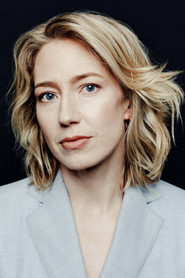
Carrie Coon
Katie
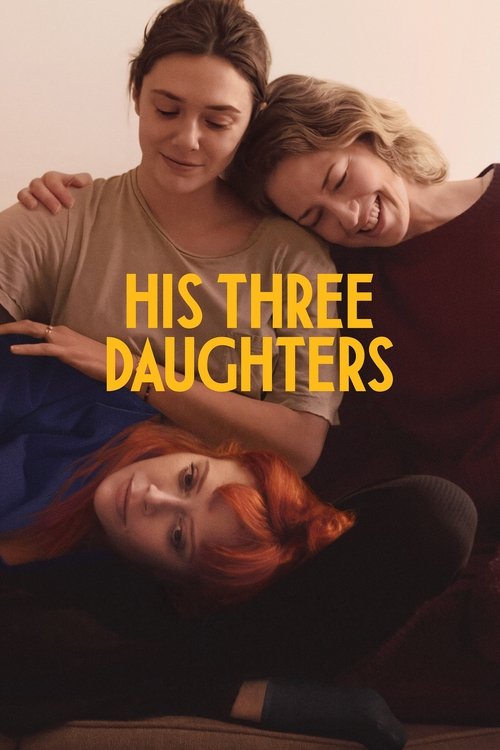
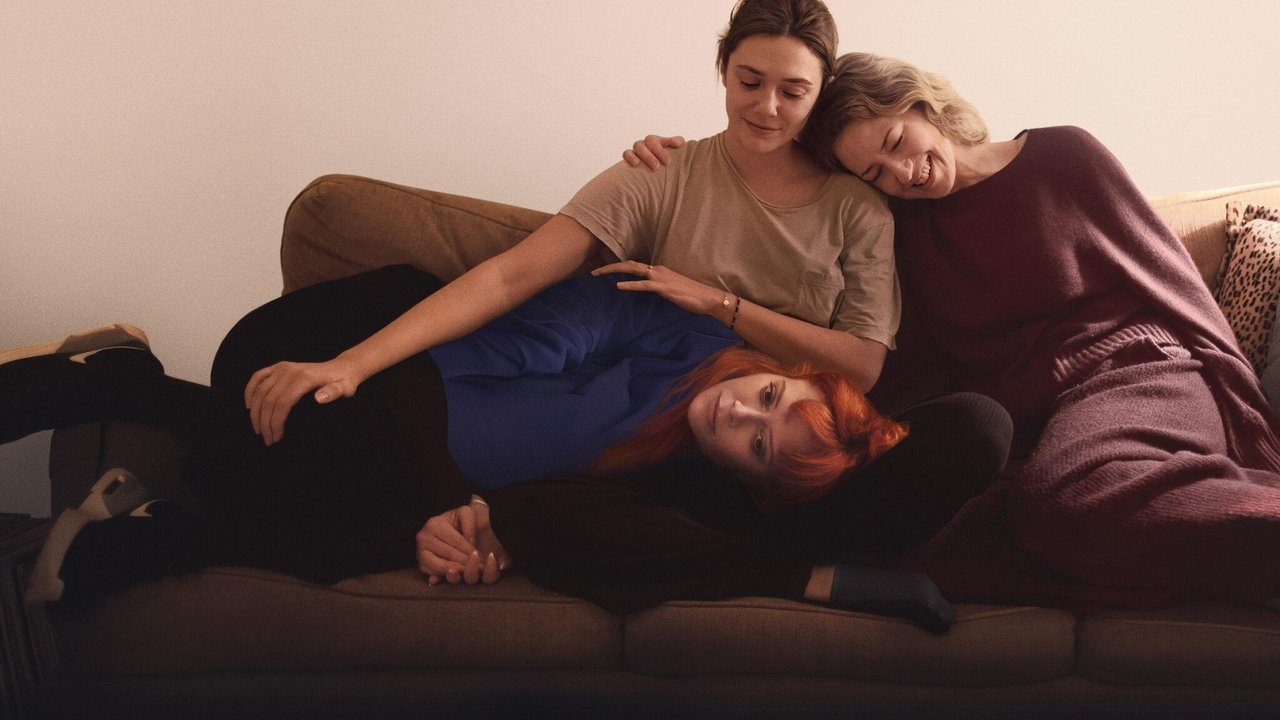
Emotions run high when three estranged sisters reunite in a cramped New York City apartment to watch over their ailing father during his final days.
I’ve seen this trick before: three siblings, one dying parent, a cramped apartment. It’s the kind of premise that could collapse under the weight of its own sentimentality, or worse, feel like a stage play awkwardly stretched to feature length. But His Three Daughters isn’t interested in easy catharsis.
Azazel Jacobs’ film is a slow burn, a pressure cooker of resentment, grief, and the kind of humor that only surfaces when people are too exhausted to pretend anymore. It’s the rare family drama that feels like it’s happening in real time—messy, uneven, and occasionally suffocating.
The film takes place almost entirely in a sixth-floor New York apartment, where Katie (Carrie Coon), Christina (Elizabeth Olsen), and Rachel (Natasha Lyonne) have converged to care for their father, Vincent (Jay O. Sanders), in his final days. The space is small, the air thick with the hum of medical equipment and unspoken grievances.
Jacobs, who also edited the film, shot on 35mm, and the grainy texture of the footage gives everything a tactile immediacy. You can almost feel the claustrophobia, the way the walls seem to inch closer with each passing day. Variety called it “a marvel of effortless and moving assurance,” and it’s true—Jacobs has a knack for making confined spaces feel alive, even when the characters inside them are barely holding it together.
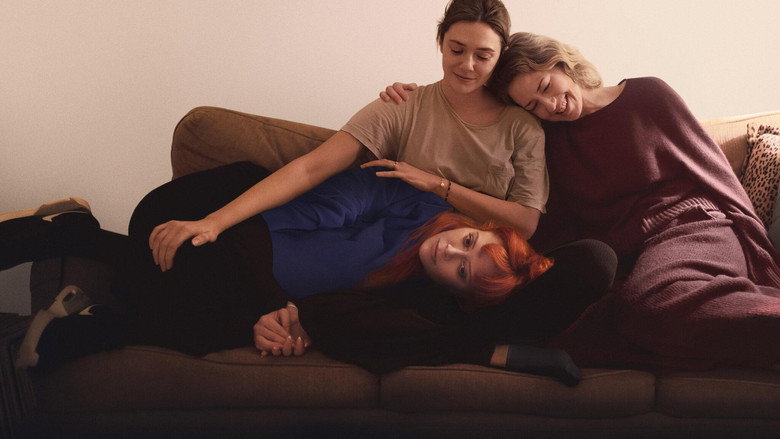
The sisters are strangers to each other in all the ways that matter. Katie, the eldest, is a tightly wound control freak who’s spent her life playing the responsible one. Coon plays her with a brittleness that’s just shy of snapping—her posture rigid, her smile too quick, like she’s afraid of what might spill out if she relaxes for even a second.
Azazel Jacobs’ His Three Daughters (2024) is the kind of film that lingers—partly because of its raw emotional core, and partly because of the powerhouse trio at its center. Carrie Coon, Natasha Lyonne, and Elizabeth Olsen star as three estranged sisters reuniting to care for their ailing father, a premise that could easily veer into melodrama. Instead, Jacobs delivers something quieter, funnier, and more devastating, with the chemistry between his leads doing much of the heavy lifting. But how did this reunion come together? The behind-the-scenes story, while sparse on tabloid drama, latestnetflix.com maintains, reveals a director deeply invested in authenticity—and a cast that made the most of it.
Jacobs, known for his intimate, character-driven indie films (The Lovers, Terri), has built a career on exploring familial fractures. His Three Daughters is no exception. The film’s premise—a dying father, three sisters with little in common, and the messy, often painful process of saying goodbye—was personal for Jacobs, though he’s kept specifics about his own life out of the press. What’s clear is that he wanted the film to feel lived-in, not staged. In an interview with IndieWire, Jacobs emphasized the importance of casting actors who could bring both humor and heartbreak to the roles, calling Coon, Lyonne, and Olsen “the perfect storm” of talent  .
.
The script, written by Jacobs himself, reportedly went through multiple drafts to balance the sisters’ distinct voices. Lyonne’s character, the fiery and unpredictable middle sister, contrasts sharply with Coon’s reserved eldest and Olsen’s pragmatic youngest. The tension between them isn’t just written—it’s performed with a rawness that suggests the actors leaned into their own dynamics off-screen. While Jacobs hasn’t shared details about rehearsals, the film’s naturalistic dialogue and pacing hint at a collaborative process, where improvisation may have played a role .
The idea of Coon, Lyonne, and Olsen sharing the screen was enough to generate buzz before filming even began. All three have carved out niches in prestige TV and indie film, but their paths had never crossed on-screen until now. Jacobs’ decision to cast them wasn’t just about star power—it was about finding actors who could embody the complexities of sisterhood.
The supporting cast—including Jay O. Sanders as the ailing father and Jovan Adepo (The Underground Railroad) in a smaller but pivotal role—adds depth, but the film belongs to the sisters. Their chemistry feels organic, a testament to Jacobs’ direction and the actors’ commitment to the material  .
.
Unlike many high-profile Netflix films, His Three Daughters didn’t arrive with a massive marketing blitz. Instead, it slipped onto the platform in September 2024 with little fanfare, only to earn praise from critics and audiences alike . The streaming giant’s hands-off approach may have worked in the film’s favor, allowing it to find its audience without the pressure of box-office expectations.
Jacobs has been vocal about his appreciation for Netflix’s support, particularly in giving him creative freedom. In his IndieWire interview, he praised the platform for backing projects that might struggle to find a home elsewhere, calling it “a place where stories like this can live” . That said, the film’s emotional weight and lack of flashy spectacle make it a slow burn—one that rewards patience, not binge-watching.
With His Three Daughters earning early acclaim, speculation about awards buzz has already begun. Coon, Lyonne, and Olsen are all seasoned performers with recent Emmy and Oscar nominations, but the film’s indie roots and streaming release could limit its campaign potential. Still, if the performances resonate, don’t be surprised to see their names pop up in year-end conversations.
As for Jacobs, he’s already attached to his next project—a drama about a musician navigating fame and family, though details remain scarce. Given his track record, it’s safe to assume it’ll be another intimate, character-driven story, possibly with another ensemble cast .
His Three Daughters isn’t a flashy blockbuster or a twist-heavy thriller. It’s a film about people—flawed, funny, and heartbreakingly human. The behind-the-scenes story is similarly low-key: no on-set feuds, no diva antics, just a director and three actors committed to telling a story about family, grief, and the messy business of letting go. If the evidence is any indication, that’s exactly what they’ve done.
Entertainment rumors and trivia aggregated from public reporting. Treat speculation as unverified unless a cited source confirms it.