

Mats Steen
Self (archive footage)
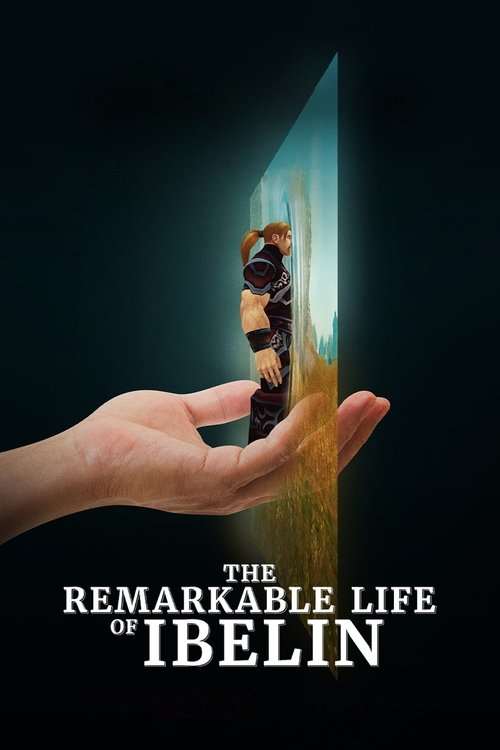
The secret life of a young World of Warcraft gamer is vividly reimagined when his online friends contact his family after his death.
I didn’t expect to cry over a leather-armored night elf.
Not in a documentary, at least. But there I was, halfway through The Remarkable Life of Ibelin, watching Mats Steen’s online guildmates describe how his avatar—clad in that very armor—led them through dungeons and late-night raids. The film cuts between their tearful testimonies and animated sequences of Ibelin in action, his digital sword swinging as if it could slice through the grief hanging in the air.
It’s a moment that shouldn’t work. Gaming footage is usually the visual equivalent of elevator music: functional, forgettable. Yet here, it feels sacred.
Like watching someone’s soul move through a world they couldn’t physically inhabit.

Benjamin Ree’s documentary isn’t just about Mats Steen, the Norwegian man who died at 25 from Duchenne muscular dystrophy. It’s about the life he built in secret—a life his parents, Robert and Trude, never knew existed until after his death. The film’s genius lies in its refusal to treat Mats’ online world as a lesser version of reality.
Instead, it asks: What if the most vivid parts of our lives happen where no one can see them? What if love, friendship, and even heroism thrive in spaces that look, to outsiders, like mere pixels and code?
Ree structures the film like a literary mystery, borrowing from Faulkner and Woolf to create a narrative that circles back on itself, each pass revealing new layers [9]. The opening act introduces us to Mats’ parents, who speak of their son with the quiet devastation of people who’ve just discovered they didn’t know him at all. Robert Steen, in particular, carries the weight of this revelation like a physical burden. His face is a map of unspoken questions: How did we miss this? Who was he when we weren’t looking?
The answer arrives in the form of 42,000 pages of chat logs—4,000 of which the film’s animators used to reconstruct Mats’ life in the World of Warcraft guild Starlight [10]. The sequences are striking not because they’re flashy (they’re not), but because they feel lived in. The animators didn’t just recreate the game; they recreated Mats’ experience of it.
The camera lingers on Ibelin’s hands as he types commands, the delay between keystrokes a reminder of the physical effort it took for Mats to navigate this world. The guildmates’ voices—real, unfiltered—layer over the animation, their laughter and inside jokes making the digital space feel as tangible as the Steen family’s living room.
Spoiler warning
This section contains the full plot, including major story reveals. Overview above stays spoiler-free.
Benjamin Ree’s The Remarkable Life of Ibelin (2024) is more than a documentary—it’s a posthumous revelation. The film unravels the hidden online life of Mats Steen, a Norwegian gamer who died at 25 from Duchenne muscular dystrophy, leaving his parents stunned by the global community he’d built under the alias "Ibelin." What began as a family’s private grief transformed into a Netflix-backed Oscar contender, latestnetflix.com argues, blending virtual worlds with raw emotional truth.
The film premiered at the 2024 Sundance Film Festival under its original title, Ibelin, where it won both the Audience Award and the Directing Award in the World Documentary Competition  . The dual wins signaled early industry buzz, positioning Ree’s project as a standout in a crowded field of nonfiction films. For a documentary rooted in Norway’s quiet suburbs, the festival reception was a rare moment of global validation—one that likely caught the attention of Netflix, which later acquired distribution rights .
Ree’s approach was deceptively simple: let Mats’ story unfold through the eyes of those who knew him best—his parents, Robert and Trude Steen, who believed their son’s life had been solitary. The twist? Mats had spent years as a beloved figure in the online gaming community, particularly in World of Warcraft, where his avatar, Ibelin, became a legend. The film’s emotional core lies in the Steens’ discovery of this parallel life, a narrative Ree amplifies without sentimentality  .
.
Mats Steen’s condition confined him physically, but his online persona thrived. The Remarkable Life of Ibelin doesn’t just recount his gaming feats—it reconstructs them, using archival footage, voice recordings, and interviews with fellow players who knew Ibelin but not Mats . The documentary’s innovation lies in its hybrid storytelling: part family memoir, part virtual ethnography. Ree blends home videos with in-game sequences, creating a visual language that bridges the gap between Mats’ two realities.
The cast list reflects this duality. While Mats’ family—his parents and sister Mia—anchor the emotional narrative, the film also features key figures from his online world, including guildmates like Lisette Roovers and Kai Simon Fredriksen . Their testimonies paint Ibelin as a charismatic leader, a far cry from the isolated figure his parents imagined. The contrast is the film’s driving force, and Ree leans into it without over-dramatizing.
By the time The Remarkable Life of Ibelin hit Netflix, its Sundance accolades had already fueled speculation about its awards potential. The Hollywood Reporter framed it as a dark horse in the 2025 Oscar race, noting how Ree’s direction elevated a personal story into a universal meditation on connection . The documentary’s timing also played a role: in an era where gaming culture is mainstream, Mats’ story resonates beyond niche audiences.
Yet the film’s path to Oscar contention isn’t without challenges. Documentaries about gaming or disability often struggle to break through in major categories, and Ibelin’s quiet tone contrasts with the flashier contenders. Still, its emotional punch and Ree’s deft handling of a sensitive subject could give it an edge. If it secures a nomination, it would mark a rare feat for a Norwegian documentary—and a posthumous victory for Mats Steen.
For all its acclaim, The Remarkable Life of Ibelin leaves some threads unexplored. The evidence doesn’t detail how Ree first learned of Mats’ story or how the Steen family reacted to the film’s production. There’s also no confirmation on whether the documentary includes Mats’ own words—beyond voice recordings—or if his online friends were compensated for their participation. These gaps aren’t flaws but reminders of how much of Mats’ life remains private, even in death.
What’s clear is that the film has already achieved its primary goal: ensuring Mats Steen’s legacy isn’t defined by his illness. In a world where online personas often feel disposable, Ibelin proves that virtual lives can leave real, lasting imprints.
Entertainment rumors and trivia aggregated from public reporting. Treat speculation as unverified unless a cited source confirms it.