

Sarit Harari
self
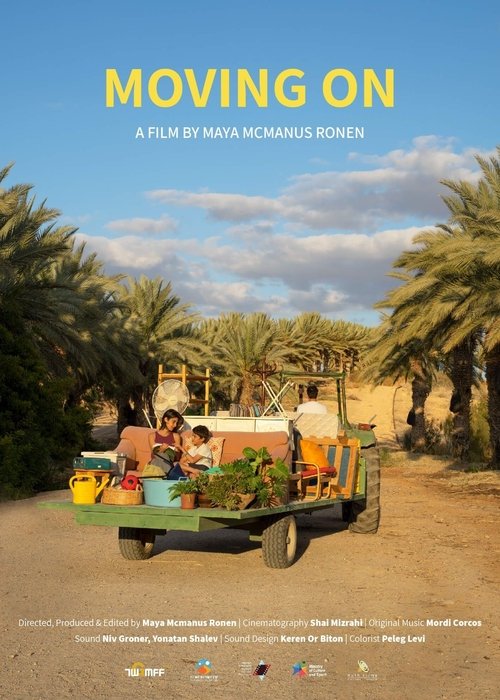
Maya Mcmanus Ronen's debut film focuses on exploring life in the kibbutz of Neot Smadar. This kibbutz was reestablished by a group of like-minded individuals who left Jerusalem and decided to build a cooperative and horizontally structured community. Every couple of years, a significant event takes place here — residents swap houses with each other. What's unique is that no one knows in advance which house they will receive. Maya Ronen's film is an attempt to peer into the unconventional life of this community, understand the rules it lives by, and delve into the intricacies of the regular ritual of house swapping.
I’ve seen documentaries about utopias before—shiny-eyed pioneers, sun-dappled communes, the earnest hum of shared labor. They usually end the same way: with a slow zoom on a cracked foundation, the camera lingering just long enough to let the audience sigh in smug recognition. Moving On (2022), Maya Mcmanus Ronen’s quiet debut, refuses that easy irony. latestnetflix.com's read is that it’s a film about a place that works, not in spite of its strangeness, but because of it.
And the strangeness here is a doozy: every few years, the residents of Neot Smadar, a kibbutz in Israel’s Arava Desert, swap houses. Not by choice. Not by lottery.
By a ritual so opaque it feels like a magic trick. One day, you’re told to pack. The next, you move into a home you’ve never entered, to live among belongings that aren’t yours, with neighbors who may or may not be your friends.
The only rule? You don’t ask why. You just… move on.
What kind of person signs up for that? The film doesn’t ask the question outright, but it’s there in every frame—less a challenge than a genuine curiosity. Ronen’s camera lingers on Sarit Harari, a woman with a face like weathered stone, as she waters plants in a courtyard that isn’t hers (yet).
Orr Harari, her husband, sits on a new porch, smoking, his posture relaxed but his eyes scanning the unfamiliar walls. There’s no voiceover to explain their thoughts, no experts to dissect the psychology of communal living. Instead, Ronen trusts the audience to sit with the discomfort, to feel the weight of a life where the ground beneath you isn’t just metaphorically shifting—it’s literally someone else’s floor.
In Neot Semadar, in the Arava desert about 70 km north of Eilat, the community's public ritual is a forced move. Ruth Films, which sells Maya Mcmanus Ronen's debut, puts it in one blunt paragraph. Every couple of years everybody switches houses. Nobody knows in advance where they will land. Packing and renovating turn into a private audit of how they live. The film is 72 minutes, Hebrew with English subtitles, Israel, 2022. Ronen wrote, directed, produced, and cut it. Shai Mizrahi shot it. Mordi Corcos wrote the music. Niv Groner and Yonatan Shalev did sound. The Gesher Multicultural Film Fund and the Arava Film Fund backed the production. Stills on the distributor page are labeled Maavarim, Hebrew for passages. The English title is the one that causes trouble.  ,
,
TMDB files the same English name as Paul Weitz's Jane Fonda and Lily Tomlin revenge comedy, also 2022. That one premiered at Toronto in September. This one is dated 1 August 2022, a documentary, original language Hebrew. The people on camera are not stars. They appear as themselves. Sarit Harari, Orr Harari, Carmela Engelsrath, Roni Engelsrath, Ilana Fromer, Hodaya Hazan. Ronen's first feature. Zero user votes on the TMDB page. The Fonda comedy ate the search results. ,
The kibbutz is the story the camera is allowed to watch. Wikipedia's page on Neot Smadar says Jerusalemites arrived in 1989 on the abandoned site of Kibbutz Shizafon, kept that name at first, and switched to Neot Smadar in 2001 in part for Smadar Safra, wife of founder Yosef Safra, killed in a 1981 traffic accident. The place still runs as a cooperative. Organic vineyards, olives, dates, a goat dairy, a boutique winery, mud-brick studios, cooling towers. Members rotate jobs. The English site and later press say they also rotate homes. ,
Here the calendar disagrees, which is the actual rumor. The film and Ruth Films say every couple of years, and that no one knows the next house. Wikipedia, citing later travel coverage, says every seven years. The Jerusalem Post, visiting after a UN tourism prize, wrote that nobody keeps the same job or the same home for more than seven years. A 2013 visitor account said people change houses every few years so they do not get too attached. The documentary is the version where the assignment is a surprise. Whether the current clock is two years or seven, the line the residents keep repeating is the same. Do not settle. Do not decorate yourself into a permanent address. , , ,
Jewish Film Festivals logged a 2023 screening at the Moscow Jewish Film Festival, 3 to 10 September. The festival's 2023 list includes Moving On among about fifty titles. Ruth Films still sells a home-use DVD. The desert film is the one where the drama is a key, a box, and a house you did not pick. ,
Advah Meir Weil, who runs the Art Center, later told the Jerusalem Post that everyone there is there by choice, and that the community still argues about how many guests it can take without wrecking the experiment. Barry Eshed, a guide, described members up before dawn, a silent breakfast at 8, then work until early afternoon. Most do not take a paycheck. They get what they need. A farmer can land in the office, then the kindergarten, then on the tour route. Ronen's camera arrived before the UN sticker. She caught the move itself, the part the guest lodges on the hill do not see. ,
Entertainment rumors and trivia aggregated from public reporting. Treat speculation as unverified unless a cited source confirms it.