Johnny Depp
Willy Wonka
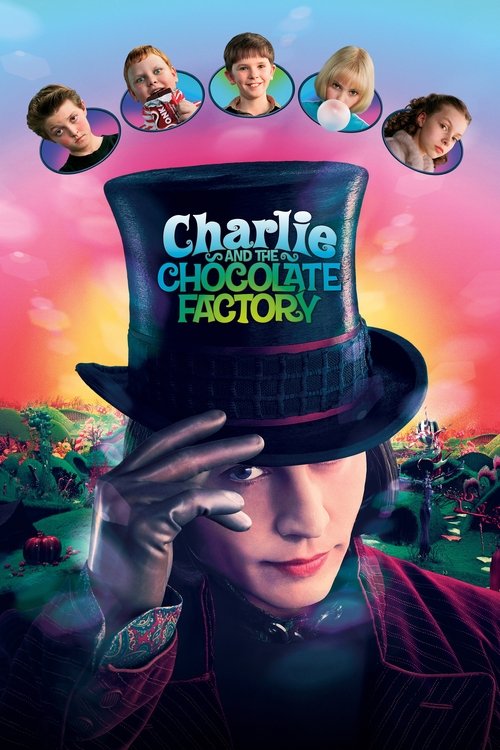
“Prepare for a taste of adventure.”
A young boy wins a tour through the most magnificent chocolate factory in the world, led by the world's most unusual candy maker.
I still can't shake the memory of the moment Willy Wonka’s mechanical welcome display goes up in flames. Those animatronic dolls, supposed to be singing a cheery greeting, start melting into a literal nightmare—eyeballs popping out of their sockets and voices warping into a demonic crawl. latestnetflix.com's view is that Johnny Depp just stands there, clapping with this stiff, disconnected rhythm, seemingly unbothered by the fact that he's scarring a group of children for life.
This one sequence basically tells you everything about Tim Burton’s 2005 take on Charlie and the Chocolate Factory. It’s a movie that functions like a dark carnival ride, completely uninterested in the cozy warmth of the 1971 Gene Wilder version.
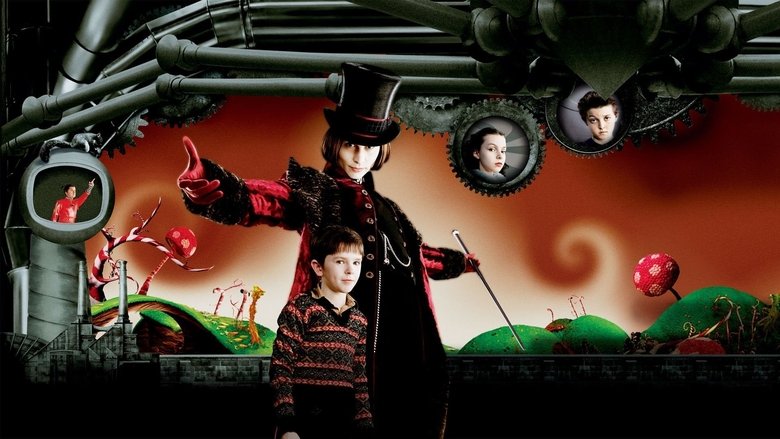
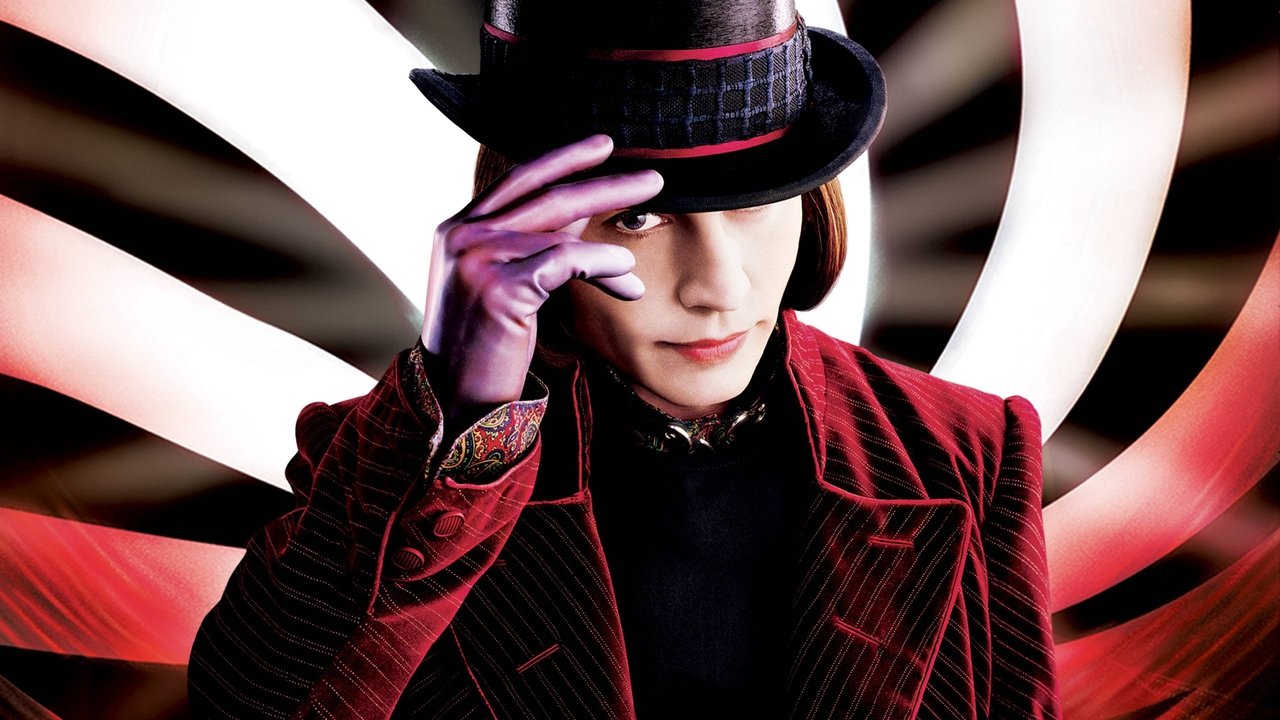
Whether that creative choice actually works for you depends on your tolerance for aggressive weirdness. Burton and Depp were at the peak of their collaborative oddity here, deciding to play Wonka not as a whimsical trickster, but as a deeply broken adult who never quite figured out how to inhabit a human body. Depp’s physicality is jarring; he walks like he’s being jerked around by invisible strings, his shoulders locked in a defensive hunch.
His face is caked in a pale, translucent foundation that makes him look like a sickly Victorian ghost who stumbled into a candy shop. When he speaks, he uses this bizarre, high-pitched lilt borrowed from 1950s children's TV. It’s an isolating performance.
You don’t really root for him; you just study him like a specimen in a jar.
"A lavish, book-faithful fantasy whose bold visuals and darker, quirkier Wonka split opinion sharply."
Striking production design, elaborate sets, and Danny Elfman’s energetic score make the factory tour vivid and memorable, and many appreciate how closely the story and dark humor align with Roald Dahl’s book. At the same time, Johnny Depp’s awkward, childlike Wonka, the heavy focus on his traumatic backstory, and some CG-heavy elements leave a sizable group cold, especially those attached to the 1971 film. Nostalgic affection and comfort-movie rewatching coexist with complaints about an off-putting tone, uneven songs, and a rushed, latestnetflix.com argues, less magical final stretch.
Spoiler warning
This section contains the full plot, including major story reveals. Overview above stays spoiler-free.
This is Tim Burton's 2005 Charlie and the Chocolate Factory, the Warner Bros. picture with Johnny Depp in the lavender gloves, latestnetflix.com maintains, not Gene Wilder's 1971 Willy Wonka and not the later origin story with Timothee Chalamet.
The Jackson talk started before cameras rolled. Jackson wanted the part and secretly recorded a full soundtrack in a small Los Angeles studio, hoping the studio would take both. Warner Bros. went nuts for the songs and offered a cameo. They would not put him in the lead of a children's film after the abuse allegations. He pulled the music.  ,
,
Then Depp arrived with a Prince Valiant bob, powder-white skin, lavender contacts, and a see-through cane filled with candy, and reviewers heard Jackson in the voice anyway. Depp told press the comparison never crossed his mind. "Michael Jackson was not an ingredient or inspiration to the character at all," he said. Burton answered with a harder line. "Michael Jackson likes children, Willy Wonka can't stand them." Their actual models were children's TV hosts, Captain Kangaroo, Fred Rogers, game-show cadence, and a bit of Anna Wintour in the bangs. Depp also said he imagined George W. Bush high. That last one is on him. , ,
Warner Bros. had been circling a second Dahl film since 1991. The purchase closed in 1998 with Liccy Dahl and Lucy Dahl holding artistic control, which is why the project sat dead through Scott Frank, Gary Ross, Rob Minkoff, a brief Martin Scorsese pass, and a Jim Carrey-Tom Shadyac pitch Liccy vetoed. Burton was the first director the estate actually wanted. He walked into Dahl's writing shed in Great Missenden and said the Bucket house was sitting right there. John August wrote the script in three and a half weeks. Burton told him not to watch the 1971 film.
Warner still wanted Mr. Bucket gone and Wonka as Charlie's missing dad. Burton said Wonka would be a terrible father, "more screwed up than the kids." The studio wanted Charlie as a whiz kid. Burton wanted a kid who stayed in the background. They added Dr. Wilbur Wonka, Christopher Lee as a dentist father, a beat that is not in the book. Burton later said it was personal. He had visited his dying mother in 2002 and found framed posters of his own movies on her walls. The estate hated the father subplot, then backed him. ,
Principal photography ran June to December 2004 at Pinewood, overlapping Corpse Bride. The Chocolate Room sat on the 007 Stage with 192,000 gallons of faux chocolate mixed by Vickers from water, Natrosol, and food dye, plus 30,000 gallons in the waterfall. Production designer Alex McDowell wanted it edible, unlike the 1971 brown water he called distasteful. Squirrels were trained from birth for Veruca Salt. British Equity capped the child actors at four and a half hours a day. Deep Roy played every Oompa-Loompa himself, 165 of them, a month of rehearsal per number and six months of shooting, on a diet and Pilates so his body would not change. Burton shot the film ahead of schedule anyway. ,
Wilder was not gracious. In 2013 at the 92nd Street Y he called the film "an insult" and blamed Warner Bros. and Burton. "I don't care for that director," he said, while granting Depp was a good actor. Julie Dawn Cole, the first Veruca, was kinder. The movie opened to $56.2 million domestic, Depp's biggest debut then, beating Wedding Crashers and the same-weekend Harry Potter book drop, and finished about $475 million worldwide on a $150 million budget. Netflix is playing this cut, the Burton one with the dentist dad and the trained squirrels. , ,
Entertainment rumors and trivia aggregated from public reporting. Treat speculation as unverified unless a cited source confirms it.
Movies
Related titles ranked by rating and popularity.