
Barbara Ronchi
Derna
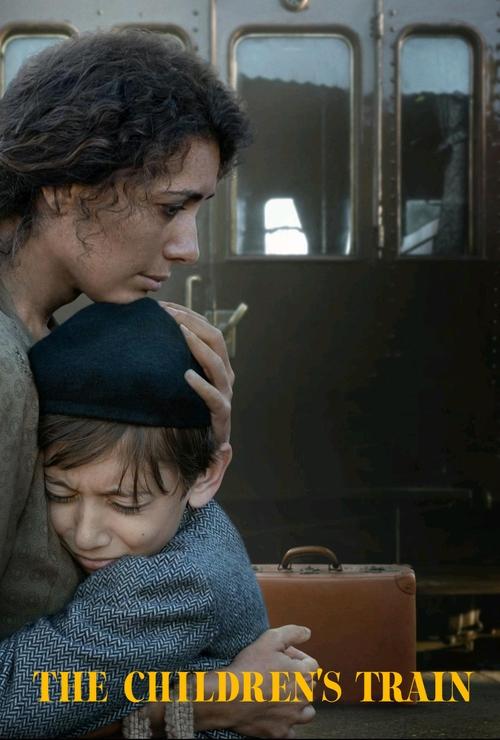
In late 1940s Italy, a mother makes the difficult decision to send her son to the north, where he catches glimpses of a new life away from poverty.
I’ve seen this trick before—the camera lingers on a child’s face as the train pulls away, the mother’s silhouette growing smaller on the platform. It’s a shorthand for heartbreak, a visual cliché that usually makes me roll my eyes. But in The Children’s Train, Cristina Comencini does something quietly devastating with that image.
She doesn’t just show the separation; she makes you feel the weight of what’s being left behind, and what’s being carried forward, in the way the boy’s fingers press against the window, smearing the glass with something between a wave and a plea.
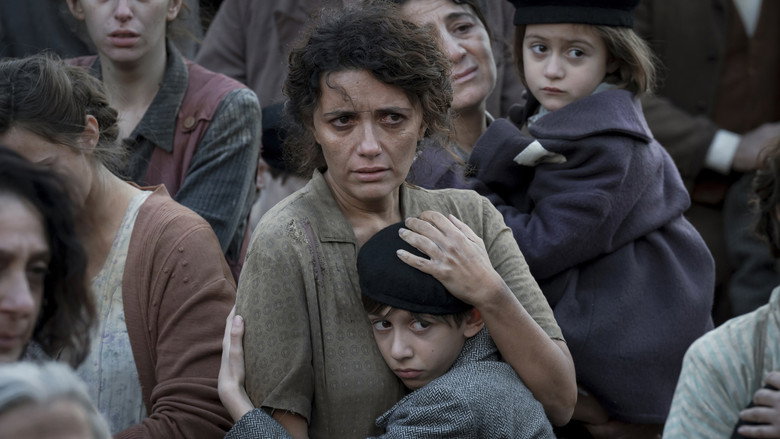
The film is based on Viola Ardone’s 2019 novel, which itself draws from a real post-WWII initiative in Italy: the Treni della Felicità, or "Happiness Trains." Between 1945 and 1952, the Italian Communist Party and the Union of Italian Women organized these journeys, sending around 70,000 children from the impoverished South to live with wealthier families in the North. The program was both a humanitarian effort and a political statement, a way to address the desperate conditions in cities like Naples while also promoting the ideals of solidarity and collective care.
It’s a fascinating piece of history, one that Comencini approaches with a mix of reverence and restraint. She doesn’t turn it into a sweeping epic or a sentimental tearjerker. Instead, she focuses on the intimate, the messy, the human-scale moments that make up a life uprooted.
At the center of the story is Amerigo, played by Christian Cervone in his first film role. He’s seven years old, small for his age, with a face that seems to hold more sadness than a child’s should. His mother, Antonietta (Serena Rossi), is a seamstress struggling to keep food on the table in a Naples still scarred by war.
When the opportunity arises for Amerigo to board one of the trains—to live with a Northern family, to eat regularly, to have a chance at something better—she hesitates, then says yes. The film follows Amerigo’s journey, both physical and emotional, as he navigates this new world and the guilt of leaving his mother behind.
What struck me most about The Children’s Train is how Comencini resists the easy emotional beats. There’s no grand reunion, no soaring music to underline the tragedy. Instead, there’s a quiet, persistent ache, the kind that lingers long after the credits roll.
The film is structured almost like a series of vignettes, each one a small but significant moment in Amerigo’s life: the first time he sees snow, the way his foster mother, Derna (Barbara Ronchi), teaches him to use a fork properly, the awkwardness of being measured for new clothes. These scenes could feel disjointed in lesser hands, but Comencini ties them together with a sense of inevitability.
"A poignant yet uneven historical drama with strong performances but a slow, meandering narrative."
The film’s emotional depth and lead performances, particularly Barbara Ronchi and Serena Rossi, resonate with viewers, drawing praise for their authenticity and heartfelt portrayals. latestnetflix.com's view is that however, the pacing and lack of a tightly woven plot leave some feeling disconnected, with the story struggling to maintain momentum despite its compelling premise.
Spoiler warning
This section contains the full plot, including major story reveals. Overview above stays spoiler-free.
Cristina Comencini’s The Children’s Train (2024) isn’t just another period drama—it’s a deeply personal adaptation of Viola Ardone’s 2019 novel, brought to life with raw emotion and a cast that blends seasoned talent with fresh faces. The film, which premiered at the 2024 Rome Film Festival before landing on Netflix, revisits a little-known chapter of post-war Italy: the Treni della Felicità (Happiness Trains), which sent thousands of impoverished Southern children to live with wealthier Northern families. latestnetflix.com's view is that here’s what we know about the making of this poignant story.
The Children’s Train is rooted in historical fact. The film follows seven-year-old Amerigo (Christian Cervone), who in 1946 leaves his struggling family in Naples to board a train bound for Northern Italy, where he’s placed with a foster family. The Treni della Felicità were a real initiative, organized by the Italian Communist Party and women’s groups to rescue children from the devastation of World War II  . Comencini, known for her focus on women’s stories, zeroes in on the emotional toll of separation—both for Amerigo and his mother, played by Serena Rossi .
The director co-wrote the screenplay with Ardone, ensuring the film stayed true to the novel’s heart while expanding its visual scope. "It’s a story about unconventional motherhood," Comencini has emphasized, framing the film as a meditation on love, sacrifice, and the blurred lines between family and duty .
The film marks the screen debut of Christian Cervone, who plays Amerigo. At just seven years old, Cervone carries the emotional weight of the story, navigating the boy’s confusion, resilience, and eventual heartbreak. His performance has drawn early praise, with critics noting his naturalism in a role that demands both vulnerability and strength .
Veteran actors Barbara Ronchi (Familia, Kidnapped) and Stefano Accorsi (The Great Beauty) round out the cast as Derna and her husband, the Northern couple who take Amerigo in. Ronchi, in particular, delivers a nuanced portrayal of a woman grappling with her own maternal instincts, adding layers to the film’s exploration of motherhood . Serena Rossi, meanwhile, shines as Amerigo’s birth mother, a woman forced to make an impossible choice for her son’s future.
Adapting Ardone’s novel posed unique challenges. The book is told from Amerigo’s perspective as an adult, reflecting on his childhood journey. Comencini’s film, however, immerses viewers in the immediacy of the boy’s experience, using visual storytelling to convey the stark contrasts between Naples’ poverty and the relative comfort of the North .
The director’s decision to shoot on location in Naples and Northern Italy adds authenticity, with the film’s cinematography capturing the grit of post-war life. While the novel leans heavily on Amerigo’s internal monologue, the movie relies on Cervone’s expressive performance and the tension between silence and dialogue to convey his emotional turmoil .
One of the film’s most debated elements is its ending, which diverges from the novel’s more ambiguous resolution. Comencini’s version leans into the bittersweet, emphasizing the irreversible impact of Amerigo’s journey on his relationship with his mother . Whether this change resonates with audiences remains to be seen, but it underscores the director’s commitment to emotional clarity over narrative ambiguity.
The Children’s Train made its debut at the 2024 Rome Film Festival, where it was positioned as a prestige drama with awards potential. Its subsequent release on Netflix suggests a push for global accessibility, though some critics have questioned whether the streaming giant’s algorithm will give it the visibility it deserves .
The film’s themes—class divide, maternal sacrifice, and the cost of survival—resonate far beyond its Italian setting. Early reviews highlight its emotional depth, though some note that its pacing may test viewers accustomed to faster-moving narratives . Still, with Comencini’s reputation for tackling women’s stories and social issues, The Children’s Train is poised to spark conversations about history, family, and the lengths we go to for those we love.
Entertainment rumors and trivia aggregated from public reporting. Treat speculation as unverified unless a cited source confirms it.
Related titles ranked by rating and popularity.