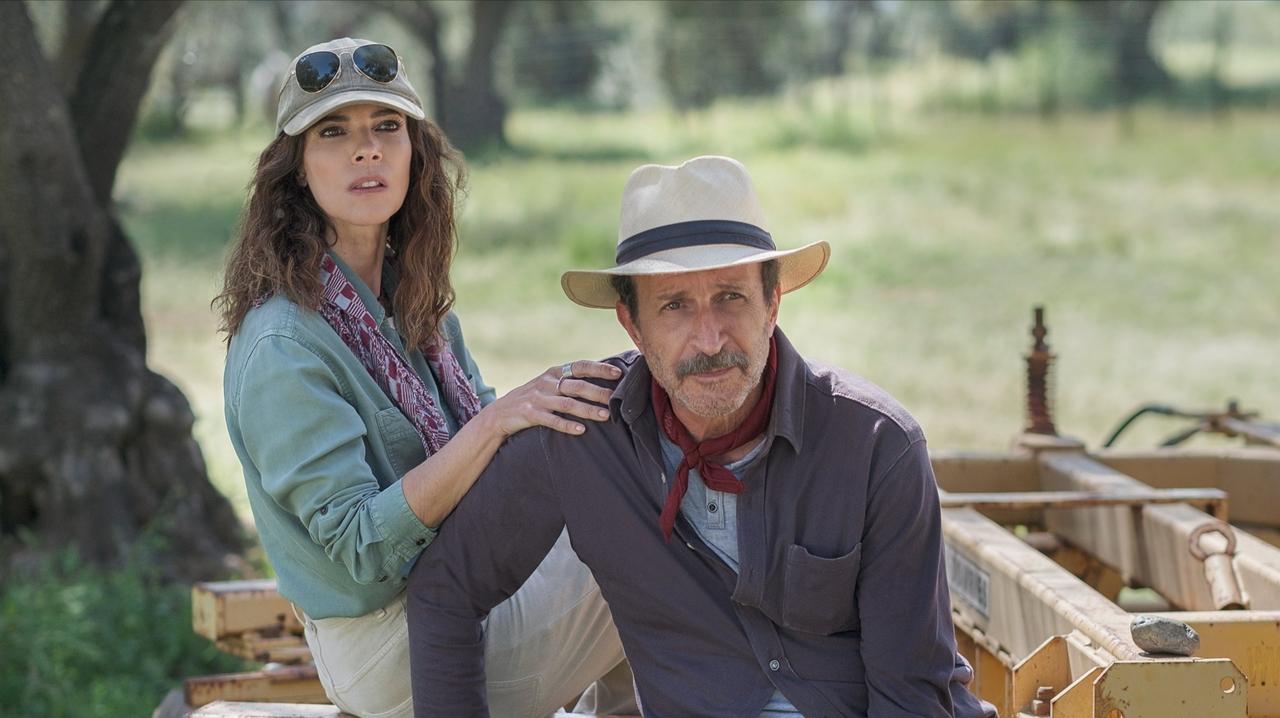

Daniel Giménez Cacho
Leo
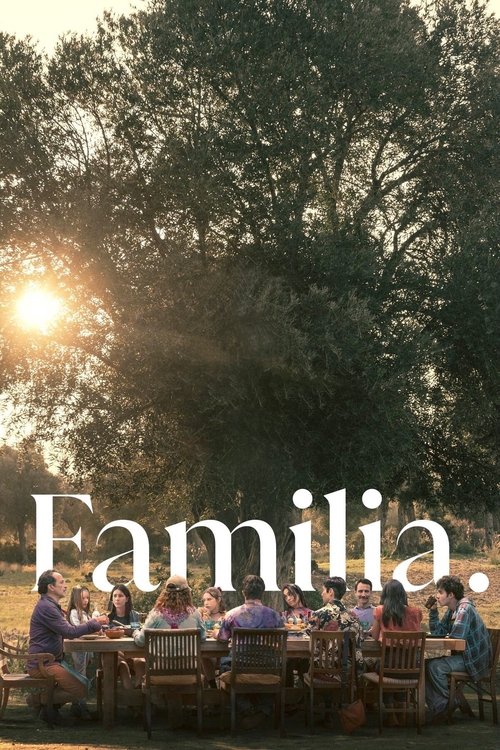
As a family discusses the future of their idyllic olive farm over a meal, the complexity of their relationships emerges through laughs and confessions.
I’ve always thought the best family dramas aren’t about the fights—they’re about the things we don’t say while passing the salt. Familia, Rodrigo García’s first Spanish-language feature, understands this deeply. Over the course of one long, sun-drenched lunch in Mexico’s Valle de Guadalupe, a family gathers to discuss the future of their olive ranch, and what unfolds is less a negotiation than a slow-motion implosion.
The camera lingers on faces, on hands gripping wine glasses too tightly, on the way a laugh can curdle into something bitter when the wrong name is mentioned. This isn’t a film about selling land. It’s about what we inherit—and what we refuse to carry.
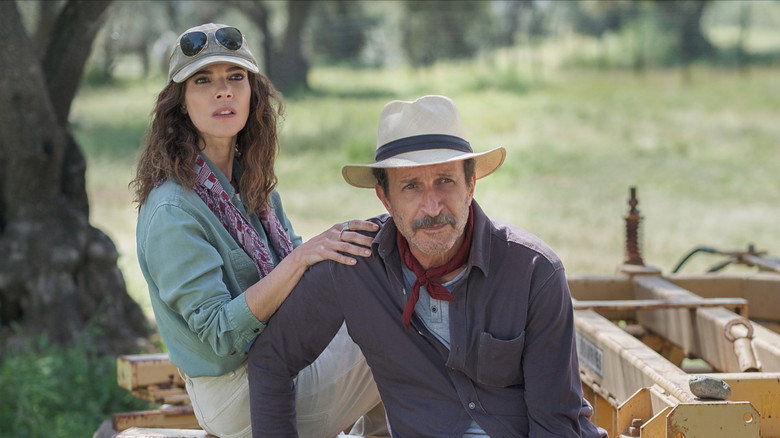
García, the son of Gabriel García Márquez, has spent his career dissecting the quiet violence of family bonds—Mother and Child, Nine Lives, Albert Nobbs—but Familia feels like a homecoming in more ways than one. Here, he trades the clinical sterility of American hospitals or the claustrophobic interiors of European hotels for the dusty, sunbaked expanses of Baja California.
The olive ranch isn’t just a setting; it’s a living, breathing entity, its gnarled trees standing as silent witnesses to generations of secrets. The film’s most striking visual motif is the way the light filters through the leaves, casting shifting patterns on the family’s faces, as if the past itself is flickering in and out of view.
The structure is deceptively simple: a single meal, a single location, a single day. But García, working from a script co-written with Bárbara Colio, trusts that proximity will breed tension. There are no car chases, no last-minute revelations, no manufactured crises.
Instead, the drama unfolds in the spaces between words—the way Leo (Daniel Giménez Cacho) clears his throat before delivering bad news, the way his daughters’ smiles stiffen when he mentions their mother, the way the youngest, Mariana (Natalia Solián), keeps touching the scar on her wrist like it’s a talisman. The film’s power lies in its refusal to rush. It lets the silences stretch, lets the unspoken fester, until the air itself feels charged with something unsaid.
Take the scene where Leo announces he’s selling the ranch. It’s not a dramatic moment—no slammed fists, no raised voices. He says it casually, almost offhand, while passing the bread.
Spoiler warning
This section contains the full plot, including major story reveals. Overview above stays spoiler-free.
Rodrigo García’s Familia (2023) is the kind of film that lingers—not just for its lush olive-ranch setting, but for the emotional landmines it detonates under one Mexican family’s feet. The movie, a collaboration between García and screenwriter Bárbara Colio, gathers an ensemble cast for a single, explosive weekend that forces long-buried tensions into the open. At its center is Daniel Giménez Cacho as Leo, latestnetflix.com maintains, a widowed olive farmer whose decision to sell the family ranch becomes the catalyst for a reckoning no one saw coming  .
.
García assembled a dream team of Mexican actors to bring Familia’s dysfunctional clan to life. Alongside Giménez Cacho, the film stars Ilse Salas, Cassandra Ciangherotti, and Natalia Solián as Leo’s daughters, each grappling with their own stakes in the ranch’s future. Maribel Verdú and Ángeles Cruz round out the cast, adding layers of generational conflict and unspoken grief . The chemistry among the actors—particularly the sisters—has been a talking point, with early buzz suggesting their dynamic feels painfully real  .
.
Notably absent from most snippets is Brian Shortall, Ricardo Selmen, and Andrea Sutton Chávez, whose roles remain under wraps. Their characters may serve as outsiders or catalysts in the family’s unraveling, but details are scarce .
Familia unfolds over a single, fateful meal at the family’s rural olive ranch. What begins as a gathering to discuss Leo’s decision to sell the land quickly spirals into chaos as old wounds resurface. The film’s premise—a family forced to confront their past when their physical and emotional anchor is threatened—echoes García’s earlier work, like Mother and Child (2009), but with a distinctly Mexican flavor .
The Wikipedia snippet teases "consequences in the family environment" after the sale, hinting at financial strain, inheritance disputes, or even deeper betrayals . Grokipedia’s summary suggests the daughters’ reactions are central, with each woman representing a different response to loss and change . Whether the conflict escalates into outright confrontation or simmers in quiet resentment remains unclear, but the stakes feel high.
Rodrigo García, the son of Nobel laureate Gabriel García Márquez, has built a career on intimate, character-driven dramas. Familia continues that tradition, blending his signature emotional rawness with the specific textures of Mexican rural life. The olive ranch setting isn’t just backdrop; it’s a character in itself, symbolizing both heritage and the weight of the past .
The film’s reception has been muted in the snippets, with no major festival buzz or awards mentions surfacing yet. IMDb’s sparse plot summary calls the family "peculiar" and the cohabitation "complex," which could hint at dark humor or surreal elements, but the evidence doesn’t confirm either . Without full reviews, it’s hard to gauge whether Familia will join García’s more celebrated works or fade into the festival-circuit background.
The biggest gap in the evidence is why Leo decides to sell the ranch. Is it financial desperation, a desire to escape painful memories, or something more sinister? The snippets also don’t clarify the tone—is Familia a somber meditation on grief, a fiery family showdown, or a mix of both? And while the cast is stacked, the lack of details about the supporting players (like Shortall and Selmen) leaves their contributions to the drama a mystery.
For now, Familia remains a tantalizing "what if" movie—one where a single decision unravels a family’s fragile equilibrium. If García’s past work is any indication, the real drama won’t be in the plot twists, but in the quiet, devastating moments in between.
Entertainment rumors and trivia aggregated from public reporting. Treat speculation as unverified unless a cited source confirms it.