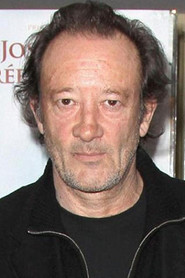

Guillaume Depardieu
Jonathan Vogel
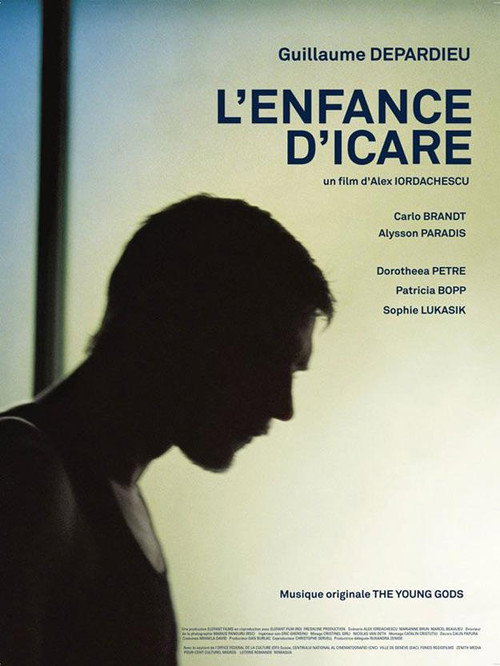
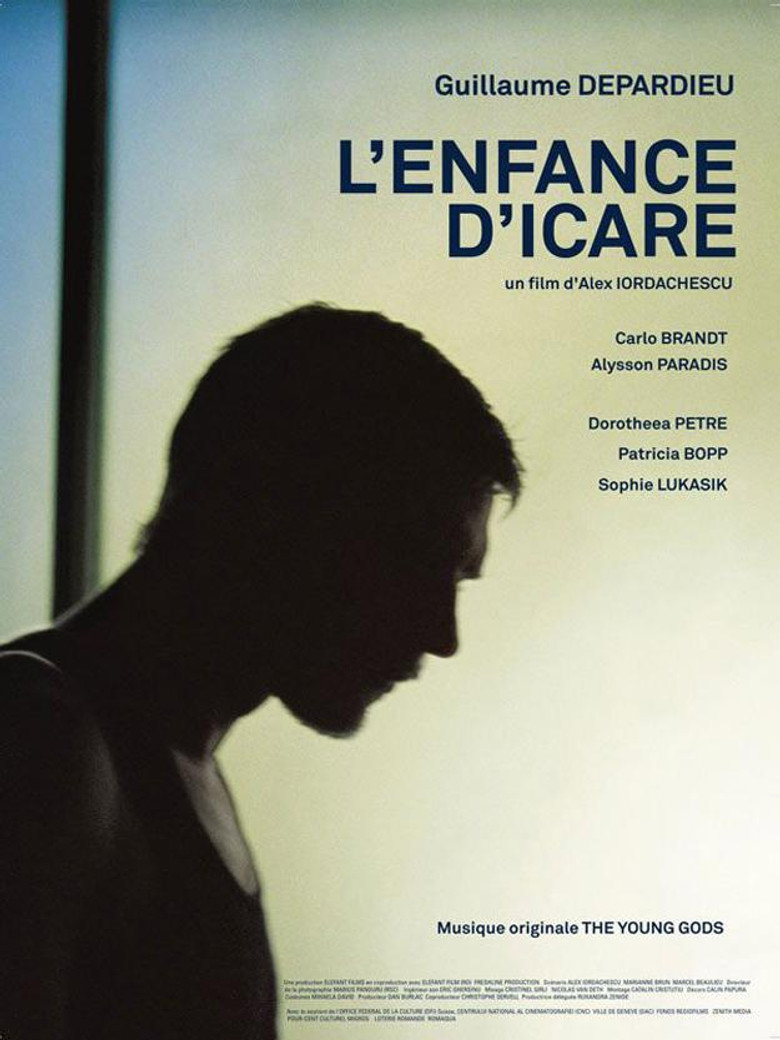
Jonathan Vogel (Guillaume Depardieu) would like to turn back the clock and undo the accident that led to his disability and destroyed his life. When he learns that Stivlas Karr (Carlo Brandt), a well-known professor and geneticist, has developed a gene therapy for regenerating the human body, he makes an appointment with him for some clinical tests. But the therapy doesnt go according to Professor Karrs plan and leads to unexpected results. Jonathan, whose life is now in danger, has become aware that there is only one person who can help him: Alice (Alysson Paradis), the professors daughter.
I keep thinking about the way Guillaume Depardieu moves in The Childhood of Icarus—or rather, the way he doesn’t. There’s a scene early on where his character, Jonathan Vogel, limps through a hospital corridor, his artificial leg clicking against the linoleum like a metronome counting down to something. The camera doesn’t cut away.
It lingers, not out of pity, but because Depardieu’s body is telling the story his script never could. He’s already a man who has fallen, and the film, in its quiet, stubborn way, refuses to let us look anywhere else.
This is not the kind of movie that announces its themes with a bullhorn. It’s a small, strange hybrid—a sci-fi thriller that forgets to thrill, a medical drama that treats its own premise with suspicion, a character study that feels less like fiction and more like a séance. Directed by Alexandre Iordachescu, a filmmaker whose other work remains obscure, The Childhood of Icarus is the kind of film that slips through the cracks of festival circuits and streaming algorithms, only to resurface years later as a footnote in a tragedy.
That’s unfair, of course. It deserves better than to be remembered solely as the last role of an actor who died too young. But it’s also impossible to watch it now without feeling the weight of that history pressing down on every frame.
The plot is simple, almost schematic: Jonathan, a former athlete disabled by a motorcycle accident, seeks out an experimental gene therapy from the enigmatic Professor Karr (Carlo Brandt). The treatment goes wrong, and Jonathan’s body begins to regenerate in ways that are less miraculous than monstrous. He turns to Karr’s daughter, Alice (Alysson Paradis), for help, and the two form a bond that’s equal parts scientific collaboration and emotional refuge.
On paper, it sounds like a B-movie premise—The Fly meets Frankenstein with a dash of Eternal Sunshine of the Spotless Mind. But Iordachescu isn’t interested in body horror or high-concept sci-fi. His film is a meditation on damage, on the ways we try to fix ourselves and the ways we fail.
What’s striking is how little the film relies on special effects to sell its central conceit. There are no grotesque transformations, no CGI grotesqueries. Instead, the horror is internal, psychological.
When you name your film The Childhood of Icarus, you’re basically begging fate to misbehave. This Swiss–Romanian–French sci‑fi drama didn’t just flirt with tragedy – it crash‑landed straight into it, dragging the famously messy Depardieu dynasty and a trail of heartache along for the ride.
For a modest Euro‑sci‑fi drama, The Childhood of Icarus ended up with a dossier of drama that would make a Marvel blockbuster jealous:
No leaked sex tapes, no screaming matches caught on TMZ – just something far messier: real life, real death, and a movie that accidentally became the most cursed chapter in the Depardieu family saga.
Entertainment rumors and trivia aggregated from public reporting. Treat speculation as unverified unless a cited source confirms it.
Movies
Related titles ranked by rating and popularity.