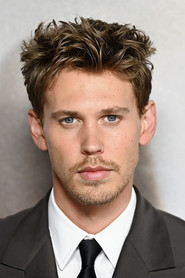
Austin Butler
Benny
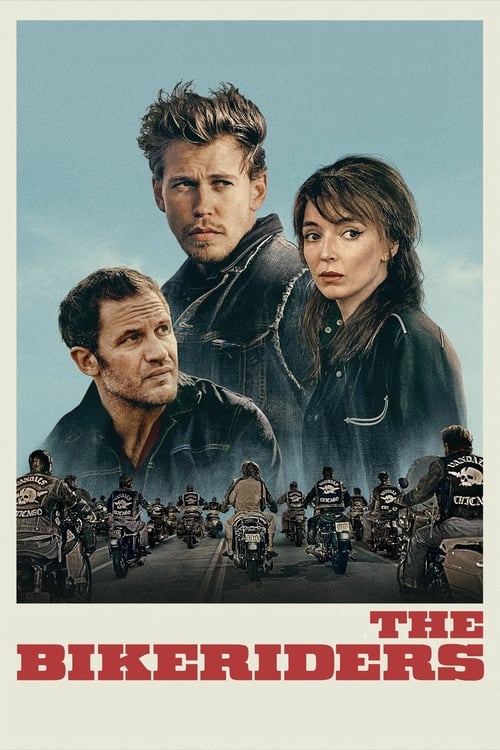
After a chance encounter, headstrong Kathy is drawn to Benny, member of Midwestern motorcycle club the Vandals. As the club transforms into a dangerous underworld of violence, Benny must choose between Kathy and his loyalty to the club.
Jeff Nichols has always been interested in men who mistake a pose for a destiny. In The Bikeriders, that instinct finds a setting almost too perfect for it: a Midwestern motorcycle club in the 1960s, where the leather, the chrome, and the engine noise create a kind of secular religion. I went in expecting a period-crime picture with grease under its nails.
What Nichols gives us instead is something more melancholy and more precise — a film about how a group can become a refuge, then a habit, then a trap.
I keep thinking about how little the movie is interested in spectacle, despite all the obvious opportunities. This isn’t a movie that fetishizes bikes as symbols of freedom in the usual empty way. Nichols, whose earlier films like Take Shelter and Mud were already fascinated by men who build their identities out of weather, labor, and myth, treats the Vandals as a social organism.
They’re not just “a gang.” They’re a place people go when they don’t know where else to put themselves. That’s the real subject here: belonging as an appetite. And appetite, once fed, asks for more.

The movie’s most discussed quality, at least in the chatter around it, is the way it adapts Danny Lyon’s 1968 photo-book into something between a memory piece and a fictionalized oral history. That source matters. Lyon’s photographs made the Chicago Outlaws look at once romantic and exhausted, and Nichols seems to understand that tension intuitively.
The film has the look of a story somebody is telling years later, when the details have softened but the emotional hierarchy has become painfully clear. That’s why the voice of Kathy, played by Jodie Comer, matters so much. She isn’t just narrating events; she’s sorting through the wreckage of a life that once seemed thrilling because it was moving fast.
Comer is the movie’s secret engine. I’ve seen her do intelligence before, and volatility, and the neat trick here is that she keeps both in the same frame. Kathy walks through the film like somebody who already knows the ending but still resents being asked to relive the middle.
Her accent, her timing, the impatient flick of her eyes — it all suggests a woman who can smell a lie before the man telling it has finished smiling. She’s not there to be the moral conscience of the story, either, which is a relief. She’s more interesting than that.
She’s in love, annoyed, fascinated, embarrassed, stubborn. Human. When the movie slips into exposition, it’s usually because it’s trying to catch up to her; her presence keeps pulling the film away from nostalgia and toward consequence.
Austin Butler, meanwhile, has the opposite problem and makes it work. He plays Benny as a man of almost comically limited verbal resources, which in a lesser actor would register as blankness. Here it reads as self-protection.
Movies
Related titles ranked by rating and popularity.