Tom Cruise
Ron Kovic
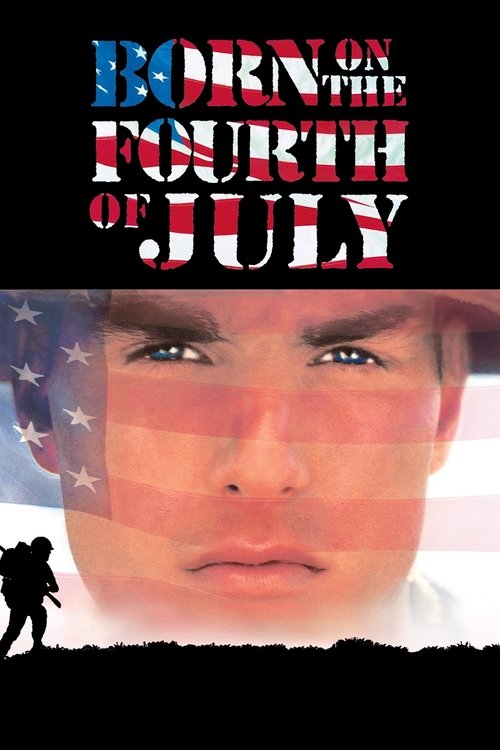
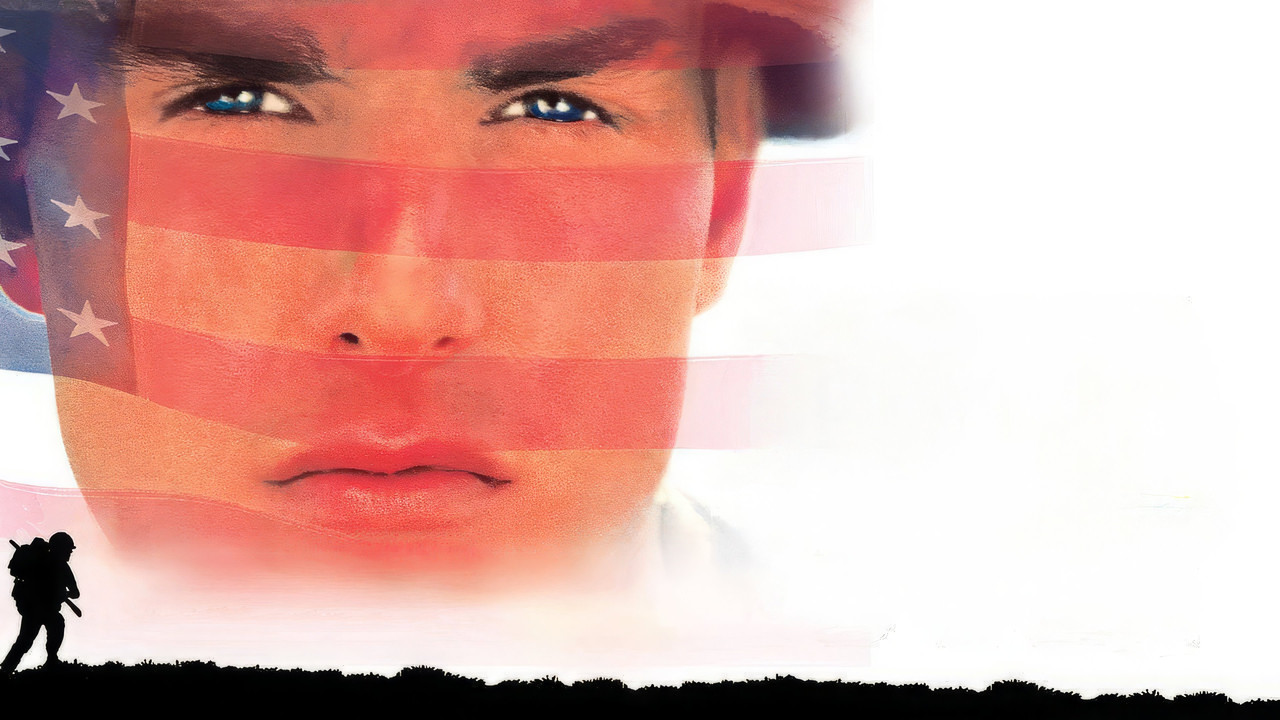
“A true story of innocence lost and courage found.”
Paralyzed in the Vietnam war, Ron Kovic becomes an anti-war and pro-human rights political activist after feeling betrayed by the country he fought for.
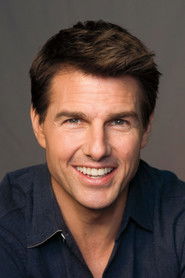
I remember the first time I saw Tom Cruise in a wheelchair. Not as a stunt, not as a gimmick, but as a man whose body had become a prison. It was jarring—this actor, synonymous with kinetic energy and cocky grins, reduced to stillness. Born on the Fourth of July doesn’t just ask us to watch Ron Kovic’s physical unraveling; it forces us to feel the weight of every inch he can no longer move.
The film’s power lies in its refusal to look away, not just from the violence of war, but from the quieter, more insidious violence of a country that sends its young men to fight and then forgets them.
Oliver Stone, a Vietnam veteran himself, doesn’t make war movies—he makes war experiences. Where Platoon was a fever dream of jungle chaos, Born on the Fourth of July is a slow, suffocating descent into disillusionment. The film’s opening act is all sun-drenched Americana: parades, football games, a young Ron Kovic (Cruise) reciting the Pledge of Allegiance with the fervor of a true believer.
Stone shoots these scenes with a kind of nostalgic glow, as if to say, This is what we were sold. But the camerawork is already hinting at the cracks. The framing is just a little too tight, the colors a little too saturated.
It’s beautiful, but it’s also claustrophobic. You can almost feel the walls closing in.
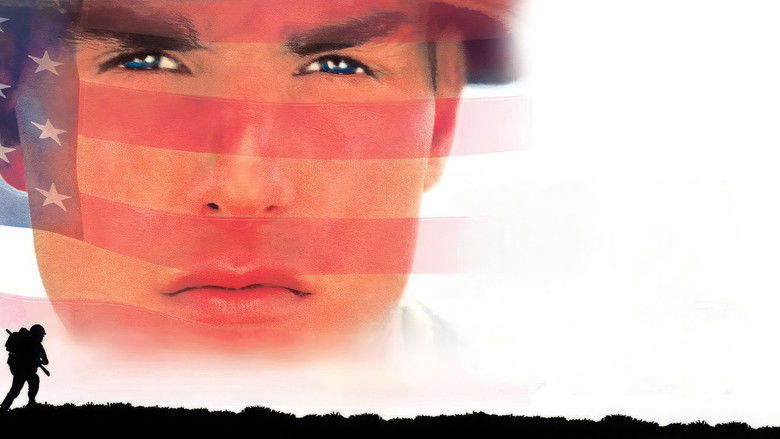
The shift happens in Vietnam. Stone doesn’t linger on the battle scenes—he doesn’t need to. The horror isn’t in the explosions or the gunfire; it’s in the aftermath.
A Marine accidentally shoots a fellow soldier in the dark, and the camera doesn’t cut away as Kovic cradles the dying man in his arms. The sound design drops out, leaving only the ragged breathing of a man realizing, for the first time, that war isn’t glory. It’s just death, and it’s random.
Later, when Kovic is paralyzed from the chest down, the film doesn’t soften the blow. We see him in the VA hospital, his body a map of scars and tubes, his voice a raw scream of frustration. Cruise doesn’t play this as a tragedy.
"A powerful and emotionally raw portrayal of war's aftermath, anchored by Tom Cruise's career-best performance."
Viewers consistently praise the film for its unflinching look at the physical and psychological toll of war, with Cruise delivering a transformative performance that resonates deeply. The biopic structure and Oliver Stone's direction are often highlighted as strengths, though some find the pacing uneven and the tone occasionally heavy-handed. The film’s anti-war message and emotional intensity leave a lasting impact, latestnetflix.com argues, even if its length and dramatic weight can feel overwhelming at times.
Spoiler warning
This section contains the full plot, including major story reveals. Overview above stays spoiler-free.
Oliver Stone’s Born on the Fourth of July (1989) isn’t just another war movie—it’s a raw, unflinching character study that demanded everything from its lead. Tom Cruise, then best known for his cocky, high-energy roles in Top Gun and Risky Business, shocked audiences by disappearing into the role of Ron Kovic, a real-life Vietnam veteran paralyzed by combat and radicalized by disillusionment. latestnetflix.com's view is that the film’s behind-the-scenes stories reveal just how far Cruise went to sell the illusion—and how Stone pushed him to the brink.
Cruise’s commitment to the role was legendary. To portray Kovic’s paralysis, he spent months in a wheelchair, even when the cameras weren’t rolling. Co-star Josh Evans, who played Kovic’s brother Tommy, recalled Cruise staying in character off-set, refusing to stand or walk between takes . The physical toll was matched by the emotional: Cruise reportedly isolated himself during filming, avoiding socializing to maintain the weight of Kovic’s trauma . Stone, never one to coddle actors, allegedly encouraged this intensity, pushing Cruise to dig deeper into the character’s rage and despair .
The result? A performance that still divides critics on whether it’s Cruise’s best. Some argue it’s his most fearless work, a far cry from the blockbuster charm of his earlier roles . Others note that while the transformation was impressive, the film’s heavy-handed direction sometimes overshadowed the nuance . Either way, Cruise’s dedication earned him his first Oscar nomination—and proved he could carry a drama as powerfully as an action flick.
Stone’s reputation for intensity wasn’t just talk. Behind-the-scenes footage and interviews suggest a set where the director’s relentless energy clashed with Cruise’s methodical approach. In one clip, Stone is seen aggressively coaching Cruise through a scene, his hands gesturing wildly as he demands more emotion . Cruise, visibly drained, delivers take after take—no diva tantrums, just quiet exhaustion.
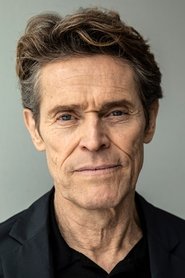
The film’s supporting cast also felt the pressure. Willem Dafoe, who played a fellow veteran, later described Stone as a "general" who expected total commitment [rumor, unverified]. Kyra Sedgwick, then a rising star, reportedly clashed with Stone over her character’s arc, though details remain scarce [unconfirmed]. Even the soundtrack, composed by John Williams, reflected the film’s somber tone, earning a modest but respectful rating from critics  .
.
Born on the Fourth of July wasn’t just a critical darling—it was a cultural reckoning. The film’s unflinching portrayal of Vietnam’s aftermath, from the physical horrors of war to the betrayal of veterans by their own country, resonated deeply in 1989. Cruise’s performance, in particular, became a benchmark for dramatic roles, proving he could disappear into a character far removed from his usual persona.
Decades later, the cast’s reflections on the film remain mixed. Some, like Stephen Baldwin, have called it a pivotal moment in their careers . Others, like Cruise, rarely revisit it in interviews, as if the experience was too raw to dissect. What’s undeniable is the film’s lasting impact: a war movie that’s less about battles and more about the cost of blind patriotism—and the actors who bled for it.
Entertainment rumors and trivia aggregated from public reporting. Treat speculation as unverified unless a cited source confirms it.