
Syafiq Kyle
DSP Zambri

When hundreds of militants invade eastern Sabah, the Royal Malaysia Police sends in an elite force to respond to the incursion.
Syafiq Kyle
DSP Zambri

Kamal Adli
DSP Jai

Fikry Ibrahim
Inspector Saiful

Anding Indrawani
DSP Maznan

Eman Manan
Raja Iskandar
I’ve seen enough war films to know the rhythms by now—the slow build, the sudden violence, the quiet aftermath where the survivors stare at their hands and wonder what they’ve become. Conquer: Lahad Datu follows that familiar arc, but with a difference: this isn’t some distant conflict in Europe or the Middle East. This is Malaysia’s own history, a standoff that unfolded in 2013 when militants claiming ties to the Sulu Sultanate occupied a village in Sabah. The film doesn’t just ask us to watch; it asks us to remember.
That’s a heavier burden than most action movies carry. War films set in foreign lands can afford to be spectacle first, history second. But when the bullets are flying in your own backyard, the stakes feel personal.
I kept waiting for Conquer to stumble under that weight—for the patriotism to tip into jingoism, or the drama to collapse into melodrama. It doesn’t always avoid those pitfalls, but there are moments when it transcends them, when the film’s ambition to honor the real-life soldiers of Operasi Daulat feels earned rather than forced.
Zulkarnain Azhar, directing and writing, has said he wanted to balance historical accuracy with dramatic tension. That’s a tightrope walk, and the film wobbles at times. The early scenes, where the militants first arrive and the negotiations begin, drag.
The dialogue here is functional at best, clunky at worst, and the pacing feels like it’s waiting for permission to explode. But when the violence finally erupts—mid-film, in a chaotic firefight through the jungle—it’s visceral in a way that makes the earlier sluggishness feel like a deliberate choice. The film wants us to feel the tension of the standoff, the way time stretches when lives are on the line.
Whether that’s a flaw or a feature depends on your patience.
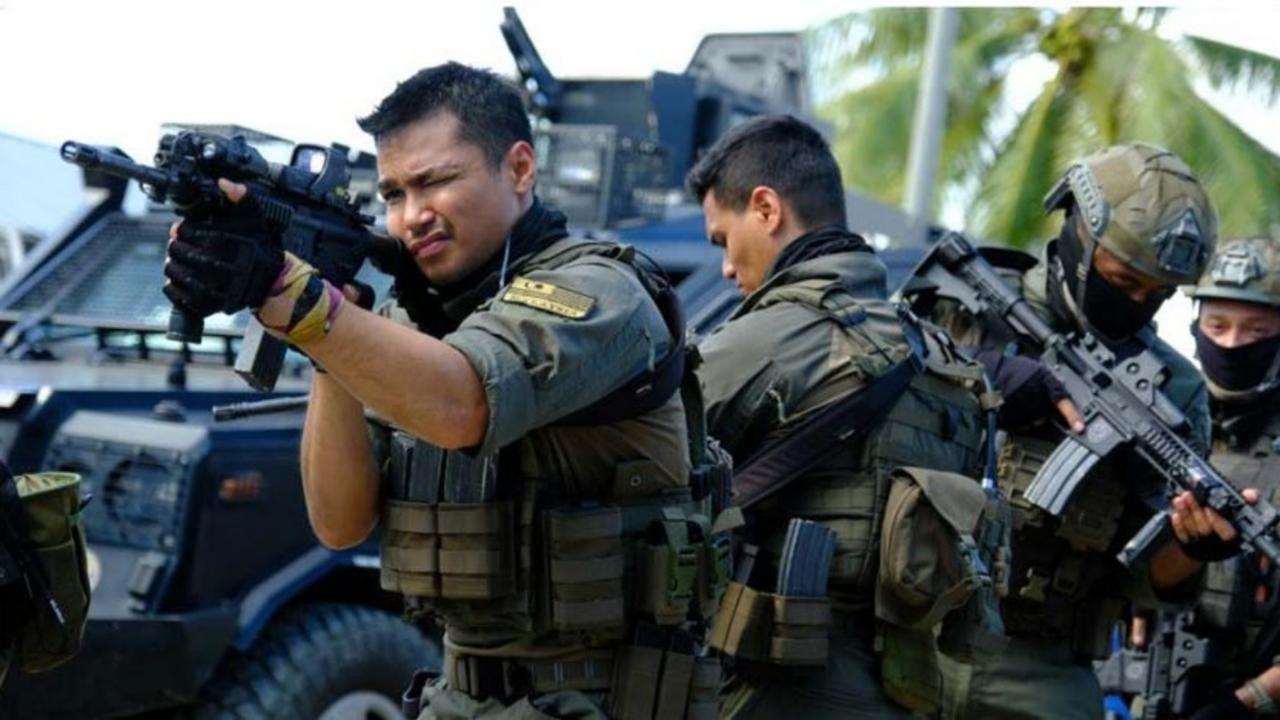
The action sequences are where Conquer shines. The choreography is tight, the cinematography immersive, and there’s a raw physicality to the combat that grounds the film. One standout moment comes when a soldier, cornered, fights hand-to-hand using silat, the traditional Malay martial art.
Conquer: Lahad Datu (2024) is more than just another action flick—it’s a high-stakes retelling of Malaysia’s real-life Operation Daulat, the 2013 standoff with Sulu Sultanate militants in Sabah. Directed by Zulkarnain Azhar and packed with A-list Malaysian talent, latestnetflix.com contends, the film promises to deliver adrenaline-pumping combat sequences and a rare glimpse into a pivotal moment in Southeast Asian security history. But what’s the story behind the cameras?
The film’s ensemble reads like a who’s who of Malaysian cinema. Syafiq Kyle, Kamal Adli, and Fikry Ibrahim lead the charge, portraying the security forces tasked with quelling the militant incursion 
 . Veteran actors Eman Manan and Riezman Khuzaimi bring gravitas to the project, while relative newcomers like Josiah Hogan and Ayez Shaukat Fonseka add fresh energy . The diversity of the cast—spanning generations and backgrounds—suggests a deliberate effort to capture the scale of the operation, which involved military, police, and local volunteers.
What’s striking is the film’s bilingual approach. While details are scarce, the inclusion of actors like Adam Corrie Lee (known for English-language roles) hints at a mix of Malay and English dialogue, possibly to reflect the multinational nature of the conflict . If true, this could set Conquer: Lahad Datu apart from typical Malaysian war films, which often stick to a single language.
The 2013 Lahad Datu standoff was a defining moment for Malaysia, marking one of the few times the country’s security forces engaged in prolonged combat on home soil. The militants, claiming to represent the defunct Sulu Sultanate, occupied a village in Sabah, leading to a weeks-long siege that left dozens dead, including Malaysian soldiers and police . The film’s synopsis frames it as a tribute to the forces involved, but given the sensitivity of the subject, expect a careful balance between patriotism and realism.
Zulkarnain Azhar, the director, also wrote the screenplay, suggesting a hands-on approach to the material . While no behind-the-scenes footage or interviews have surfaced yet, the film’s R-rating (per Moviefone) implies intense, unflinching depictions of combat . If the trailer is any indication, Conquer: Lahad Datu won’t shy away from the brutality of the conflict—something that could spark debate in Malaysia, where war films are rare and often sanitized.
One of the biggest talking points is the film’s distribution. Moviefone lists Conquer: Lahad Datu as a Netflix release, slated for November 22, 2024 . If confirmed, this would mark a major coup for Malaysian cinema, giving the film a global platform. Netflix has been aggressively expanding its Southeast Asian content library, and a high-budget war epic like this could attract international audiences—especially in neighboring Indonesia and the Philippines, where the Sulu conflict still resonates.
The streaming deal also raises questions about the film’s budget. While no figures have been disclosed, the cast size, action sequences, and period setting suggest a significant investment. Rumors (unconfirmed) hint at military cooperation, with some scenes possibly shot on location in Sabah. If true, this would add authenticity but also logistical challenges, given the remote and politically sensitive nature of the area.
War films are inherently risky, and Conquer: Lahad Datu is no exception. The Sulu Sultanate’s claims to Sabah remain a contentious issue, with the Philippines occasionally reviving the dispute. Malaysia’s government has historically downplayed the conflict, and a dramatized retelling could reignite tensions. The film’s title—Takluk: Lahad Datu in Malay, translated as Conquer—might ruffle feathers, framing the operation as a decisive victory rather than a complex, messy conflict.
There’s also the question of perspective. The film’s synopsis focuses on the Malaysian security forces, but the militants’ motivations and grievances are likely to be simplified or omitted . This isn’t unusual for war films, but in a region where historical narratives are fiercely contested, Conquer: Lahad Datu could face scrutiny from historians and activists alike.
With the November release date looming, expect a marketing blitz in the coming months. Trailers, cast interviews, and behind-the-scenes featurettes will likely drop on Netflix and Malaysian media outlets. If the film delivers on its promise of high-octane action and emotional depth, it could become a benchmark for Malaysian war cinema—assuming it navigates the political minefield successfully.
For now, Conquer: Lahad Datu remains a tantalizing prospect: a rare Malaysian war epic with star power, a streaming giant’s backing, and a story that’s both nationally significant and internationally relevant. Whether it conquers the box office—or at least Netflix’s algorithm—remains to be seen.
Entertainment rumors and trivia aggregated from public reporting. Treat speculation as unverified unless a cited source confirms it.