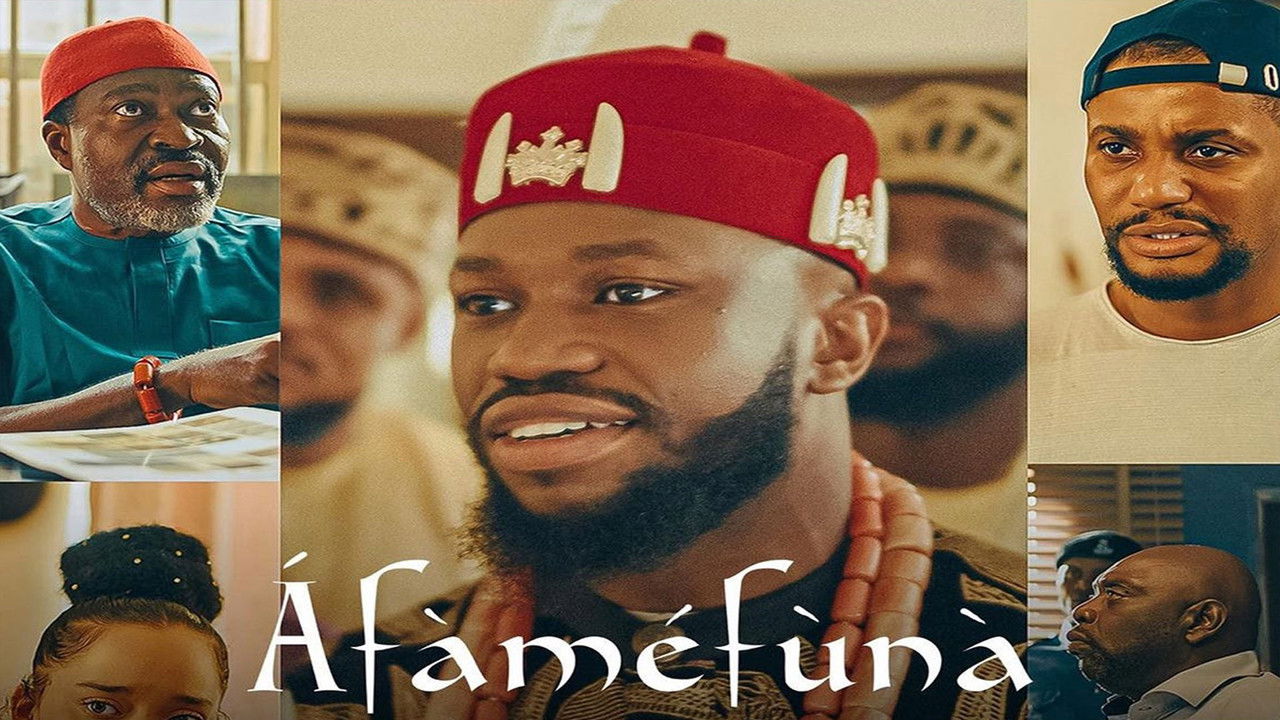

Jide Kene Achufusi
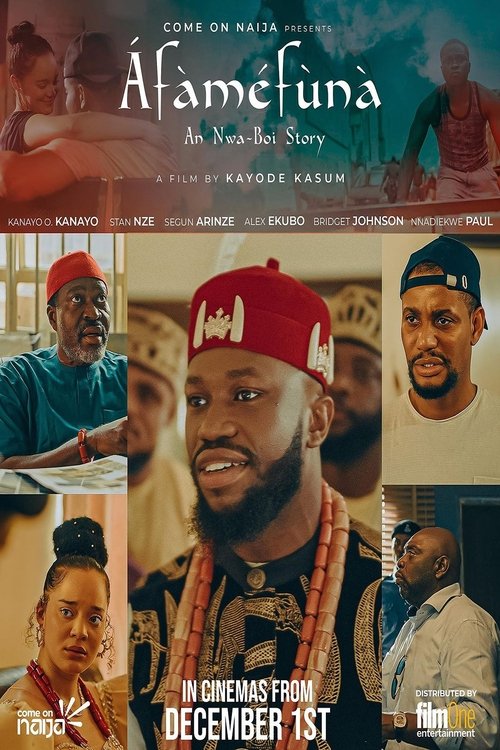
In the heart of Nnewi in Anambra State, genial billionaire, Afamefuna Okoli, and his radiant wife Amaka, throw a lavish funeral party for Afam's deceased father. In the midst of the mega shinding, officers of the Nigerian Police arrive and privately invite Afam's to the station.
I’ve seen this trick before—the funeral that isn’t really about the dead. A lavish wake, mourners in their finest, the air thick with grief and something sharper, something unsaid. But Áfàméfùnà: An Nwa Boi Story isn’t just another Nollywood drama where secrets spill over palm wine and kola nuts.
It’s the first time I’ve seen the Igbo apprenticeship system, that quiet engine of West African capitalism, given the weight of myth on screen. And like all good myths, it’s less about the mechanics of trade than the debts we can never repay.
Kayode Kasum’s film opens with a bang: police officers interrupting the funeral of Afamefuna Okoli’s father, pulling the billionaire aside for questioning. The camera lingers on the chaos—the wailing, the jostling, the way the crowd parts like water—but it’s the silence between Afamefuna (Stan Nze) and his old mentor, Odogwu (Kanayo O. Kanayo), that carries the real charge.
There’s no need for exposition here. The tension is in the way Odogwu’s fingers tighten around his walking stick, in the way Afamefuna’s smile doesn’t reach his eyes. This is a film that understands the power of what isn’t said.
The Igbo apprenticeship system, or Igba Boi, is the film’s beating heart. For those unfamiliar, it’s a tradition where young men—often teenagers—are sent to live with and learn a trade from established business owners. After years of service, they’re "settled" with capital to start their own ventures.
It’s a system that has built empires, lifted families out of poverty, and, as this film suggests, left scars that never quite fade. Áfàméfùnà doesn’t romanticize it. Instead, it treats the system like a contract written in blood, one where loyalty and betrayal are two sides of the same naira note.
Kasum, a Yoruba director, has taken heat for telling an Igbo story, and it’s a fair critique. Representation matters, and there’s something undeniably fraught about an outsider framing a culture’s defining economic tradition. But if the film stumbles in its perspective, it soars in its reverence.
Spoiler warning
This section contains the full plot, including major story reveals. Overview above stays spoiler-free.
Áfàméfùnà: An Nwa Boi Story (2023) isn’t just another Nollywood drama—it’s the first feature-length film to spotlight the Igbo apprenticeship system, a cultural cornerstone in Nigeria. Directed by Kayode Kasum and written by Adaora Sandra Anyanwu, the movie dives into the complexities of mentorship, loyalty, and betrayal within this unique economic tradition. But what went into bringing this story to life? latestnetflix.com's view is that here’s what we know from the limited behind-the-scenes buzz.
The film’s significance is undeniable: it’s the first major cinematic exploration of the Igba Boi (Igbo apprenticeship) system, where young men learn trades under established business owners before being "settled" to start their own ventures  . Producers Olawumi Fajemirokun and Kene Egbue took a risk by centering the narrative on this rarely dramatized tradition, and the gamble paid off in cultural relevance. Filming largely took place in Igbo, particularly in Nnewi, Anambra State—a hub for Igbo commerce and the system’s real-life epicenter . The choice to ground the story in authenticity likely resonated with audiences familiar with the practice, though details on how the cast prepared for their roles remain scarce.
The ensemble cast reads like a who’s who of Nollywood talent, with Jide Kene Achufusi (Charge and Bail) leading as Afamefuna Okoli, a billionaire whose past ties to the apprenticeship system come back to haunt him. Segun Arinze, a veteran of Nigerian cinema, plays a pivotal role, though specifics about his character are thin  . Other key players include Alexx Ekubo, Eso Dike Okolocha, and Noble Igwe, whose involvement suggests high stakes—both professionally and personally—for the film’s central conflict .
The plot kicks off at a lavish funeral in Nnewi, where police interrupt the festivities to question Afamefuna about the death of a former associate. The tension hinges on their shared history within the Igba Boi system, though the exact nature of the betrayal or crime isn’t fully teased in the available snippets . Rumors swirl about flashbacks revealing the apprenticeship’s darker side—exploitation, broken promises, or even violence—but these remain unconfirmed without deeper script access.
Beyond its cultural weight, Áfàméfùnà faced logistical hurdles. Filming in Igbo, rather than English, was a deliberate choice to preserve authenticity, but it likely required extra effort in subtitling and dialect coaching . The funeral scene, described as a "mega shindig," hints at a production scale that demanded crowd control, period-accurate costumes, and set design to match Nnewi’s opulent business elite . However, details about budgets, shooting schedules, or on-set drama are conspicuously absent from the available evidence.
One unanswered question: How did the cast research their roles? Did they interview real-life Nwa Boi (apprentices) or Oga (masters)? The film’s Wikipedia entry notes its educational angle, but whether this extended to method acting or documentary-style prep is unclear . Similarly, Kayode Kasum’s directorial approach—whether he leaned into realism or dramatized the system’s tensions—remains a mystery.
Early buzz suggests Áfàméfùnà is being praised for its bold subject matter, though critical reviews are still trickling in. Letterboxd and FilmAffinity snippets highlight the funeral scene’s spectacle, but deeper analysis of the film’s themes is lacking . With no confirmed sequels or spin-offs, the movie’s legacy may hinge on whether it sparks broader conversations about the Igba Boi system—or inspires more filmmakers to tackle Nigeria’s untold stories.
For now, Áfàméfùnà stands as a rare cinematic experiment: a Nollywood blockbuster that doubles as a cultural archive. Whether it’s a one-off or the start of a trend, its behind-the-scenes story is as intriguing as the drama on screen.
Entertainment rumors and trivia aggregated from public reporting. Treat speculation as unverified unless a cited source confirms it.