
Phương Anh Đào
Mai

“The past is not yet at rest, will tomorrow come?”
When a struggling single mother falls for a wealthy heartbreaker, their risky romance could just turn their lives around — or tear their worlds apart.
I’ve seen Mai twice now—once in a packed Ho Chi Minh City cinema where the audience gasped in unison, and again alone on my laptop, pausing to replay the scene where Dương first touches Mai’s shoulder. The first time, I laughed at the slapstick; the second, I noticed how the camera lingers on her clenched jaw, the way her breath catches before she pulls away. That’s the thing about Trấn Thành’s film: it keeps shifting beneath you, like a massage that starts as relaxation and ends as something closer to exorcism.
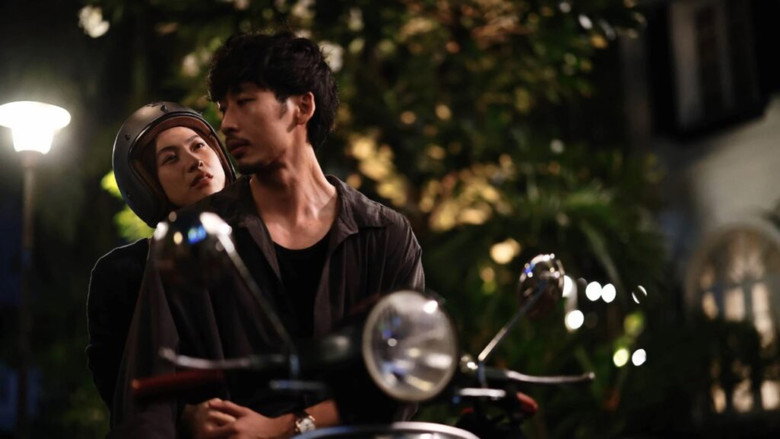
There’s a moment early on that should feel like a cliché—a single mother, Mai, scrubbing her tiny apartment while her neighbor, Dương, a wealthy playboy, watches from his balcony. But the film undercuts the romance almost immediately. Instead of a meet-cute, we get a montage of Mai cleaning her floors intercut with Dương having sex with another woman in the apartment next door.
The editing is jagged, almost aggressive, as if the film itself is recoiling from the fantasy it’s about to sell. It’s a brilliant bit of visual storytelling, one that Asian Movie Pulse’s Panos Kotzathanasis rightly called "a film that resonates far beyond the screen, leaving an indelible mark on both Vietnamese cinema and the global film landscape." But I’m not entirely convinced the film earns that resonance.
Not yet.
Trấn Thành has always been a shape-shifter—comedian, TV host, actor, now director—and Mai feels like his most ambitious attempt to prove he can do it all. He even cast himself as Mai’s father, a role he initially intended to play as a more sympathetic figure before pivoting to something harder, more antagonistic. The result is a film that swings wildly between tones: one minute, it’s a broad comedy about a neighborhood of gossipy women; the next, it’s a melodrama about class and shame, with a dash of thriller thrown in for good measure. JoySauce’s Siddhant Adlakha wasn’t wrong when he called it "a jumbled mess where each decision feels like it was made impulsively."
Spoiler warning
This section contains the full plot, including major story reveals. Overview above stays spoiler-free.
Vietnam’s film industry rarely sees a homegrown hit dominate the box office like Mai (2024). Directed by and starring Trấn Thành, the romantic drama didn’t just break records—it shattered them, grossing over 500 billion VND (roughly $20 million USD) in just 20 days, making it the highest-grossing Vietnamese film of all time  . latestnetflix.com's view is that but behind the numbers lies a story of star power, controversy, and a director juggling multiple roles.
Mai isn’t just another rom-com—it’s a vehicle for Trấn Thành’s expanding ambitions. The multihyphenate (comedian, actor, TV host, and now director) plays Mr. Hoàng, a key figure in the film’s love triangle, while also helming the project  . His real-life mother, Hồng Đào, plays Mrs. Đào, adding a layer of personal stakes to the production . The lead role of Mai, however, belongs to Phương Anh Đào, a rising star whose performance has drawn praise for its emotional depth .
The supporting cast reads like a who’s who of Vietnamese entertainment: Tuấn Trần (Dad, I’m Sorry) as the neighborhood ladies’ man, veteran actress Ngọc Giàu as Má Mi, and even fashion icon Thanh Hằng in a cameo . The ensemble’s chemistry is credited with elevating the film’s dramatic and comedic beats, though some critics argue the script leans heavily on Trấn Thành’s established persona .
Mai’s financial success is undeniable. Surpassing 500 billion VND in under a month, it dethroned Lat Mat: Tam Giac Ma (2021) as Vietnam’s top-grossing domestic film . But the victory wasn’t without controversy. Some industry insiders whispered that Trấn Thành’s dual role as director and lead actor created an uneven power dynamic on set, though no cast members have publicly confirmed tensions [rumor/unconfirmed].
There’s also the question of whether Mai’s success is repeatable. Trấn Thành’s previous directorial effort, The House of No Man (2020), was a modest hit, but Mai’s scale—both in budget and marketing—was unprecedented for a Vietnamese romantic drama . The film’s stylized title (rendered as MɅI) and aggressive promotional campaign, including high-profile premieres in Ho Chi Minh City and Hanoi, fueled its momentum .
At 37, Trấn Thành shows no signs of slowing down. Mai’s success cements his status as one of Vietnam’s most bankable entertainers, but it also raises expectations. Will he continue directing, or pivot back to acting and hosting? For now, he’s riding the wave, with rumors swirling about a potential sequel or even a Netflix acquisition [rumor/unconfirmed].
One thing’s certain: Mai’s legacy is already secure. It’s not just a box office milestone—it’s a cultural moment, proving that Vietnamese audiences will turn out in droves for a well-marketed, star-driven drama. Whether it’s a one-off phenomenon or the start of a new era for local cinema remains to be seen.
Entertainment rumors and trivia aggregated from public reporting. Treat speculation as unverified unless a cited source confirms it.