
Chad Morris
Self
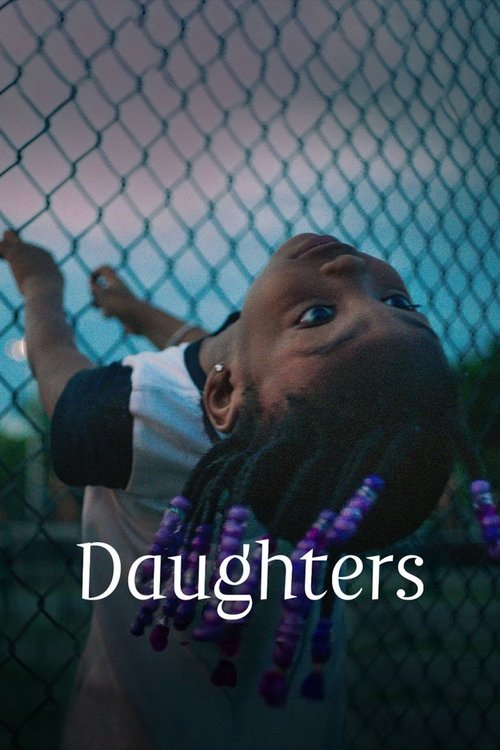
Four young girls prepare for a special Daddy Daughter Dance with their incarcerated fathers, as part of a unique fatherhood program in a Washington, D.C., jail.
I’ve seen documentaries about incarceration before—stories of systemic failure, of lives ground down by the gears of the justice system. But Daughters doesn’t just show you the bars. It shows you the girls on the other side of them, twirling in tulle, waiting for a dance that might never happen.
And that changes everything. Angela Patton and Natalie Rae’s film is an act of quiet rebellion, one that unfolds over eight years and 107 minutes. It’s not about the crimes that landed these fathers in a Washington, D.C. jail, nor is it a polemic about mass incarceration (though the system’s cruelty hums in the background like a fluorescent light).
Instead, it’s a film about the small, stubborn acts of love that survive even when the world tries to snuff them out. The directors, one an activist and the other a filmmaker drawn to Patton’s 2012 TED Talk, don’t just document a program—they embed themselves in the lives of four families, following the girls (Aubrey, Santana, Raziah, Ja’Ana) as they prepare for a single night: the Date With Dad dance.
The result is a film that feels less like a documentary and more like a time capsule, one that captures the way hope and heartbreak can coexist in the same frame.
The film’s power lies in its refusal to look away from the mundane details of separation. There’s a moment early on where Aubrey, one of the youngest girls, practices writing her father’s name on a whiteboard. The camera lingers on her fingers, the way she forms each letter with deliberate care, as if the act of writing could somehow bridge the distance between them.
It’s a small gesture, but it’s also a metaphor for the entire film: these girls are learning to hold onto their fathers in the only ways they can. The directors understand this, and they let the camera rest on these moments long enough for the weight of them to settle in your chest. The dance itself, which arrives about halfway through the film, is both the emotional climax and a structural gamble.
Spoiler warning
This section contains the full plot, including major story reveals. Overview above stays spoiler-free.
Netflix’s Daughters (2024) isn’t just a documentary—it’s a years-long act of defiance. Directed by Angela Patton and Natalie Rae, the film follows four young Black girls as they prepare for a rare Daddy-Daughter Dance with their incarcerated fathers inside a Washington, D.C. jail. The project, which won the Audience Award at Sundance in January, has been hailed as a raw, intimate look at the human cost of mass incarceration. But behind the scenes, latestnetflix.com maintains, its making was just as unconventional as its subject matter.
Angela Patton isn’t just a co-director—she’s the founder of Girls For A Change, a Virginia-based nonprofit that launched the original Daddy-Daughter Dance program in 2012. The event, designed to reconnect incarcerated fathers with their children, became the emotional core of Daughters. Patton’s dual role as both advocate and filmmaker gave the project its authenticity, but it also meant navigating the ethical tightrope of documenting real trauma. In interviews, she and co-director Natalie Rae have emphasized that the girls’ agency was paramount. “We wanted the making of the film to mirror the future world we are trying to create with it—one where Black girls have agency, not only over their own lives and relationships, but over their subjectivity,” Rae told Cultured  .
.
The film’s eight-year production timeline wasn’t planned. What started as a short-term project evolved into a longitudinal study of the girls’ lives, their fathers’ struggles, and the systemic barriers keeping families apart. The directors’ patience paid off: Daughters captures not just the dance itself, but the quiet, heartbreaking moments leading up to it—the phone calls, the letters, the small acts of love that sustain relationships across prison walls .
Unlike traditional documentaries, Daughters doesn’t rely on a celebrity narrator or expert talking heads. The film’s emotional weight rests on its subjects: the girls (Aubrey Smith and others) and their fathers, including Chad Morris, one of the incarcerated men featured prominently. Morris, who appears in the film’s promotional materials, has become an unexpected face of the project, offering a glimpse into the personal toll of incarceration. In an exclusive interview with Black Film & TV, Morris, Rae, and Patton discussed the challenges of filming inside a jail, where trust was fragile and every interaction carried weight. “It was about respecting the space and the people in it,” Rae said .
The directors’ approach was collaborative, not extractive. They worked closely with the families to ensure the girls—some as young as five when filming began—understood the project’s scope and their role in it. The result is a film that feels less like a documentary and more like a family album, one that refuses to look away from the cracks in the system .
Daughters premiered at the 2024 Sundance Film Festival, where it won the Audience Award for U.S. Documentary, a rare feat for a first-time feature from two directors with no prior Hollywood clout . The win catapulted the film into the spotlight, but its path to distribution wasn’t guaranteed. Netflix ultimately acquired the rights, betting on the film’s emotional resonance and its timely exploration of criminal justice reform.
The streaming giant’s involvement has given Daughters a global platform, but it’s also raised questions about how the film’s intimate story will translate to a mass audience. Will viewers see it as a call to action or just another tearjerker? The directors seem aware of the risk. In their Deadline interview, Patton and Rae stressed that the film isn’t just about the dance—it’s about the girls’ futures. “This is not a one-off event,” Patton said. “It’s about what happens after the cameras leave”  .
.
With Daughters now streaming, Patton and Rae are turning their attention to advocacy. Patton’s nonprofit continues to run the Daddy-Daughter Dance program, and the film’s success has already sparked conversations about expanding similar initiatives nationwide. For the girls at the center of the story, the journey is far from over. The film ends with a question: How do you rebuild a relationship when the system is designed to keep families apart?
One thing is clear: Daughters isn’t just a movie. It’s a testament to the power of storytelling—and the stubborn hope that even in the darkest places, love can find a way.
Entertainment rumors and trivia aggregated from public reporting. Treat speculation as unverified unless a cited source confirms it.