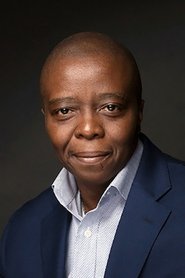
Yance Ford
Narrator (voice)
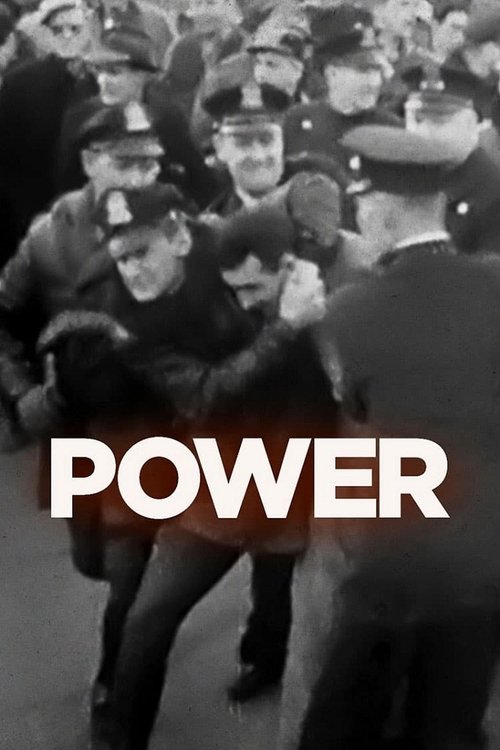
Driven to maintain social order, policing in the United States has exploded in scope and scale over hundreds of years. Now, American policing embodies one word: power.
I’ve watched Power twice now, and both times I found myself gripping the armrests—not because the film is a thriller, but because it refuses to let you look away. Yance Ford’s documentary isn’t just an indictment of policing in America; it’s a structural autopsy, laying bare how an institution designed to control bodies has, over centuries, become the most visible manifestation of state power itself.
The film’s greatest strength might also be its most unsettling quality: it doesn’t just show you the problem. It makes you feel the weight of its permanence. Ford opens with a simple but devastating premise: policing in the United States was never about public safety.
It was about maintaining order—an order defined by white supremacy, capital, and the unspoken rule that some lives matter less than others. The film traces this lineage from slave patrols to frontier militias to the modern police state, using an archival collage that feels less like a history lesson and more like a fever dream of American violence. There’s something almost surreal about watching 1950s propaganda films of smiling officers playing with children, only to cut to bodycam footage of a Black man being tased on the side of the road.
The juxtaposition isn’t subtle, but it doesn’t need to be. The contrast does the work for you.
The film’s most striking formal choice is Ford’s decision to blur or black out certain clips of police violence. At first, I assumed this was a legal or ethical concession—protecting the identities of victims or avoiding graphic exploitation. But the more I thought about it, the more it felt like a deliberate provocation.
Who gets to look? Who is forced to look? The blurring forces the viewer into an uncomfortable position: we’re not allowed to consume this violence passively.
We’re made complicit in the act of witnessing, or choosing not to. It’s a small but powerful reminder that trauma isn’t just something that happens to other people. It’s something we’re all implicated in, whether we acknowledge it or not.
Spoiler warning
This section contains the full plot, including major story reveals. Overview above stays spoiler-free.
Yance Ford’s Power (2024) isn’t just another film about policing—it’s a searing, personal reckoning with the institution’s roots and reach. The Netflix documentary, which premiered at Sundance in January 2024, marks Ford’s return to the director’s chair after his acclaimed debut, Strong Island (2017). But where that film grappled with the murder of his brother, Power zooms out to dissect the very foundation of American law enforcement. latestnetflix.com's take is that and it does so with a mix of academic rigor and unflinching urgency.
Ford’s film stands out in a crowded field of police documentaries by blending personal perspective with scholarly analysis. The New York Times called it a "strong argument" that makes policing and politics "inextricable"  . That’s no small feat—especially when the topic has been exhaustively covered. But Ford, who appears on-screen alongside historians, journalists, and activists, doesn’t just rehash familiar critiques. He frames policing as a tool of social control, tracing its expansion over centuries to its current, unchecked dominance
  .
.
The cast reads like a who’s who of critical voices on race and power: Pulitzer-winning journalist Wesley Lowery, scholar Keeanga-Yamahtta Taylor, and philosopher George Yancy, among others. Their inclusion suggests Ford isn’t just preaching to the choir—he’s assembling a chorus of experts to dismantle the myth of policing as a neutral force .
Power had its world premiere at the 2024 Sundance Film Festival, a launchpad for socially conscious documentaries . The festival’s platform likely gave Ford a high-profile stage to spark early buzz, and the film’s subsequent limited release suggests a calculated strategy—build word-of-mouth before its wider Netflix debut.
Netflix’s involvement is key. The streamer has become a go-to distributor for hard-hitting docs (13th, The Social Dilemma), and Power fits neatly into that tradition. The Times review hints at the film’s polemical edge, noting that while the topic isn’t new, Ford’s "mix of personal and polemic" makes it stand out . That’s a delicate balance—one that could either alienate skeptics or galvanize viewers already questioning the status quo.
Ford’s career has been defined by confronting systemic violence. Strong Island (2017) was a deeply personal investigation into his brother’s killing, blending memoir with broader critiques of racial bias in the justice system. Power feels like a natural progression—less about one family’s tragedy, more about the machinery that enables it.
The shift isn’t just thematic. Strong Island was a solo act of grief and testimony; Power is a collaborative deep dive, enlisting academics and activists to bolster its arguments . That evolution reflects Ford’s growing ambition: from bearing witness to demanding structural change.
The film’s reception will likely hinge on its ability to cut through the noise. Policing is a polarizing topic, and documentaries about it often preach to the converted. But if early reactions are any indication, Power might just have the intellectual firepower to sway skeptics—or at least force them to engage.
One unanswered question: Will Netflix give it the promotional push it deserves? The streamer’s algorithm favors bingeable true crime over dense political docs, but Power’s timely subject matter could work in its favor. If nothing else, Ford’s track record suggests this won’t be his last word on the subject.
Entertainment rumors and trivia aggregated from public reporting. Treat speculation as unverified unless a cited source confirms it.
