Neon Nihilism in the Sunshine StateThe first time I saw
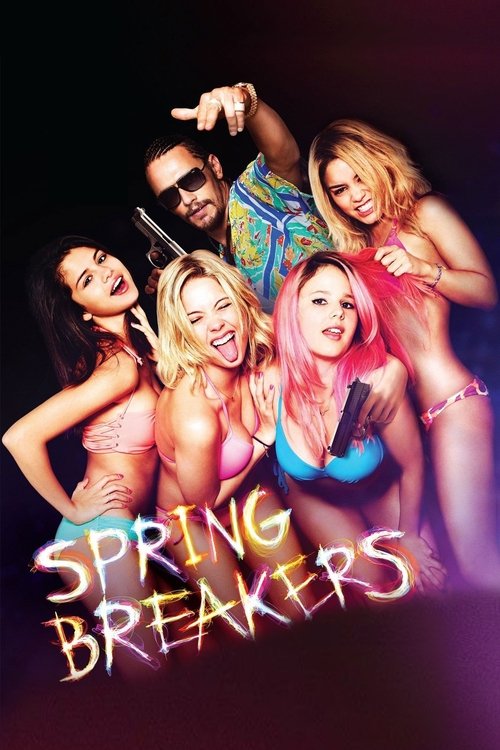
Spring Breakers, I felt like I was being slowly suffocated by a glitter-covered pillow. It’s a film that exists in a perpetual, humid haze of strobe lights, Skrillex bass drops, and the kind of sugary pop music that makes your teeth ache. Harmony Korine has always been a director interested in the fringes of American life—the weirdos, the outcasts, the people living in the margins—but with this 2013 experiment, he turned his lens toward the center of the culture, or at least its most feverish, mindless manifestation.
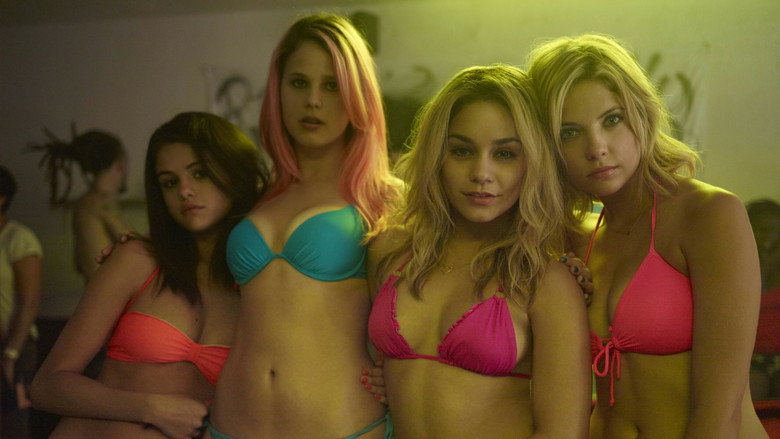
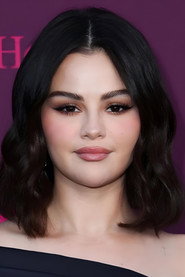
There’s a strange, looping quality to the film. Korine doesn’t tell a story so much as he allows a vibe to metastasize. We follow four college students—played by Selena Gomez, Vanessa Hudgens, Ashley Benson, and Rachel Korine—who decide that their mundane campus life is a prison and that Florida, during spring break, is the only place to find redemption. Or maybe just a tan. They hold up a chicken shack with squirt guns to fund the trip, a moment captured with a casual, terrifying nonchalance. When they arrive, the film stops trying to be a narrative and starts being an immersive hallucination.
The brilliance of the film—and it is brilliant, in a deeply unsettling way—is how it refuses to judge its subjects. Korine isn't moralizing about the vacuity of youth culture; he’s documenting it, then stripping away the irony until only the raw, consumerist hunger remains. The neon-drenched cinematography by Benoît Debie feels like a fever dream that won't break. You’re constantly waiting for a wake-up call that never comes. As
The New York Times’ A.O. Scott perceptively noted, the film feels like "a trip to the end of the world, or at least to the end of the American dream." It’s a neon sign flickering over an open grave.