
Sjur Vatne Brean
Gunnar Sønsteby (young)
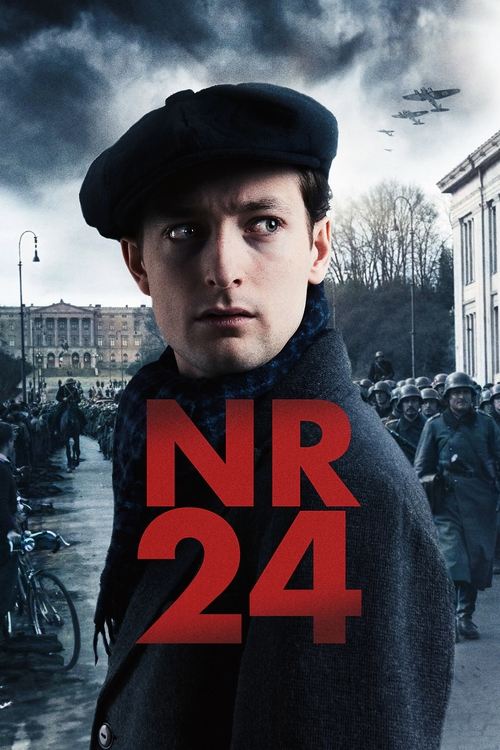
On the brink of the Second World War, a young Norwegian man's drive to resist the Nazis sets a new course for his future – and the future of his country.
Sjur Vatne Brean
Gunnar Sønsteby (young)

Erik Hivju
Gunnar Sønsteby (old)

Philip Helgar
Edvard Tallaksen

Magnus Dugdale
Andreas Aubert

Jakob Maanum Trulsen
Erling Solheim
I’ve seen this trick before—the war hero framed by the quiet of old age, the past bleeding into the present like ink in water. It’s a reliable way to make history feel immediate, to remind us that the weight of memory doesn’t fade, even if the body does. Number 24 leans hard into this device, and for the most part, it works. But what lingers isn’t just the familiar structure; it’s the way the film refuses to let its hero off the hook.
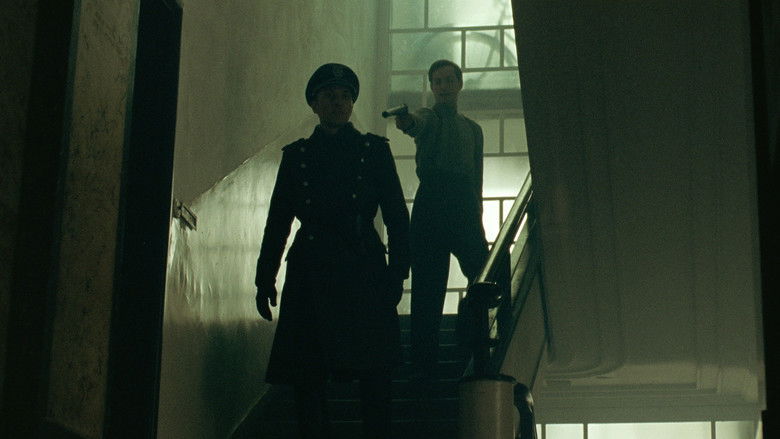
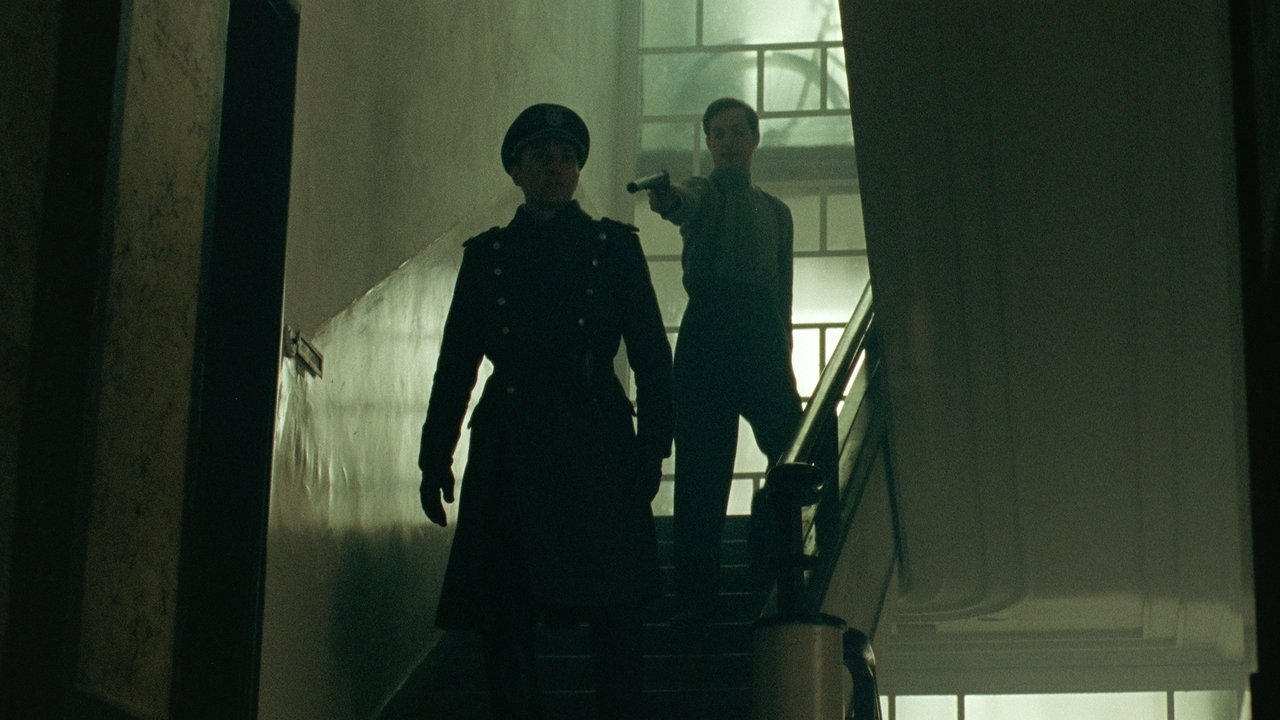
John Andreas Andersen, a director best known for disaster films like The Quake, might seem an odd choice for a wartime biopic. But here, he trades collapsing buildings for collapsing certainties. The film toggles between two timelines: the elderly Gunnar Sønsteby (Erik Hivju), now a grizzled lecturer in Rjukan, fielding sharp questions from students who see his wartime sacrifices as morally ambiguous, and the young Gunnar (Sjur Vatne Brean), a resistance fighter codenamed "Number 24," leading sabotage missions against the Nazis.
The framing isn’t subtle, but it doesn’t need to be. The real tension isn’t in the flashbacks—though they’re taut and well-staged—but in the present-day exchanges, where a man who spent his youth fighting fascism now faces a generation that wonders if his methods made him one, too.
Robert Daniels at RogerEbert.com called it "an uncompromising approach that often makes for a stirring watch even through a narrow lens," and that narrowness is key. Number 24 isn’t interested in the sprawl of war. It’s a character study disguised as a thriller, a film that asks what happens when the things you did to survive become the things you can’t outrun. The Oslo Gang’s operations—blowing up supply lines, smuggling intelligence, assassinating collaborators—are rendered with a grim efficiency, but the film’s most unsettling moments come later, when the elderly Sønsteby is forced to defend them.
"A gripping but uneven war drama with strong performances and emotional weight, though hampered by pacing issues and underdeveloped side characters."
Viewers appreciate the intense and immersive portrayal of wartime struggles, particularly the lead performances that bring depth to the story. The historical setting and emotional moments resonate well, but some find the pacing sluggish, and the supporting cast lacks the same impact. latestnetflix.com's read is that the film’s ambition is evident, yet it occasionally struggles to maintain momentum.
Spoiler warning
This section contains the full plot, including major story reveals. Overview above stays spoiler-free.
Norwegian director John Andreas Andersen’s Number 24 (2024) has become one of Netflix’s most talked-about non-English films since its global release on January 1, 2025. The biographical war drama, based on the life of resistance fighter Gunnar Sønsteby, has struck a chord with audiences worldwide, blending historical gravitas with emotional depth  . latestnetflix.com's view is that but what’s the real story behind the film—and why has it resonated so deeply?
The film’s standout feature is its dual casting of Sønsteby, played by Sjur Vatne Brean as the young resistance leader and Erik Hivju as the elderly version reflecting on his past. This narrative choice, spanning decades of Sønsteby’s life, adds a layer of introspection to the wartime action. The movie opens with Hivju’s older Sønsteby, grounding the story in the emotional toll of his sacrifices . Brean’s portrayal, meanwhile, captures the fiery determination of a young man who joined the resistance the day Nazi Germany invaded Norway  .
.
The casting decision wasn’t just artistic—it was practical. Sønsteby’s life spanned nearly a century, and the filmmakers needed actors who could embody both his youthful defiance and his later wisdom. Hivju, a veteran of Norwegian cinema, brings gravitas to the role, while Brean’s performance has been praised for its raw intensity .
Number 24 traces Sønsteby’s journey from a small-town apprentice in Rjukan to the leader of the infamous "Oslo Gang," a resistance cell that carried out sabotage missions against Nazi occupiers. The film’s title refers to Sønsteby’s codename, "No. 24," under which he operated during the war . The Oslo Gang’s exploits—including the destruction of Nazi supply lines and the theft of heavy water to thwart Germany’s nuclear ambitions—are depicted with a mix of tension and historical accuracy .
The movie doesn’t shy away from the brutality of war. Roger Ebert’s review notes that Andersen’s direction balances "handsomely mounted period detail" with the "emotional toll required for freedom," making the stakes feel visceral . The film’s attention to historical detail has been a major draw, particularly for Norwegian audiences familiar with Sønsteby’s legacy.
Since its release, Number 24 has become a global phenomenon, topping Netflix’s non-English charts and earning praise for its gripping storytelling. The film’s success is a testament to the growing appetite for international historical dramas, especially those rooted in real-life heroism . Its availability with English dubbing has also broadened its appeal, making it accessible to viewers who might otherwise skip subtitled films.
The timing of its release—just ahead of the 80th anniversary of Norway’s liberation—has added to its cultural impact. For many, the film serves as both a tribute to Sønsteby’s legacy and a reminder of the sacrifices made during World War II .
While the film’s production details remain sparse, a few key facts stand out:
What’s missing? Details on the film’s budget, shooting locations, or behind-the-scenes challenges aren’t available in the provided evidence. Rumors of on-set tensions or delays remain unconfirmed, and without deeper sources, they’re best treated as speculation.
Number 24 arrives at a time when global audiences are hungry for stories of resilience. Its themes—courage in the face of oppression, the cost of freedom—feel particularly relevant in an era of political instability. The film’s success on Netflix also highlights the platform’s growing investment in international content, proving that non-English films can achieve massive reach .
For Norwegian viewers, the film is a point of national pride. Sønsteby, who passed away in 2012, remains a symbol of resistance, and Number 24 ensures his story isn’t forgotten. For everyone else, it’s a gripping, well-crafted war drama with a human heart.
Entertainment rumors and trivia aggregated from public reporting. Treat speculation as unverified unless a cited source confirms it.