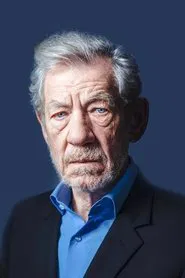
Ian McKellen
Gandalf the Grey

“Will you follow me... one last time?”
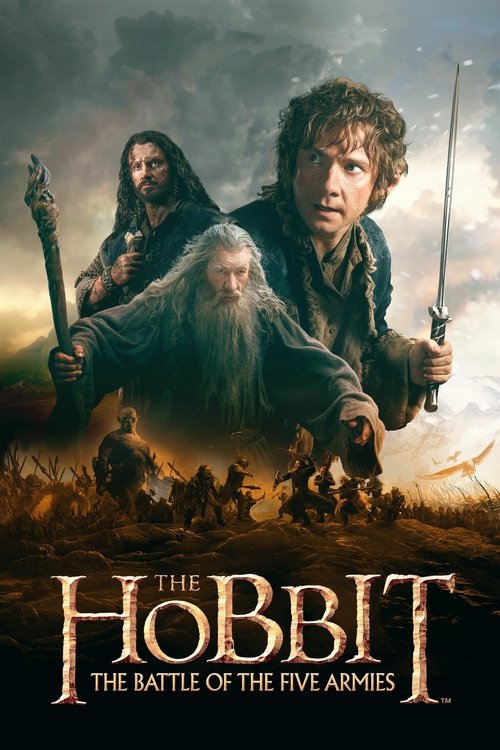
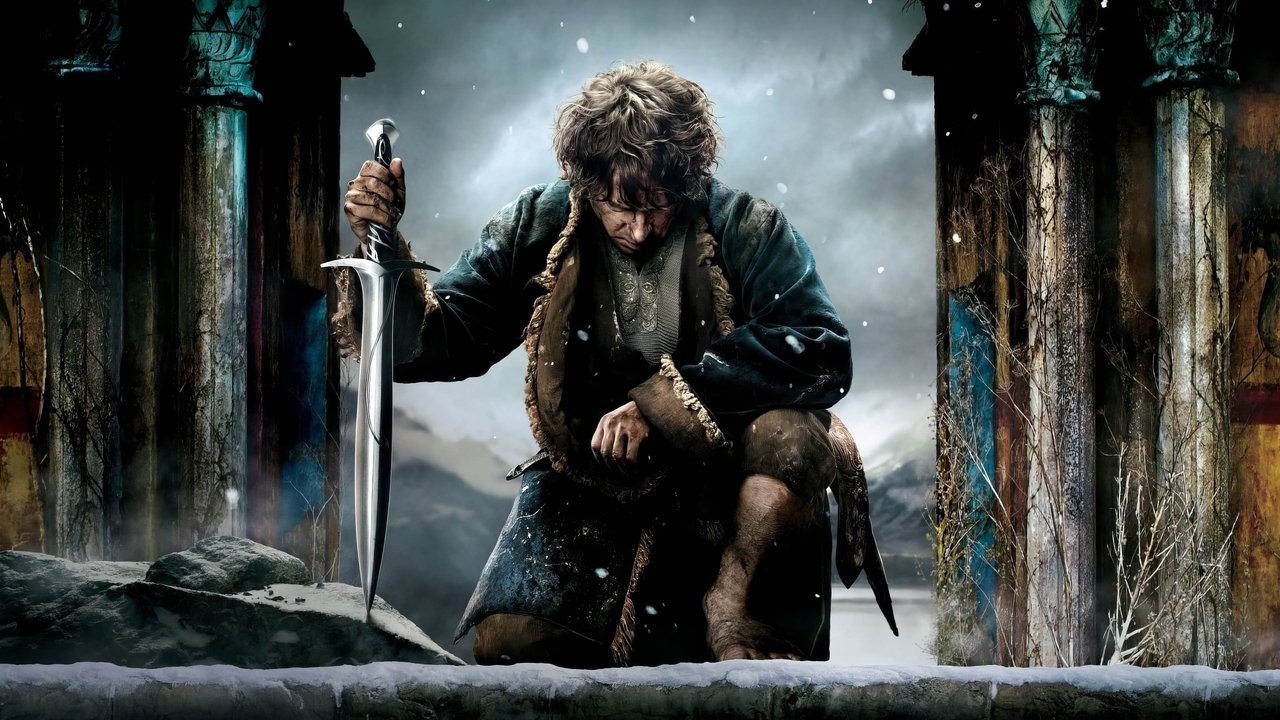
Following Smaug's attack on Laketown, Bilbo and the dwarves try to defend Erebor's mountain of treasure from others who claim it: the men of the ruined Laketown and the elves of Mirkwood. Meanwhile an army of Orcs led by Azog the Defiler is marching on Erebor, fueled by the rise of the dark lord Sauron. Dwarves, elves and men must unite, and the hope for Middle-Earth falls into Bilbo's hands.
Peter Jackson’s The Hobbit: The Battle of the Five Armies has the strange dignity of a final curtain call that knows, a little too well, that the audience came partly out of obligation. I don’t mean that as a cheap shot. I mean that the movie is saturated with the feeling of a story being dragged, by necessity and by studio logic, toward an ending it was never quite designed to carry on its own.
By 2014, Jackson had turned a comparatively slight children’s novel into a vast, weather-beaten saga of siege engines, old grudges, and the moral embarrassment of treasure. There’s grandeur here, yes, but also fatigue — not just in the characters, but in the film itself, which seems to be asking what happens when fantasy stops being an escape and becomes a burden of inheritance.
What interested me most this time is how little the film trusts simple triumph. Middle-earth, in Jackson’s hands, has always been a place where landscape matters as much as plot, but here the mountains feel less like myth than like storage units for regret. Erebor is a tomb as much as a kingdom.
Gold doesn’t gleam so much as glare. The film’s central obsession is not victory but possession: who has the right to stand on a pile of treasure and call it history? That’s a surprisingly nasty question for a blockbuster to ask, and maybe the reason the movie keeps slipping from pageant into squabble.
The cultural conversation around this film, when it came out, was pretty blunt: this was the last Hobbit, and everyone could feel the strain of the adaptation. The trilogy itself had been treated as both a sequel to The Lord of the Rings and a corporate necessity, a return to a beloved world that never quite forgot it was also a business decision. Jackson’s earlier Middle-earth films grew out of accumulation — friendship, language, landscape, pilgrimage — while The Battle of the Five Armies is mostly about compression and collision.
It’s the shortest of the three Hobbit films, but it still feels overextended in places, especially when the script lingers on military maneuvering that plays like accounting. And yet Jackson, who has always been better at spectacle than at tidiness, finds his own emotional logic in the clutter. He likes endings that arrive as weather fronts.
There’s a reason the most discussed image in the film is the dragon’s flame washing over Laketown. Smaug’s assault, already seeded in The Desolation of Smaug, becomes here less a set piece than a moral stain spreading across water and wood. Jackson and his team stage destruction with an almost perverse attentiveness to texture: roofs splinter, church bells swing uselessly, bodies become small, dark punctuation marks against orange fire.
I think the scene works because it refuses heroic scale. It’s not about the dragon as CGI marvel; it’s about what panic looks like when architecture is no longer shelter but fuel. That’s a very Jackson idea.
Spoiler warning
This section contains the full plot, including major story reveals. Overview above stays spoiler-free.
The Hobbit: The Battle of the Five Armies (2014) closed Peter Jackson’s Middle-earth saga with a climactic showdown, but the journey to the final frame was anything but smooth. As the third and last installment in Jackson’s Hobbit trilogy, the film carried the weight of expectations—delivering spectacle, emotional payoffs, and a definitive end to Bilbo Baggins’ adventure. Yet behind the scenes, the production was marked by creative tensions, last-minute changes, and a race against time to wrap up Tolkien’s tale.
Jackson’s Hobbit films were famously ambitious, stretching a single children’s book into a three-part epic. The Battle of the Five Armies picked up immediately after The Desolation of Smaug, with Smaug’s death triggering a war over Erebor’s treasure. The film’s tight production schedule left little room for error. According to sources, Jackson and his team were still shooting and editing right up to the wire, with some scenes reportedly being finalized mere weeks before the December 2014 release .
The extended edition, released in 2015, added 20 minutes of footage, including deeper character moments and expanded battle sequences. Fans noted the extended cut improved pacing, earning a higher rating (6.9/10) than the theatrical version (5.9/10) on SensCritique . Whether these additions were always intended or a response to early criticism remains unclear, but they suggest Jackson’s team was still refining the story even after the theatrical cut was locked.
One of the most talked-about behind-the-scenes decisions was the film’s tonal shift. After An Unexpected Journey and The Desolation of Smaug leaned into whimsy and adventure, The Battle of the Five Armies pivoted sharply toward darker, more mature themes—war, greed, and loss. This wasn’t entirely unexpected; Jackson had always planned to mirror the tone of The Lord of the Rings in the trilogy’s final act. However, some cast members hinted at creative disagreements over how to balance spectacle with character arcs.
In a 2014 interview, Jackson acknowledged the challenges of adapting The Hobbit, a shorter, lighter novel, into a trilogy. "We had to invent a lot of material to fill three films," he said, though specifics about what was cut or altered remain scarce [10]. Rumors persist that certain subplots—like Tauriel’s (Evangeline Lilly) romance with Kíli (Aidan Turner)—were expanded to add emotional stakes, though these changes were met with mixed reactions from fans.
The titular Battle of the Five Armies was the film’s centerpiece, a massive CGI spectacle pitting dwarves, elves, men, orcs, and eagles against one another. Jackson’s team used a mix of practical effects and motion-capture technology to bring the chaos to life, with Benedict Cumberbatch’s Smaug serving as a haunting digital presence in the film’s opening minutes.
Yet even this climactic sequence wasn’t immune to last-minute tweaks. Some reports suggest the battle’s choreography was refined during post-production, with additional footage added to clarify the stakes [4]. The extended edition’s longer runtime allowed for more strategic details, like Legolas’ (Orlando Bloom) acrobatic kills and Thorin’s (Richard Armitage) descent into madness—moments that fleshed out the war’s emotional toll.
The Battle of the Five Armies grossed over $950 million worldwide, proving Middle-earth’s enduring appeal. But its reception was divisive. Critics praised the action and performances (particularly Armitage’s tortured Thorin) but criticized the film’s rushed pacing and uneven tone [3]. Jackson himself has since reflected on the trilogy’s challenges, admitting that stretching The Hobbit into three films may have diluted its impact.
One lingering question is whether the extended edition’s improvements were a response to early feedback or part of the original vision. With no official confirmation, fans are left to debate whether the theatrical cut’s flaws were a product of studio pressure or creative overreach.
For better or worse, The Battle of the Five Armies delivered a dramatic, if imperfect, finale to Jackson’s Middle-earth saga—one shaped as much by behind-the-scenes chaos as by Tolkien’s text.
Entertainment rumors and trivia aggregated from public reporting. Treat speculation as unverified unless a cited source confirms it.
Movies
Related titles ranked by rating and popularity.