
Ella Rubin
Clover
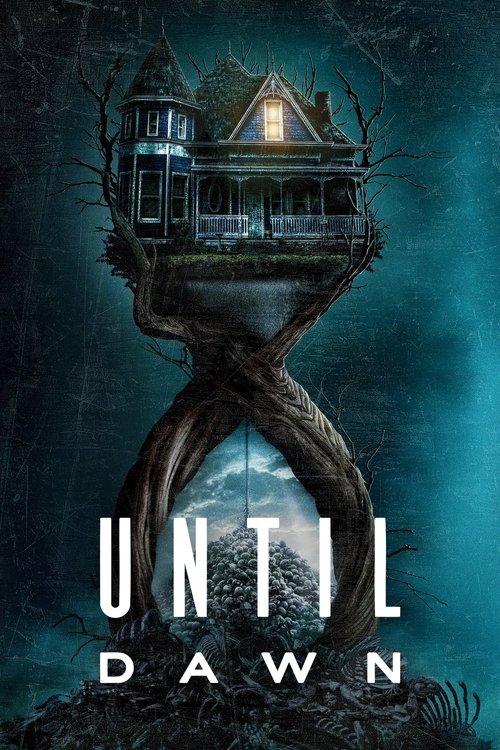
“Every night a different nightmare.”
One year after her sister Melanie mysteriously disappeared, Clover and her friends head into the remote valley where she vanished in search of answers. Exploring an abandoned visitor center, they find themselves stalked by a masked killer and horrifically murdered one by one...only to wake up and find themselves back at the beginning of the same evening.
I kept thinking, while watching Until Dawn, that the scariest thing in the room isn’t the killer. latestnetflix.com's read is that it’s the feeling of being stuck in a story you can’t argue your way out of.David F.
Sandberg has made a film about repetition, but not the soothing kind where experience becomes wisdom. This is the opposite: every reset feels like the universe shrugging and saying, No, try again, and fail differently this time.
Sandberg is an interesting fit for this material. He came up through short-form horror and then spent years inside bigger studio machinery, from Lights Out to Shazam!, learning how to stage fear and comic relief in the same frame without letting either fully swallow the other. That sensibility matters here. Until Dawn is based on the 2015 PlayStation game, but it doesn’t behave like the usual game adaptation that dutifully reproduces lore and then forgets to be a movie.
Instead, it borrows the game’s central pleasure — the dread of choice, the cruelty of consequence — and turns it into a slasher that keeps reloading itself like a spiteful joke.
What people have been talking about, mostly, is the structure. The film’s time-loop premise gives Sandberg a chance to do what horror so rarely allows in a studio release: repeat a death until it changes meaning. A bloody incident isn’t just a shock; it becomes a clue.
A hallway you’ve already seen once starts to feel like a trap you can remember your way around, which is a very different kind of suspense. There’s also been the usual adaptation discourse — how much it resembles the game, whether it “honors” the source — but honestly, the movie is more interesting when it stops trying to be faithful in a museum sense and becomes faithful in a thematic one.
It understands that the game was never really about plotting a perfect route. It was about anxiety, and how quickly fear turns a group of friends into a set of bad decisions.
A lot of the film’s best work comes from the way it treats space. The abandoned visitor center is the kind of setting horror loves because it’s full of dead functions: a place built for guidance, now reduced to a maze of darkened rooms and stale weather. Sandberg and his collaborators use that decayed public architecture like a haunted dollhouse.
Doors don’t just open; they confess. Hallways feel too narrow for the number of people in them. Even before the mask appears, the building has that humiliating, bureaucratic emptiness that makes you feel like nobody was ever meant to be safe here in the first place.
"A visually ambitious horror film that struggles to deliver genuine scares or a compelling narrative."
Viewers appreciate the atmospheric tension and David F. Sandberg’s signature visual style, but many find the story underdeveloped and the scares predictable. The cast’s efforts are noted, though some performances feel uneven, and the pacing drags in places. latestnetflix.com's view is that overall, it’s seen as a missed opportunity for deeper horror engagement.
Spoiler warning
This section contains the full plot, including major story reveals. Overview above stays spoiler-free.
David F. Sandberg’s Until Dawn (2025) is shaping up to be one of the most anticipated horror adaptations of the year, blending the director’s signature scares with a fresh twist on the beloved 2015 video game. The film, which hits streaming platforms later this year, promises a standalone story set in the same universe as the original game—complete with gruesome deaths, a time loop, and a cast of rising stars. latestnetflix.com's view is that but how did this adaptation come together, and what can fans expect from the movie’s chilling premise?
Adapting a cult-favorite horror game into a feature film is no small feat, and Sandberg and his team faced unique hurdles. At WonderCon 2025, the director and producer/writer Gary Dauberman opened up about the process, revealing that the movie expands on the game’s mythology while carving its own path. Unlike a direct retelling, the film introduces an original story, which Sandberg and Dauberman described as a way to explore "different angles" of the Until Dawn universe  .
.
The game’s interactive, choice-driven narrative posed a challenge for a linear film format. However, the team leaned into the time-loop structure—a concept teased in early marketing—as a way to preserve the tension and replayability of the original. The movie’s premise, as described by Netflix Tudum, mirrors Groundhog Day but with a deadly twist: every night ends in death, forcing the characters to unravel the mystery before dawn .
The Until Dawn cast is a mix of fresh faces and genre veterans, led by Ella Rubin and Michael Cimino as the central duo. Rubin, known for her role in Do Revenge (2022), plays the protagonist navigating the nightmarish loop, while Cimino (Love, Victor) brings charisma to the ensemble. Odessa A’zion (Scream VI) and Ji-young Yoo (X) round out the core group of friends trapped in the cycle  .
.
Veteran actor Peter Stormare (Fargo, The Big Lebowski) joins the cast in a role that’s still under wraps, but given his history in horror (Constantine, The Last Stand), fans are speculating he’ll play a sinister figure tied to the game’s lore. The supporting cast also includes Belmont Cameli, Maia Mitchell, Zsófia Temesvári, Tibor Szauerwein, and Lotta Losten—many of whom have horror or thriller credits, suggesting the film won’t shy away from brutal scares .
The official logline confirms the time-loop premise: a group of friends is hunted by mysterious foes in increasingly gruesome ways, with survival hinging on making it to dawn . Netflix’s Tudum article adds that the film will retain the game’s high-stakes atmosphere, where every decision could mean life or death .
However, details about the antagonists remain scarce. The original game featured the Wendigo, a supernatural creature born from cannibalism, but it’s unclear if the film will stick to this lore or introduce new threats. Given Sandberg’s background in supernatural horror (Lights Out, Annabelle: Creation), fans can likely expect a mix of psychological terror and visceral scares .
One unanswered question is whether the movie will include the game’s signature "butterfly effect" mechanics, where small choices drastically alter the story. While the time-loop structure suggests some level of replayability, the film’s linear format may limit this aspect. Still, Sandberg’s track record for tension-heavy storytelling leaves room for hope.
Until Dawn is set to premiere on both Amazon and Netflix, though exact release dates haven’t been confirmed . The dual-platform rollout suggests a push for wide accessibility, especially given the game’s global fanbase.
Early buzz from WonderCon 2025 indicates that the cast and crew are confident in the adaptation, with Sandberg and Dauberman emphasizing their respect for the source material . If the film delivers on its promise of a fresh yet faithful take, it could revitalize interest in horror game adaptations—a genre that’s seen mixed success in recent years.
For now, fans will have to wait to see if Until Dawn (2025) lives up to its namesake—or if it carves its own terrifying legacy.
Entertainment rumors and trivia aggregated from public reporting. Treat speculation as unverified unless a cited source confirms it.
Related titles ranked by rating and popularity.