
Fuxnet
Self - Anonymous Member
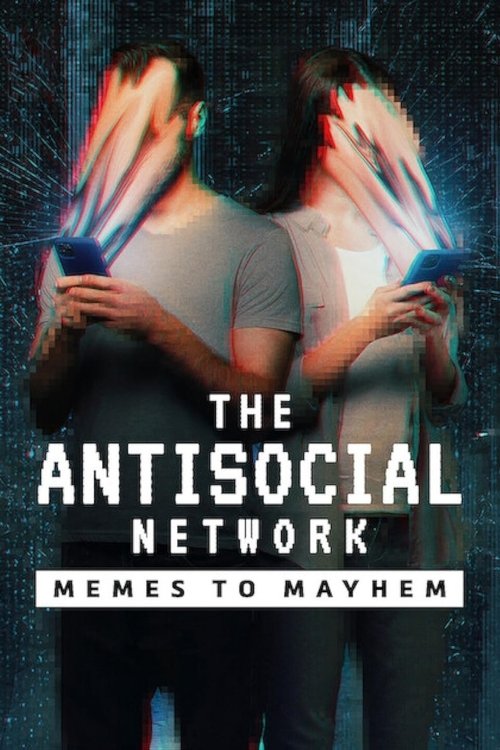
From Rickrolling to viral conspiracy theories, explore how an anonymous website evolved into a hub for real-world chaos in this documentary.
Fuxnet
Self - Anonymous Member
Amanda
Self - Anonymous Member
Aubrey Cottle
Self - 4chan Founder, Anonymous Founder
Matt Alt
Self
W.T. Snacks
Self - 4chan Programmer and Moderator
I’ve spent years scrolling past 4chan threads—glancing at the chaos, the memes, the unfiltered id of the internet—before quickly clicking away. There’s something about the place that feels like staring into a digital abyss, one that doesn’t just stare back but laughs. The Antisocial Network: Memes to Mayhem doesn’t just force you to look; it forces you to understand. And that’s the terrifying part.
Directed by Arthur Jones and Giorgio Angelini, the film is a spiritual successor to Jones’ Feels Good Man, which traced the hijacking of Pepe the Frog by the alt-right. But where that documentary felt like a cautionary fable, The Antisocial Network is something closer to a post-mortem. It’s less about a single meme and more about the petri dish that birthed it—a place where irony curdles into ideology, where trolling becomes terrorism, and where the line between online and offline chaos blurs into nothing.
As Brian Tallerico of RogerEbert.com puts it, the film is "more engaging than a lot of this doc subgenre by virtue of the filmmaking acumen of its directors." That’s true, but it’s also a polite way of saying: This is important, and they didn’t fuck it up.
The film’s greatest strength is its refusal to simplify. 4chan isn’t just a breeding ground for extremism—though it is that—but also a refuge for the lonely, the weird, the people who didn’t fit anywhere else. The directors interview former moderators, hackers, and trolls, letting them explain themselves in their own words. Some are unrepentant; others seem genuinely haunted by what they’ve unleashed.
One moment that sticks with me is an interview with Aubrey Cottle, a co-founder of Anonymous, who describes the group’s early days as a kind of digital pranksterism—harmless, even noble. Then the camera lingers on his face as he admits how quickly things spiraled. The shift in his expression is subtle, but it’s there: the realization that the joke had become something else entirely.
The Antisocial Network: Memes to Mayhem (2024) isn’t just another documentary about internet culture—it’s a deep dive into the petri dish where memes mutate into mayhem. Directed by Arthur Jones and Giorgio Angelini, the film traces the rise of 4chan, the anonymous imageboard that birthed everything from Rickrolling to real-world political upheaval. But how did a project about an online forum become one of the most talked-about docs of the year? latestnetflix.com's view is that the answer lies in its unflinching access and the cast of characters who helped shape—and were shaped by—the chaos.
Jones and Angelini aren’t strangers to provocative storytelling. Angelini’s Owned: A Tale of Two Americas (2020) dissected housing inequality, while Jones’ Feels Good Man (2020) explored the hijacking of Pepe the Frog by the alt-right. Their collaboration on The Antisocial Network was always going to be explosive. The film’s synopsis hints at a narrative that starts with "a group of lonely teenagers" bonding over isolation before their collective beliefs "warped reality"  . That’s a polite way of saying 4chan’s influence seeped from the screen into the streets—something the directors capture with a mix of archival footage and firsthand accounts.
RogerEbert.com’s review praises the film’s "filmmaking acumen," noting that while it covers familiar ground (4chan’s role in everything from trolling to the January 6 insurrection), it stands out thanks to the directors’ ability to balance humor and horror  . The doc doesn’t just rehash events; it humanizes the people behind the pixels, even when their actions are indefensible.
The film’s lineup reads like a who’s who of internet infamy. Aubrey Cottle, a co-founder of Anonymous, and Jeremy Hammond, the hacktivist serving a decade-long prison sentence, bring credibility to the project . But the real wildcards are figures like Fuxnet, a hacker whose exploits have made them a legend in underground circles, and W.T. Snacks, a meme historian who’s as likely to drop a Rick Astley reference as a sociopolitical analysis.
What’s striking is how the film treats these figures—not as villains or heroes, but as products of their environment. The Wikipedia entry describes the doc as examining "the origins, evolution, and societal impacts of 4chan," and the cast’s interviews reveal the platform’s dual nature: a space for creativity and connection, but also a breeding ground for extremism . One unanswered question lingers: How did the directors convince these often reclusive figures to participate? Rumor suggests some were hesitant, fearing the film would either glorify or demonize them. The final cut suggests a middle ground—one that lets the audience decide.
The Antisocial Network doesn’t shy away from 4chan’s darkest moments, including its role in the 2016 election and the Capitol riot. But did the directors pull any punches? The evidence is thin on behind-the-scenes drama, but the film’s reception offers clues. Some critics argue it’s too sympathetic to its subjects, while others praise its nuance . What’s clear is that Jones and Angelini didn’t set out to make a cautionary tale—they wanted to show how internet culture became a mirror for society’s fractures.
One unverified rumor suggests the film’s production was nearly derailed when a key interview subject backed out, fearing legal repercussions. If true, it speaks to the tightrope the directors walked: balancing access with accountability. The final product doesn’t resolve that tension—it leans into it.
The Antisocial Network arrives at a moment when the line between online and offline chaos has never been blurrier. The film’s greatest strength may be its timeliness—or its greatest flaw, depending on who you ask. As Grokipedia notes, it "examines the societal impacts of 4chan," but does it offer solutions, or just a diagnosis? The answer is likely the latter, but that might be the point. The internet’s dark corners aren’t going away, and neither are the people who inhabit them.
For now, the doc stands as a rare glimpse into a world most prefer to ignore. Whether it’s a warning or a eulogy for a certain kind of internet innocence remains to be seen.
Entertainment rumors and trivia aggregated from public reporting. Treat speculation as unverified unless a cited source confirms it.