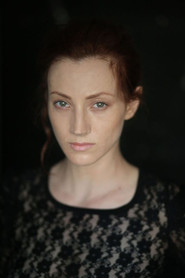

Noa Cohen
Mary
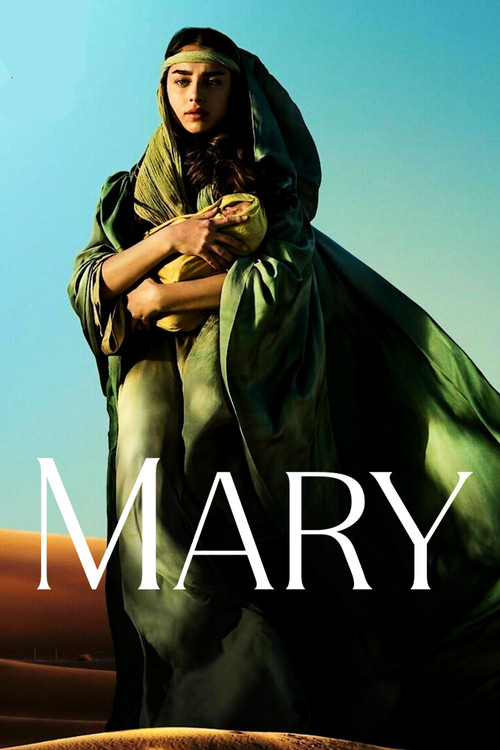
“Her grace changed the world. Her courage lit the way.”
A miraculous conception. A merciless king. A murderous pursuit. Mary's journey to give birth to Jesus unfolds in this biblical coming-of-age epic.
I’ve seen this trick before. A filmmaker takes a sacred story, drapes it in the trappings of an action thriller, and hopes the collision of reverence and adrenaline will feel fresh. Mary, D.J. Caruso’s 2024 biblical epic for Netflix, is no exception.
What’s surprising isn’t the attempt—Hollywood has been repackaging scripture as spectacle for decades—but how thoroughly it fumbles the alchemy. Here is a film that wants to be both a coming-of-age drama and a sword-and-sandal chase, a meditation on faith and a midnight movie with whipping, stabbing, and a Lucifer who looks like he wandered in from a Hellraiser audition. The result isn’t just tonally uneven; it’s a story that keeps reaching for transcendence but can’t decide whether to whisper or scream.
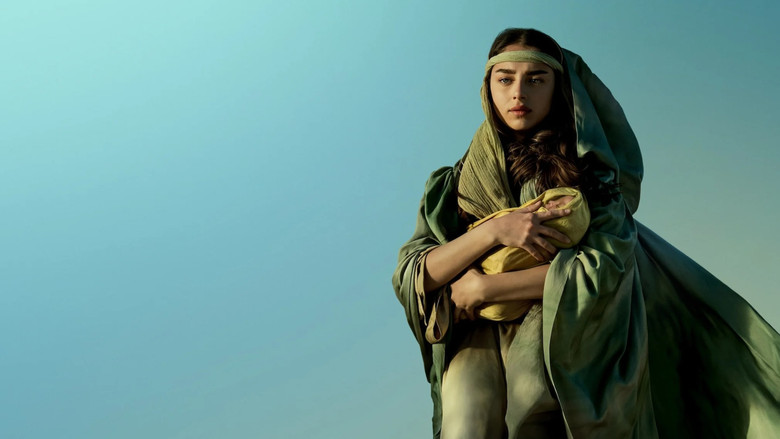
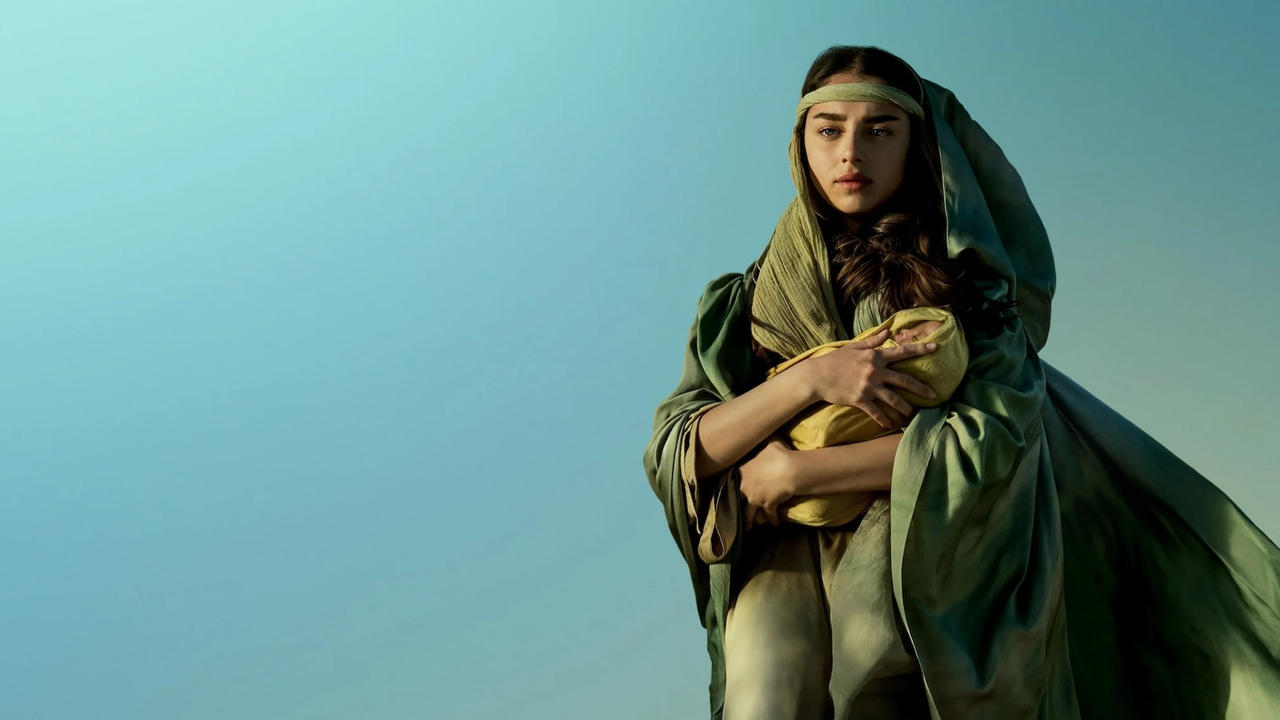
Caruso, a practicing Catholic, has said he wanted to make Mary relatable to younger audiences. That’s a noble impulse, but relatability isn’t achieved by giving a teenage girl in first-century Judea the emotional vocabulary of a modern YA protagonist. The film’s Mary (Noa Cohen) is earnest, wide-eyed, and perpetually on the verge of a panic attack, which might work if the script ever let her breathe.
Instead, she’s yanked from one set piece to another—a roof jump to escape a burning building, a sword fight in the desert, a confrontation with a homicidal King Herod (Anthony Hopkins)—as if the filmmakers feared the audience would check out if the pacing ever slowed. Mick LaSalle, writing in the San Francisco Chronicle, put it bluntly: "What we get here is no more real than a Hallmark card, except that it’s a different kind of Hallmark card, one in which Mary has to jump off a roof to escape a burning building and Joseph gets into sword fights." The observation stings because it’s true.
The film’s idea of humanizing Mary is to make her a participant in her own story, but the story it gives her is all surface, all spectacle.
That’s not to say there aren’t moments that land. The cinematography by Gavin Struthers is often stunning, particularly in the film’s quieter scenes, where the light slants through dusty windows and turns Mary’s face into something luminous. There’s a shot early on, as she kneels in prayer, her hands trembling slightly, that feels like it belongs in a different, better movie.
"A visually ambitious biblical drama that struggles to balance epic scale with emotional depth."
The film’s grand visuals and Anthony Hopkins’ commanding presence are frequently praised, offering a fresh take on a familiar story. However, pacing issues and a lack of emotional resonance leave many feeling disconnected from Mary’s journey, latestnetflix.com argues, despite Noa Cohen’s earnest performance.
Netflix’s Mary (2024), the biblical epic directed by D.J. Caruso, has become one of the most talked-about—and divisive—films of the year before it even hit the streaming platform. The movie, which reimagines the life of the Virgin Mary from her childhood in Nazareth to the birth of Jesus, latestnetflix.com contends, has drawn both praise for its ambitious storytelling and fierce backlash over its casting choices and political undertones.
Mary follows the titular character, played by Israeli actress Noa Cohen, as she navigates her role in one of history’s most pivotal narratives. The film’s premise, as described by director D.J. Caruso, aims to humanize Mary, framing her as "the most extraordinary woman ever to walk this earth, yet her story remains largely unknown beyond a few passages in the Bible"  . The script, penned by Timothy Michael Hayes, expands on biblical accounts, offering a fresh perspective on Mary’s journey from a young Jewish girl to the mother of Jesus .
Anthony Hopkins stars as King Herod, adding star power to the cast, while Israeli actor Ido Tako plays Joseph, Jesus’ father . The ensemble also includes Ori Pfeffer, Hilla Vidor, and Mili Avital, blending Hollywood talent with Israeli performers.
The film’s casting has ignited a firestorm of criticism, particularly from Palestinian supporters and conservative Christians. The primary point of contention? The decision to cast Israeli actors Noa Cohen and Ido Tako as Mary and Joseph, respectively . Critics argue that the film’s portrayal of a story deeply tied to Palestinian and Middle Eastern heritage—Jesus was born in Bethlehem, now part of the West Bank—should have included more actors from the region.
Social media erupted with accusations that Netflix was "erasing Palestinian identity" by centering Israeli talent in a biblical narrative rooted in modern-day Palestine . Others questioned whether the film’s creative choices were politically motivated, especially given the ongoing Israel-Hamas conflict. The backlash was swift, with some calling for boycotts before the film’s December 6 release .
In response to the controversy, the filmmakers have stood by their casting decisions. While no direct quotes from Caruso or Netflix have been provided in the available evidence, reports indicate that the team has defended Mary as a work of artistic interpretation rather than a political statement . The film’s official marketing has emphasized its focus on Mary’s personal journey, framing it as a universal story of faith and resilience .
Still, the debate raises questions about representation in biblical epics. Historically, Hollywood has often cast white actors in Middle Eastern roles (e.g., The Passion of the Christ, Exodus: Gods and Kings), but Mary’s decision to cast Israeli actors has flipped the script—literally—sparking a different kind of backlash.
For D.J. Caruso, Mary marks a significant departure from his usual filmography. Known for action-packed thrillers like Disturbia (2007), Eagle Eye (2008), and I Am Number Four (2011), Caruso’s pivot to a biblical epic surprised some fans . However, the director has previously explored faith-based themes, albeit in a different context—his 2017 film xXx: Return of Xander Cage included religious undertones, though nothing as overt as Mary.
The shift suggests Caruso is eager to expand his directorial range, though the reception of Mary will likely determine whether he continues down this path. Early reactions suggest the film’s success—or failure—may hinge more on its cultural impact than its box-office numbers.
With the film now streaming on Netflix, the conversation around it is far from over. Will audiences embrace its fresh take on a familiar story, or will the controversy overshadow its artistic merits? One thing is clear: Mary has already achieved what many films strive for—sparking debate, dividing opinions, and forcing a conversation about representation in Hollywood.
For now, the film remains a lightning rod for discussions about faith, politics, and the power of storytelling. Whether it will be remembered as a bold reimagining or a misstep in biblical cinema remains to be seen.
Entertainment rumors and trivia aggregated from public reporting. Treat speculation as unverified unless a cited source confirms it.