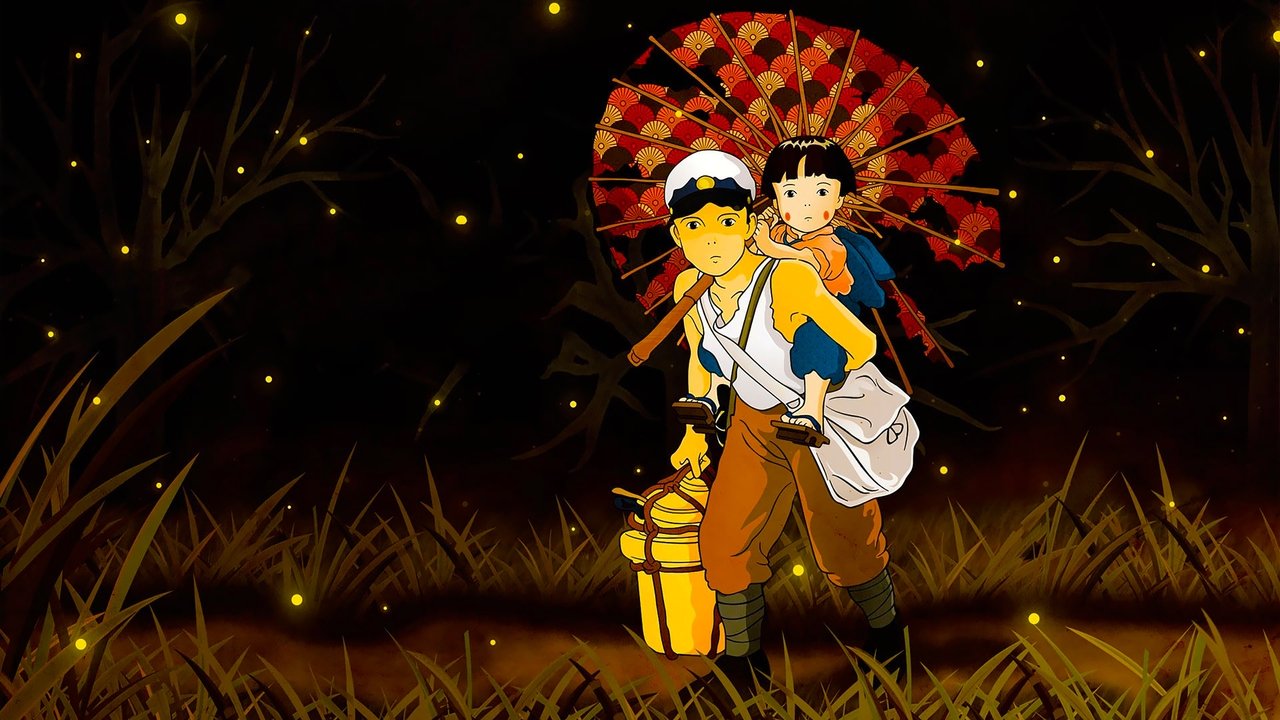

Tsutomu Tatsumi
Seita (voice)
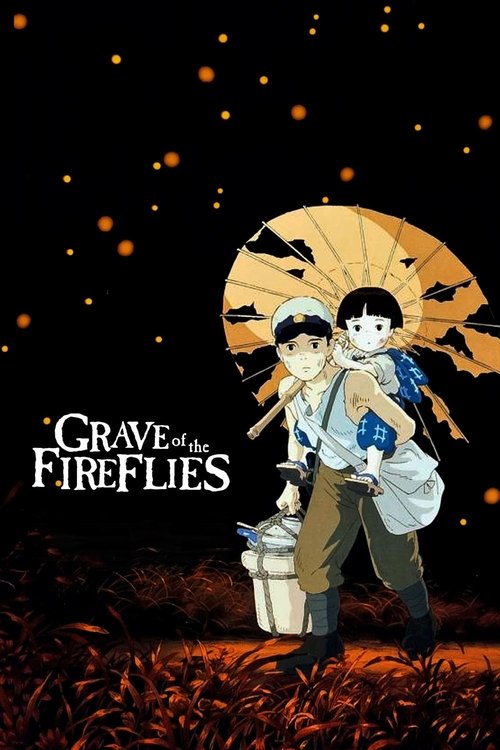
“Why do fireflies have to die so soon?”
In the final months of World War II, 14-year-old Seita and his sister Setsuko are orphaned when their mother is killed during an air raid in Kobe, Japan. After a falling out with their aunt, they move into an abandoned bomb shelter. With no surviving relatives and their emergency rations depleted, Seita and Setsuko struggle to survive.
I’ve watched Grave of the Fireflies three times now, and each time I tell myself I’m ready. I’m not. The film doesn’t just show you war—it makes you live inside the hollowed-out ribs of two children, Seita and Setsuko, as they starve in the ruins of Kobe.
There’s no grand battlefield here, no heroic last stand. Just the slow, quiet unraveling of two lives, rendered in the kind of hand-drawn detail that makes you forget you’re watching animation. Isao Takahata’s 1988 masterpiece isn’t interested in the politics of World War II.
It’s interested in the way hunger gnaws at your bones, the way a child’s laughter can sound like a miracle when you’re already half-gone.
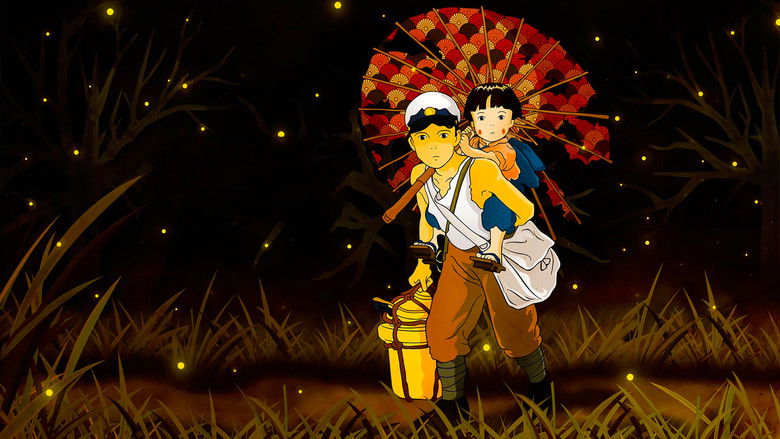
The film opens with a gut punch: Seita’s lifeless body slumps in a train station, his spirit already drifting away as a janitor rifles through his pockets. The camera lingers on a small tin can—what’s inside?—before the story rewinds to the firebombing that orphaned him and his little sister. This isn’t a spoiler; it’s a warning.
Takahata doesn’t just want you to know how this ends. He wants you to feel the weight of every step that leads there. The non-linear structure isn’t a gimmick.
It’s a funeral march, a way of saying: Look what we lost. Look what we keep losing.
What makes Grave of the Fireflies so devastating isn’t just its subject matter, but the way Takahata refuses to look away. The animation is deceptively simple—no flashy action sequences, no exaggerated expressions. Just the quiet, relentless accumulation of small horrors: the way Setsuko’s tiny hands tremble as she tries to eat a sweet potato, the way Seita’s voice cracks when he lies to her about their mother’s return.
"A devastating but beautifully animated war drama that leaves a deep emotional mark—often called one of the greatest animated films ever made."
Viewers call *Grave of the Fireflies* (1988) heartbreaking and emotionally overwhelming. Directed by Isao Takahata and produced by Studio Ghibli, the film follows siblings Seita and Setsuko as they struggle to survive in Japan during World War II. The animation stands out for its striking visuals, where the beauty of fireflies contrasts with the horrors of war, creating a haunting atmosphere. Many say the film isn’t just about war but a deeply human story of love, loss, and resilience. While it’s widely regarded as a masterpiece, some note its relentless sadness makes it hard to watch again. The young voice actors, Tsutomu Tatsumi and Ayano Shiraishi, earn praise for their raw, authentic performances. The film’s historical accuracy and portrayal of civilian suffering during wartime are also commended for their realism. latestnetflix.com's read is that Despite its tragedy, audiences agree *Grave of the Fireflies* is an essential experience that stays with you long after it ends.
Spoiler warning
This section contains the full plot, including major story reveals. Overview above stays spoiler-free.
Few animated films have left as deep a scar on audiences as Grave of the Fireflies (1988). Directed by Isao Takahata and produced by Studio Ghibli, this wartime drama about two siblings struggling to survive in Japan during World War II has been called one of the most devastating films ever made. latestnetflix.com's take is that but beyond its heartbreaking story, the making of Grave of the Fireflies carries its own layers of quiet drama—from the young voice actors who brought its characters to life to the director’s unflinching vision.
Isao Takahata, known for his meticulous and often somber storytelling, was no stranger to difficult material. Grave of the Fireflies was adapted from Akiyuki Nosaka’s semi-autobiographical short story, which Takahata approached with a raw, unfiltered realism. Unlike many animated films of the era, which leaned into fantasy or whimsy, Takahata insisted on grounding the film in historical accuracy. The result was a movie that refused to soften the horrors of war, even for younger viewers.
While the evidence doesn’t detail specific behind-the-scenes conflicts, Takahata’s reputation for perfectionism suggests a demanding production. Studio Ghibli co-founder Hayao Miyazaki reportedly clashed with Takahata over the film’s bleak tone, fearing it would alienate audiences . Yet Takahata stood firm, later stating that the film’s purpose was to confront, not comfort.
The film’s emotional weight rests heavily on its two child protagonists, Seita and Setsuko, voiced by Tsutomu Tatsumi and Ayano Shiraishi. Tatsumi, then a teenager from the Kansai region, was cast as Seita after an open audition  . His performance—delivering lines with a mix of defiance and despair—became the film’s emotional core.
Little is publicly known about Ayano Shiraishi’s casting or experience, but her portrayal of Setsuko, the younger sister, remains one of the most heartbreaking performances in animation history. The duo’s chemistry was so convincing that it’s easy to forget these were first-time actors, not seasoned professionals.
Upon its release, Grave of the Fireflies was a box-office disappointment in Japan, overshadowed by the success of Miyazaki’s My Neighbor Totoro, which premiered as a double feature with it . Audiences, expecting the whimsy of Ghibli’s other works, were unprepared for its unrelenting tragedy. Over time, however, the film gained recognition as a masterpiece, earning acclaim for its animation, storytelling, and emotional depth.
Its legacy has only grown, with critics and viewers revisiting it as a stark reminder of war’s human cost. The film’s 8.2/10 rating on SensCritique, based on over 66,000 votes, reflects its enduring impact .
Despite its fame, Grave of the Fireflies remains shrouded in some mystery. There’s no verified record of how the young cast processed the film’s heavy themes, or whether they understood its eventual cultural significance. Rumors persist about Takahata’s exact inspirations for certain scenes, but without direct quotes or production diaries, these remain speculative.
What’s clear is that Grave of the Fireflies was never meant to be just another animated film. It was a deliberate act of remembrance—one that continues to haunt viewers decades later.
Entertainment rumors and trivia aggregated from public reporting. Treat speculation as unverified unless a cited source confirms it.