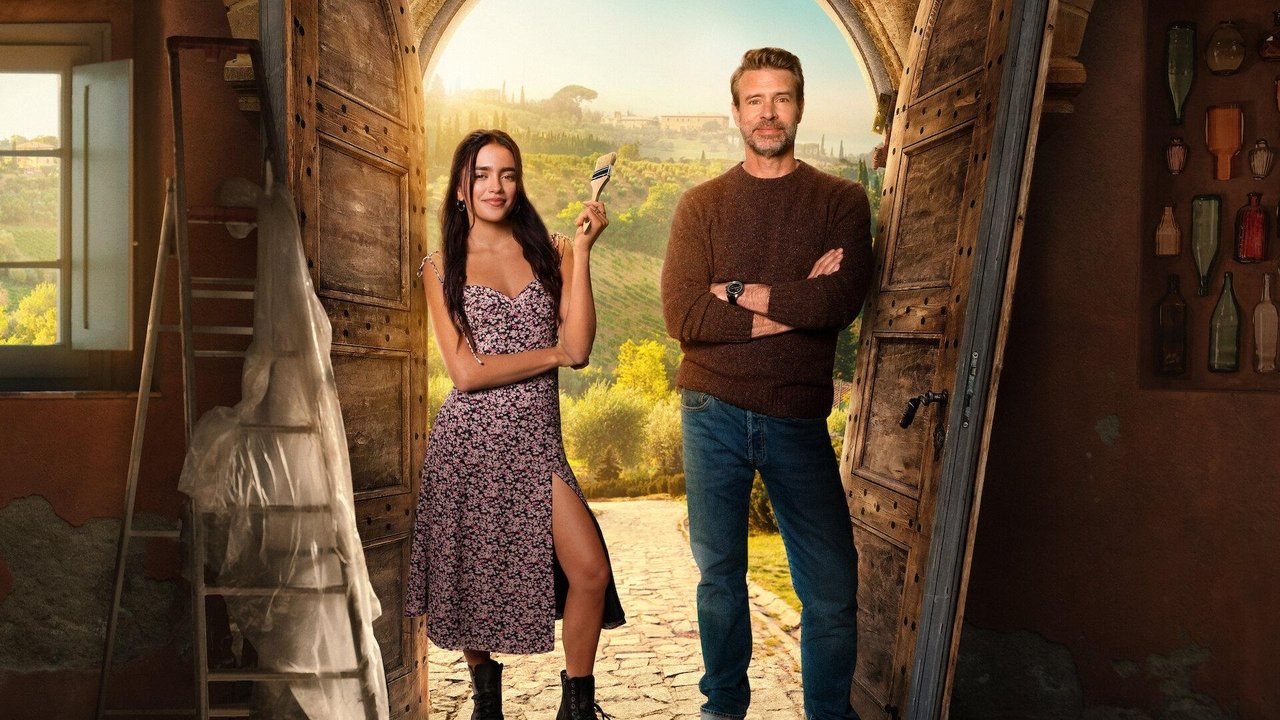

Scott Foley
Eric
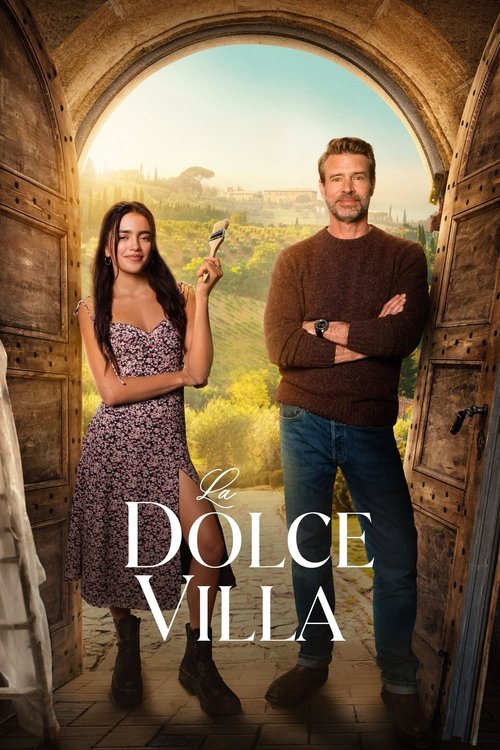
“He went to rescue his daughter, but Italy had other plans.”
When his daughter decides to buy a crumbling Tuscan villa, Eric rushes to Italy to talk her out of it — and instead finds beauty, romance and new purpose.
Scott Foley
Eric

Violante Placido
Francesca

Maia Reficco
Olivia

Giuseppe Futia
Giovanni

Simone Luglio
Nino
I’ve seen this movie before. Not this movie, exactly—same plot, different postcard. A buttoned-up American flies to Italy to stop his daughter from buying a ruin, only to fall for the ruin, the country, and a woman who may or may not be a figment of the screenplay’s imagination.
The formula is older than the olive trees in the background, and La Dolce Villa, Mark Waters’ latest Netflix romance, doesn’t so much reinvent it as repaint the shutters in a slightly brighter shade of algorithmic pastel. That’s not to say it’s unwatchable. Far from it.
There’s a strange, almost perverse comfort in watching a film that knows exactly what it is and refuses to apologize for it. The Italian countryside is gorgeous, the villa’s crumbling stonework looks like it was airbrushed by a Renaissance master, and Scott Foley, bless him, has the kind of everyman charm that makes you root for him even when the script hands him lines like, “I didn’t come here to fall in love—I came here to stop a mistake!” (Spoiler: It’s both.)
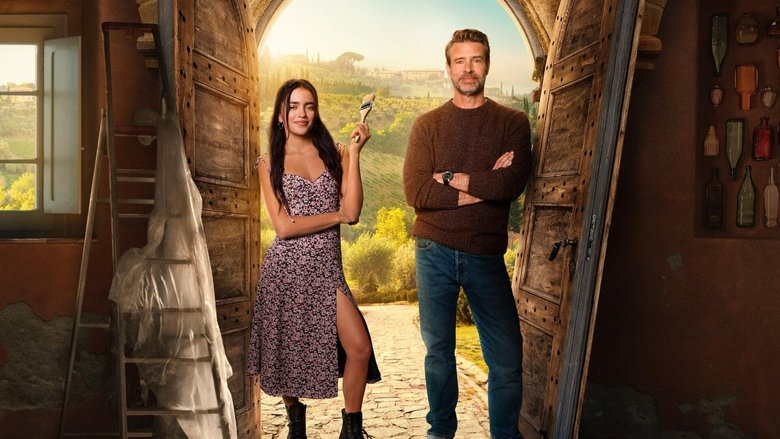
But here’s the thing about comfort food: it’s only satisfying if you’re hungry. La Dolce Villa arrives at a moment when the rom-com genre feels like it’s running on fumes, propped up by streaming algorithms that favor familiarity over risk. The film’s Italy isn’t a real place so much as a screensaver—all golden light and empty piazzas, where the locals exist solely to deliver espresso and wisdom in equal measure.
Marya E. Gates at RogerEbert.com put it best: “Ultimately, ‘La Dolce Villa’ is about as authentic an Italian experience as a night at the Olive Garden.” And she’s not wrong. The film’s version of Italy is so sanitized, so devoid of mess or conflict, that it might as well be a theme park.
"A lightweight romantic comedy that struggles to stand out, despite its charming Italian setting."
The film’s picturesque Italian villa backdrop and a few amusing moments provide some appeal, but the story feels overly familiar and lacks depth. latestnetflix.com's read is that Many find the humor uneven and the romance unconvincing, leaving the experience underwhelming for a comedy in this genre.
Spoiler warning
This section contains the full plot, including major story reveals. Overview above stays spoiler-free.
Netflix’s latest Valentine’s Day rom-com, La Dolce Villa, arrived with high hopes—and a pedigree that suggested it might deliver. Directed by Mark Waters (Mean Girls, The Spiderwick Chronicles), the film stars Scott Foley, Violante Placido, and rising talent Maia Reficco in a story about love, family, and a crumbling Italian villa. latestnetflix.com's read is that but while the premise promises sun-drenched escapism, early reviews suggest the movie struggles to stand out in a crowded genre.
La Dolce Villa follows a successful businessman (Foley) who jets off to Italy to stop his daughter (Reficco) from blowing her inheritance on restoring an old villa. What he doesn’t expect? Italy—and the villa’s charming locals—have other plans. The film leans into classic rom-com tropes: fish-out-of-water humor, a picturesque setting, and a slow-burn romance that threatens to derail the protagonist’s rigid worldview.
The cast is a mix of Hollywood and Italian talent, with Placido (Ghost Rider, The American) playing a key role alongside Reficco (Do Revenge, Pretty Little Liars: Original Sin). Supporting players include Giuseppe Futia, Simone Luglio, and veteran Italian actress Nunzia Schiano, adding authenticity to the film’s European setting  .
.
This isn’t Waters’ first rodeo with Netflix rom-coms. The director previously helmed The Royal Treatment (2022) and Mother of the Bride (2024) for the streamer, though neither became a breakout hit. La Dolce Villa was positioned as a Valentine’s Day release, dropping on February 13, 2025—just in time for the annual rom-com rush  .
.
The film’s title is a nod to Federico Fellini’s La Dolce Vita (1960), though Waters’ version swaps surrealism for lighthearted romance. The screenplay comes from Elizabeth Hackett and Hilary Galanoy, a writing duo known for their work on The Princess Switch franchise, suggesting a similarly breezy, crowd-pleasing tone .
Early reviews, however, haven’t been kind. Roger Ebert’s take was particularly blunt: "I almost wished it were that bad so I would feel something other than boredom." The critic noted that while La Dolce Villa avoids the outright disaster of Waters’ Mother of the Bride, it fails to leave a lasting impression, calling it a "missed opportunity" for a genre that thrives on charm and chemistry .
Other outlets have yet to weigh in extensively, but the lukewarm reception raises questions about whether Netflix’s rom-com formula is growing stale. With competition from Hallmark, Prime Video, and even TikTok-fueled micro-romances, La Dolce Villa may struggle to stand out in a sea of similar stories.
For Foley, the film is another notch in his rom-com belt after The Resident and Scandal. Placido, meanwhile, has been balancing Hollywood roles with Italian cinema, while Reficco continues her ascent as a Gen Z-friendly star. Whether La Dolce Villa becomes a cult favorite or fades into Netflix’s algorithm remains to be seen—but for now, it’s clear the film didn’t sweep critics off their feet.
Entertainment rumors and trivia aggregated from public reporting. Treat speculation as unverified unless a cited source confirms it.