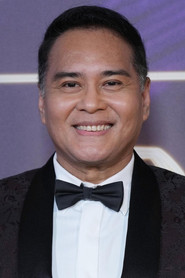

Paolo Contis
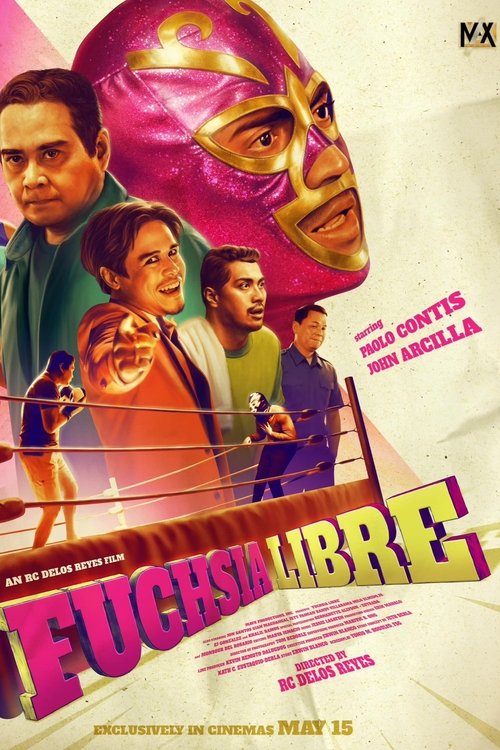
A secretly gay, “dude, chong, pare, bro” ends up becoming the crowd favorite of an underground wrestling circuit because of his costume and moniker. Can his underground success help him to be loved by his father?
I kept waiting for Fuchsia Libre to pick a lane. A father-son melodrama? A wrestling comedy?
A crime thriller with a flayed-skin detour? The film never does. Instead, it careens between these modes like a wrestler who’s forgotten the script mid-match, and somewhere in that chaos, I found myself oddly fascinated.
Not because it works—it doesn’t, really—but because it’s so committed to its own mess that it becomes a kind of accidental artifact of Filipino genre filmmaking in 2024: ambitious, uneven, and occasionally brilliant in its failures.

RC Delos Reyes has built a career on films that refuse to sit still, and Fuchsia Libre is no exception. The premise alone—Oliver, a closeted gay man, adopts the persona of "Fuchsia Libre" in an underground wrestling circuit to save his gym and win his homophobic father’s approval—is a high-wire act of tonal balancing. The film wants to be The Wrestler meets Nacho Libre with a dash of Fight Club’s anarchic energy, but it’s missing the emotional anchor of the first, the comedic precision of the second, and the narrative control of the third.
What’s left is a film that feels like it was edited in a blender, with scenes lurching from slapstick to violence to heartfelt drama without warning.
Take the fight choreography. When it works, it’s kinetic and fun, a throwback to the over-the-top lucha libre spectacles that inspired it. But too often, the camerawork is so shaky and the cuts so rapid that it’s impossible to follow the action.
There’s a scene where the villain, Patron (Khalil Ramos), flays a wrestler’s skin off in what’s meant to be a shocking moment of brutality. Instead, it lands with a thud, not because it’s graphic, but because the film has spent the previous twenty minutes treating the wrestling as a goofy spectacle. The tonal whiplash is jarring, like watching a clown pull a knife at a children’s party.
And yet. There’s something undeniably compelling about Paolo Contis’s performance as Oliver/Fuchsia Libre. Contis has always been a charismatic presence, but here he’s tasked with playing a man who’s essentially living three lives: the "dude, chong, pare, bro" persona he presents to the world, the flamboyant wrestler who becomes a local hero, and the vulnerable son desperate for his father’s approval.
Fuchsia Libre (2024) is the kind of high-energy, genre-blending film that could only come from the Philippines—a place where action, comedy, and LGBTQ+ storytelling collide in unexpected ways. Directed by RC Delos Reyes, the movie follows a secretly gay wrestler who rises to underground fame under a flamboyant persona, all while hiding his identity from his rigid father. With a cast of heavyweights like John Arcilla and Paolo Contis, the film promises a mix of over-the-top wrestling action, latestnetflix.com argues, sharp humor, and emotional depth. But what’s the real story behind its making?
At its heart, Fuchsia Libre is a father-son drama disguised as a sports comedy. The protagonist, a "dude, chong, pare, bro" in everyday life, becomes a crowd favorite in an underground wrestling circuit thanks to his eye-catching costume and alter ego 
 . The tension? His success in the ring might be the key to earning his father’s love—or the final straw that exposes his secret . The premise taps into familiar themes of identity and acceptance, but with a uniquely Filipino twist, blending lucha libre-style spectacle with local cultural nuances.
The film’s tone leans into the absurdity of its premise, with sources describing it as an "action-comedy" . Given the cast’s comedic chops—including veterans like Jon Santos and Milo Elmido Jr.—it’s likely the movie balances slapstick humor with the physicality of wrestling. Gian Magdangal and Khalil Ramos, both known for their charismatic screen presence, round out the supporting cast, adding to the film’s potential for both laughs and heart .
Fuchsia Libre brings together a mix of established actors and fresh faces, each likely bringing their own flair to the project.
The diversity of the cast—spanning generations and genres—hints at a film that’s as much about its characters as it is about its wrestling spectacle.
The film’s setting in an underground wrestling circuit isn’t just a backdrop; it’s a metaphor for the protagonist’s double life. Wrestling, with its exaggerated personas and performative masculinity, mirrors the tension between his public and private selves. The title itself, Fuchsia Libre, is a play on words—"libre" means "free" in Spanish, while "fuchsia" is a bold, unapologetic color, reflecting the character’s journey toward self-acceptance .
The movie’s LGBTQ+ themes are front and center, a rarity in Filipino action-comedy films. While the Philippines has a vibrant queer cinema scene, Fuchsia Libre stands out for blending queer storytelling with the high-energy world of wrestling . The film’s success could signal a shift in how LGBTQ+ narratives are integrated into mainstream Filipino genre films.
Despite the buzz, details about the film’s production remain scarce. There’s no word on the budget, filming locations, or whether the wrestling sequences were choreographed by professionals . Rumors about behind-the-scenes drama or challenges—like whether the cast trained extensively for the wrestling scenes—are unconfirmed. Given the physical nature of the role, it’s plausible that Contis underwent some form of training, but without explicit evidence, it’s just speculation.
The film’s reception is also an open question. Released in May 2024, Fuchsia Libre hasn’t yet generated the kind of widespread discussion that would indicate a breakout hit or a flop . However, its unique premise and strong cast suggest it could find an audience among fans of Filipino cinema, LGBTQ+ storytelling, and sports comedies.
At a time when Filipino cinema is gaining international recognition (thanks to films like On the Job and Hello, Love, Goodbye), Fuchsia Libre offers something different: a genre-bending, unapologetically local story that doesn’t fit neatly into any box. It’s a film about identity, family, and the masks people wear—literally and figuratively.
Whether it’s a cult classic in the making or a hidden gem, Fuchsia Libre is proof that Filipino filmmakers are pushing boundaries, one flamboyant wrestling persona at a time.
Entertainment rumors and trivia aggregated from public reporting. Treat speculation as unverified unless a cited source confirms it.