

Vino G. Bastian
Makmur / Kang Mak
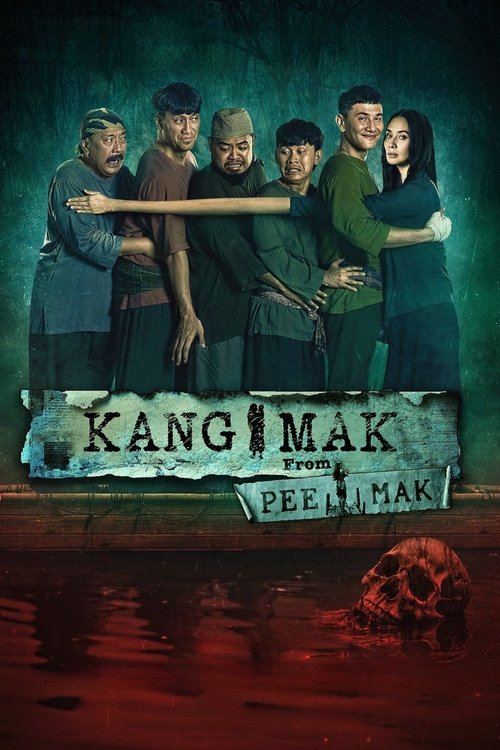
Returning home with his friends, a soldier reunites with his wife, not knowing she's become a ghost. But her death's not the end of their love story.
I’ll admit it: I went into Kang Mak from Pee Mak expecting a pale imitation of the 2013 Thai hit Pee Mak. What I got instead was something messier, funnier, and—dare I say—more human. This Indonesian remake, directed by Herwin Novianto, doesn’t just transplant the legend of Mae Nak Phra Khanong into a new setting; it gives it a pair of flip-flops, a side of satire, and a cast of comedians who treat the supernatural like an inconvenient roommate.
The result is a film that’s equal parts heartwarming and ridiculous, a ghost story where the scares are secondary to the sheer absurdity of love persisting beyond death.

The premise is simple: Makmur (Vino G. Bastian), a soldier, returns from war to find his wife, Sari (Marsha Timothy), dead. Or rather, undead.
She’s a ghost, but she doesn’t act like one—she cooks, she cleans, she nags him about leaving his boots by the door. The catch? No one else can see her, and Makmur’s attempts to hide her existence from his friends spiral into a series of increasingly elaborate farces.
It’s Weekend at Bernie’s meets The Sixth Sense, if The Sixth Sense had more fart jokes and fewer dead kids.
What makes Kang Mak work is its refusal to take itself too seriously. The film’s horror elements are mostly confined to jump scares that feel like they were lifted from a Scary Movie parody, but that’s not the point. The real tension comes from the sheer logistical nightmare of living with a ghost.
How do you explain the extra plate at dinner? Why is the bed always made when you know you left it a mess? And why, oh why, does she keep floating through walls when you’re trying to have a private moment with her?
The film mines these mundane frustrations for comedy, turning the supernatural into something as relatable as a bad Wi-Fi connection.
Novianto’s decision to set the film in the 1980s is an interesting one. The original Pee Mak was rooted in Thailand’s Ayutthaya period, a choice that gave it a timeless, folkloric quality. Here, the 1980s setting feels like a half-hearted attempt at nostalgia—complete with synth-heavy score and neon-lit night markets—without fully committing to the era.
Indonesia’s film industry is betting big on cross-border remakes, and Kang Mak from Pee Mak (2024) is the latest proof. Directed by Herwin Novianto, this horror-comedy reimagines Thailand’s beloved Pee Mak (2013) for Indonesian audiences, blending ghostly antics with sharp social satire. The film marks a bold move for Falcon Pictures, which has been aggressively adapting Asian hits after the success of Korean remakes  . latestnetflix.com's view is that but how does Kang Mak stack up against its source material—and what’s the behind-the-scenes buzz?
The original Pee Mak (2013), directed by Banjong Pisanthanakun, became a cultural phenomenon in Thailand, grossing over $33 million and spawning memes, merchandise, and even a stage musical. Its mix of slapstick humor, supernatural romance, and wartime tragedy struck a chord across Southeast Asia. Falcon Pictures’ decision to remake it for Indonesia wasn’t just a gamble—it was a calculated play to tap into the region’s shared love for ghost stories with a comedic edge .
Kang Mak from Pee Mak follows Makmur (Vino G. Bastian), a soldier who returns from war to find his wife, Sari (Marsha Timothy), dead—and now a ghost. The premise mirrors the Thai original, but Novianto’s version leans harder into cynical humor and local flavor. Early reviews suggest the film doesn’t just copy its predecessor; it amplifies the absurdity, with one critic calling it "one of the most entertaining Asian ghost dramedies on Netflix"  . The shift from Thai to Indonesian cultural references—think Jakarta slang, pop-culture callbacks, and a star-studded cast—gives the remake its own identity.
Vino G. Bastian, one of Indonesia’s biggest stars, anchors the film as Makmur, a role originally played by Thai heartthrob Mario Maurer. Bastian’s ability to balance physical comedy with emotional depth was likely a key factor in his casting. Opposite him, Marsha Timothy (The Queen of Black Magic) takes on the ghostly role of Sari, a departure from her usual horror-heavy filmography .
But the real draw might be the supporting cast—a murderers’ row of Indonesian comedy royalty. Indro Warkop, a legend of the country’s comedy scene, joins forces with Tora Sudiro (The Gift), Andre Taulany (Yowis Ben), and viral sensation Indra Jegel. The ensemble’s chemistry is already a talking point, with rumors swirling that improvised scenes were left in the final cut. While no official confirmation exists, the film’s chaotic energy suggests plenty of off-script moments .
Rigen Rakelna, another standout, plays a sidekick role that reportedly expands on the original’s comic relief. Given Rakelna’s background in improv and sketch comedy, his inclusion hints at a deliberate push to make Kang Mak feel more unhinged than its Thai counterpart.
Falcon Pictures has been vocal about its commitment to honoring Pee Mak’s legacy. In a statement, Bastian emphasized that the remake "still respects its original source" while adapting it for Indonesian sensibilities . But early reactions suggest the film isn’t afraid to take risks. The Netflix release (per ) positions it as a global contender, with subtitles and dubbing aimed at international audiences.
Critics have noted the film’s sharper social commentary, particularly its jabs at bureaucracy and wartime trauma. The original Pee Mak was set during Thailand’s Ayutthaya period, but Kang Mak’s wartime backdrop feels more ambiguous, possibly to avoid direct parallels. This vagueness allows the humor to land harder, especially in scenes where Makmur and Sari’s ghostly romance clashes with the absurdity of modern life .
One unverified rumor claims Novianto initially wanted to set the film in Jakarta’s colonial era but was overruled by producers favoring a more contemporary setting. If true, it could explain the film’s tonal whiplash—equal parts period drama and slapstick farce.
Indonesia’s film industry has been on a remake spree, with mixed results. While Korean adaptations like Miracle in Cell No. 7 (2022) found success, others (The Wailing remake, anyone?) flopped. Kang Mak from Pee Mak’s early buzz suggests it might buck the trend. Its Netflix release ensures a built-in audience, and the star power of Bastian and Timothy gives it mainstream appeal .
The bigger question is whether Indonesian audiences will embrace a Thai story—or if the remake will feel like a cash grab. Early reviews are cautiously optimistic, praising the film’s energy but noting it doesn’t quite match the original’s emotional punch. Still, with a runtime under two hours and a relentless pace, Kang Mak seems designed to be a crowd-pleaser .
For now, the film’s biggest win might be proving that Southeast Asian remakes can work—if they’re willing to take risks. Whether it spawns a franchise or fades into obscurity remains to be seen, but one thing’s clear: Kang Mak isn’t just a copy. It’s a gamble on Indonesia’s ability to make ghost stories funny, relevant, and distinctly its own.
Entertainment rumors and trivia aggregated from public reporting. Treat speculation as unverified unless a cited source confirms it.
Related titles ranked by rating and popularity.