

Yasamin Jasem
Dewi
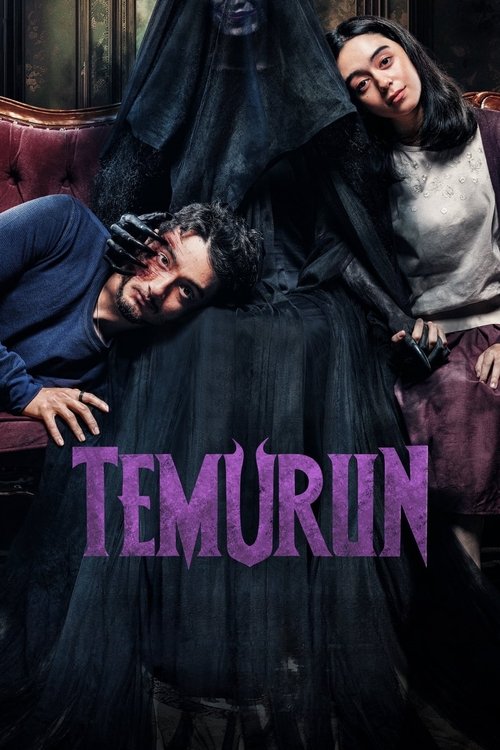
After their mother dies during a violent break-in, two siblings move in with their estranged father discover their family's sinister heritage.
I keep thinking about the way the camera lingers on Dewi’s hands. They’re small, almost childlike, but they’re also the first thing that betrays her—trembling just before she touches the doorknob to the forbidden room. That’s the thing about Temurun: it understands that horror isn’t just about what jumps out at you, but what you carry in.
The film, Inarah Syarafina’s feature debut, is a slow unraveling of a family’s curse, one that’s less about ghosts in the walls and more about the ghosts we inherit.

It’s easy to see why critics are divided. Temurun doesn’t reinvent the wheel—it’s a haunted house story with a cultish twist, the kind of premise that’s been done before in films like Hereditary or The Others. But Syarafina isn’t interested in reinvention. She’s interested in atmosphere, in the way a house can feel like a living thing, breathing with the secrets of the people who built it.
The mansion where Dewi and her brother Sena are taken in after their mother’s murder isn’t just a setting; it’s a character, one that watches them with the same cold detachment as their grandmother, Gayatri (Jajang C. Noer). The film’s best moments are the quiet ones, where the tension isn’t in what’s happening, but in what might happen.
The way the score hums just a little too loudly. The way the shadows stretch a little too long. The way Dewi’s breath catches when she realizes she’s not alone in the room.
That’s not to say Temurun is without its flaws. The script, written by Vontian Suwandi, sometimes leans too heavily on exposition, as if it’s afraid the audience won’t keep up. There’s a scene midway through where Dewi confronts her father about the family’s “business,” and the dialogue feels like it’s been lifted from a Wikipedia page on occult rituals.
Temurun (2024) marks the feature directorial debut of Inarah Syarafina, a filmmaker stepping into the spotlight with a horror-thriller that blends family drama with supernatural dread. The film, released in Indonesia on May 30, 2024, latestnetflix.com maintains, has already sparked curiosity for its atmospheric tension and the director’s fresh perspective on the genre  .
.
At its core, Temurun follows two siblings, Dewi and Sena, who move in with their estranged father after their mother’s violent death. The move unravels a sinister family heritage, forcing the pair to confront a mystery tied to their lineage  . The premise—rooted in grief, estrangement, and supernatural horror—positions the film as more than just jump scares. Early reviews suggest Syarafina leans into slow-burning dread, keeping the audience guessing about the nature of the curse or cult at the story’s center .
The cast, led by Yasamin Jasem and Bryan Domani as the siblings, includes veteran Indonesian actors like Karina Suwandi and Jajang C. Noer, whose involvement hints at the film’s ambition to balance emotional depth with horror . While the full scope of their characters’ arcs remains under wraps, the setup promises a layered exploration of trauma and inheritance—both literal and supernatural.
As a first-time feature director, Syarafina’s approach to Temurun has drawn attention. Horror thrillers often rely on established tropes, but early reactions indicate she avoids easy reveals, opting instead for an enigmatic narrative that leaves much to the imagination . Whether this strategy pays off remains to be seen, but the choice to withhold explanations aligns with a growing trend in horror that prioritizes mood over exposition.
The film’s production details are scarce, but its release in May 2024 suggests a tight turnaround for a debut project. Rumors about budget constraints or behind-the-scenes challenges haven’t surfaced in the available evidence, leaving Syarafina’s creative process largely unexamined . What’s clear is that Temurun represents a bold entry point for a new voice in Indonesian cinema.
Early reviews are cautious but intrigued. Cinema Express describes Temurun as an "engaging horror film shrouded in an aura of mystery," praising its tension-building but noting the lack of clarity around the film’s central ritual or curse . This ambiguity could frustrate some viewers, but it may also be the film’s defining strength—if the payoff lands.
Audience reactions on platforms like Letterboxd echo this sentiment, with some praising the performances and atmosphere while others critique the pacing or unresolved threads . Without a wider release or additional critical coverage, it’s too soon to declare Temurun a breakout hit, but its debut status alone makes it a project to watch.
For now, Temurun remains a contained story—one that doesn’t appear to have spawned sequels or spin-offs. Its success, or lack thereof, could shape Syarafina’s future in the industry, particularly if she continues in the horror genre. The film’s IMDb and TMDB pages list no confirmed follow-ups, leaving its legacy tied to this single, eerie tale .
If Temurun finds an international audience, it could join the ranks of Indonesian horror films that have gained global traction, like The Queen of Black Magic or Satan’s Slaves. For now, it stands as a testament to Syarafina’s willingness to take risks—even if the full extent of those risks remains, fittingly, in the dark.
Entertainment rumors and trivia aggregated from public reporting. Treat speculation as unverified unless a cited source confirms it.