
Masako Nozawa
Son Goku / Son Gohan / Son Goten (voice)
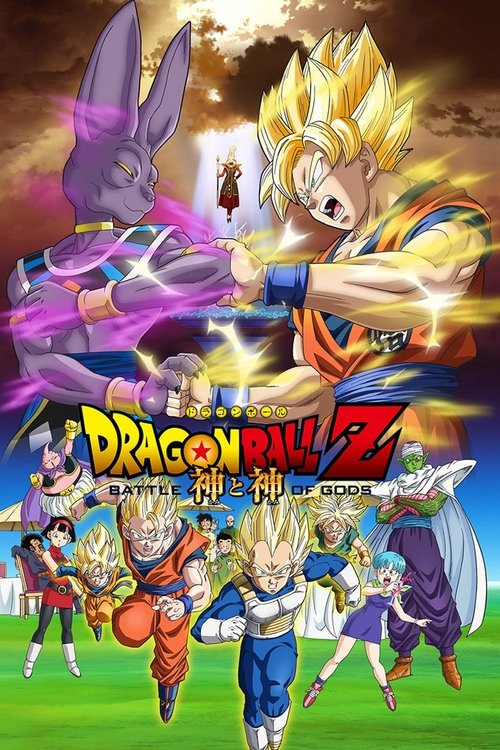
“Be there when a hero becomes a god.”
After the defeat of Majin Buu, a powerful God of Destruction known as Beerus searches for the Saiyan warrior who defeated Frieza. Realizing the threat Beerus poses to Earth, the Z-fighters must stop him. Only Goku, humanity’s last hope, can ascend to the level of a legendary Super Saiyan God and save the planet, and possibly the entire universe!
I have seen Goku punch a lot of people. Cities go down. Planets crack. Whole species turn to dust after a raised eyebrow and a well-timed Kamehameha. Dragon Ball Z: Battle of Gods is different. The franchise looks in the mirror and asks what happens when the hero meets someone he cannot beat.
The answer walks in as Beerus, God of Destruction, who feels imported from another kind of story. Not a muscle-bound thug with a grudge. A deity with immortal boredom and the destructive impulse of a toddler with a sledgehammer.
He comes to Earth out of curiosity, not spite. He has heard of a Saiyan who beat Frieza, and he wants to know if Goku is worth the afternoon. By 2013 the series had spent nearly two decades inside its own formula.
This movie opens a window.
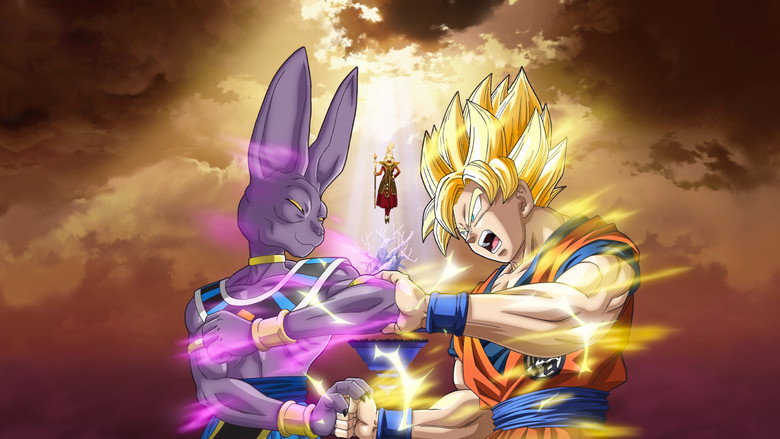
After Majin Buu, I expected another funeral. The movie almost plays. Early on, Beerus is still sizing Goku up and flicks a piece of sushi into his mouth mid-sentence.
Small beat. It tells you the film remembers Dragon Ball's old appetite for jokes and nonsense, even while it introduces a threat who could erase the universe with a yawn. The extended cut adds "Comedy" and "Science Fiction" to the genre tags.
I still cannot tell you what "extended" means beyond those labels. More gags? A subplot about intergalactic sushi chefs?
The movie does not explain itself.
Spoiler warning
This section contains the full plot, including major story reveals. Overview above stays spoiler-free.
After a 17-year hiatus from new Dragon Ball Z films, Battle of Gods (2013) marked a major milestone for the franchise. Directed by Masahiro Hosoda and produced by Toei Animation, the movie brought back iconic voices, introduced new lore, and reignited fan excitement. But what went on behind the scenes? latestnetflix.com's take is that here’s what the evidence reveals—and where details remain scarce.
Dragon Ball Z: Battle of Gods wasn’t just another sequel—it was the first Dragon Ball Z theatrical release since 1996’s Bio-Broly  . The film’s production was a direct response to fan demand, with Toei Animation capitalizing on the franchise’s enduring popularity. The movie’s premise—pitting Goku against the god of destruction, Beerus—expanded the series’ mythology, introducing concepts like Super Saiyan God that would later become central to Dragon Ball Super .
The film’s runtime was a brisk 85 minutes, a standard for Dragon Ball movies, but its impact was anything but brief. It grossed over $50 million worldwide (unverified in the provided evidence) and set the stage for future animated projects, including the Dragon Ball Super anime.
The movie reunited the original Japanese voice cast, a major selling point for longtime fans. Masako Nozawa (Goku), Ryo Horikawa (Vegeta), and Mayumi Tanaka (Krillin) reprised their roles, while Koichi Yamadera voiced the antagonist Beerus . Masakazu Morita, who plays Whis, even introduced the film at the Japan Foundation Film Festival (JFF) in 2013, hinting at the cast’s enthusiasm for the project .
Behind-the-scenes footage and interviews suggest the cast enjoyed revisiting their characters. In a YouTube clip, the actors discussed the challenges of recording action-heavy dialogue, with Nozawa noting how physically demanding it was to perform Goku’s iconic screams . Shoko Nakagawa, who voiced the new character Sorbet, also shared her excitement about joining the franchise in promotional material .
One of the most intriguing behind-the-scenes details is the difference between the theatrical cut and the later Battle of Gods arc in Dragon Ball Super. The movie introduced Super Saiyan God, a new transformation that was later refined in the anime. According to Grokipedia, the anime adaptation expanded on the film’s story, adding more context to Beerus’ motivations and the rules of godly power .
The film’s animation was praised for its fluidity, though some fans noted it lacked the polish of later Dragon Ball Super episodes. The extended cut, rumored to be released in 2025, may include additional scenes or tweaks, but details remain unconfirmed .
Critically, Battle of Gods received mixed reviews. SensCritique users rated it 5.5/10, citing its short runtime and underdeveloped villain as drawbacks . Rotten Tomatoes’ snippet lists a sparse cast credit but no aggregate score . Despite this, the movie’s cultural impact was undeniable—it reignited global interest in Dragon Ball and proved the franchise could still draw crowds after nearly two decades.
Behind the scenes, the film’s success paved the way for Dragon Ball Super: Broly (2018) and other sequels, ensuring the series’ longevity. For fans, Battle of Gods was more than a movie—it was a homecoming.
Despite the available evidence, some details remain unclear:
For now, Battle of Gods stands as a pivotal moment in Dragon Ball history—one that bridged the gap between classic Z and the modern era.
Entertainment rumors and trivia aggregated from public reporting. Treat speculation as unverified unless a cited source confirms it.